
Ceasefire between the US and Iran : Story of the Last Week
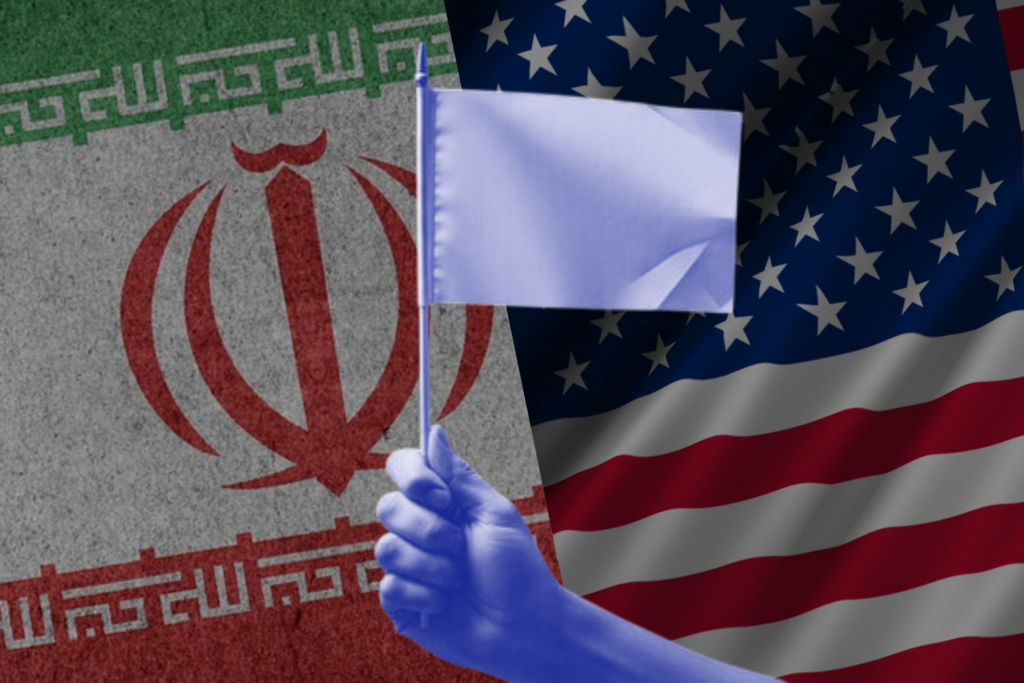
After 38 days of war between the US, Israel and Iran, on April 8th, two week ceasefire was announced What preceded the ceasefire? On 28th February, Israel and the United States “preventively” attacked Iran. You can read more in detail about this attack in our article : US & Israel Attack on Iran. Iran responded by attacking Israel back, and also attacking the allies of the United States and Israel in the region (like Kuwait, Saudi Arabia, Qatar, the United Arab Emirates, Bahrain, or Oman). Soon, military groups from Lebanon and Iraq joined Iran’s side. Iran also blocked the Strait of Hormuz, a strategic point in the world’s oil transportation. This led to an increase in the prices of oil and food (since oil is used for fertilizers and packaging). Donald Trump, the president of the US, didn’t expect this (although he should have). His loss of control over the situation was clearly visible in the level of hysteria in his posts on the Truth Social – a platform he created to communicate his decisions. He was alternating between announcing victory over Iran, negotiations with it, and giving it ultimatums… See for yourself: On April 8th, just hours before his last ultimatum was about to expire, he suddenly switched. And announced a two week ceasefire. How was the ceasefire negotiated ? The ceasefire may seem sudden, but in reality, weeks of negotiations preceded it. Actually, the US and Iran were negotiating even before the war started. Just two days before the “preventive” attack both countries met in Geneva to discuss Iran’s nuclear program (more details in this article). Immediately after the attack, Trump expected negotiations, which Iran denied. Negotiations restarted around mid-March, when the US delivered a 15-point plan to end the war to Iran via Pakistan. So far, this plan is not publicly available. However, the US was supposed to demand heavy restrictions of Iran’s nuclear program and its ballistic-missiles, end of Iran’s support for regional armed groups (like Hizballah in Libanon), and reopening the Strait of Hormuz. In return, the US would lift nuclear-related sanctions on Iran and help it to develop a civilian nuclear program. (This is basically what the US discussed with Iran in Geneva before attacking it.) Iran refused, proposing a 5-point plan instead. In which they demanded the US to stop killing Iranian officials, end all hostilities, guarantee that no other war is waged against Iran, pay reparations, and accept Iran’s sovereignty over the Strait of Hormuz. Pakistan, the mediator in this conflict, then issued another 5-point initiative together with China. Demanding immediate end of all hostilities, start of peace talks, security of nonmilitary targets, security of shipping lanes, and respect of the United Nations Charter. On 1st April, Trump claimed that Iran asked him for a ceasefire. Iran denied it. While Trump was giving ultimatums and tweeting that “the whole civilization will die tonight”, diplomatic negotiations were culminating in Pakistan. The American side was represented by the US vice president JD Vance, US special envoy to the Middle East Steve Witkoff, and Trump’s son in law Jared Kushner. The Iranian delegation was composed of Foreign Minister Abbas Araghchi, Parliament Speaker Mohammad Bagher Ghalibaf, and four senior commanders from Iran’s Revolutionary Guard. Although the composition of this group sounds a bit like the beginning of a joke, together they negotiated a temporary ceasefire. Terms of the ceasefire The ceasefire has 10 points. However, what these points are, is not yet crystal clear… Several versions are circulating in the press. And the whole situation is complicated by the fact that before this final 10-point plan, there was another 10-point plan proposed by Iran (and strongly rejected by the US). Certain is that the ceasefire will last for 14 days, during that time attacks on both sides will stop and the Strait of Hormuz will be reopened. The versions circulating in the press most often mention these other conditions : Aftermath The ceasefire is only a temporary solution. Diplomatic negotiations continue in its background. It is possible that the US and Iran will extend the ceasefire or end the war altogether. However, it is also possible that they will not reach an agreement and, when the ceasefire ends after two weeks, they will start attacking each other again. So far, this scenario seems more realistic given that: Why should we care about it? Because a ceasefire does not mean the end of the conflict. But people often make the mistake to interpret it that way. So, they miss the “final solution”. Remember how the ceasefire in Gaza turned out? – Exactly! Sources: Khamenei’s top aide Larijani rules out negotiations with US after Trump says ‘I have agreed to talk’ — What’s next for Iran Iran rejects US ceasefire plan, issues its own demands as strikes land across the Mideast – The Washington Post U.S. Sends Iran 15-Point Plan to End War | UANI Iran dismisses U.S. ceasefire plan, issues counterproposal as strikes land across the Mideast | PBS News Five-Point Initiative of China and Pakistan For Restoring Peace and Stability in the Gulf and Middle East Region_Ministry of Foreign Affairs of the People’s Republic of China Oil, strait of Hormuz and empty threats: a timeline of Trump’s flip-flopping on the Iran war | Donald Trump | The Guardian Pakistan says ceasefire efforts underway as Iran war continues | Arab News The Islamabad Accords: Framework, Preparations, and the Long View Iran warns it will respond if Israeli attacks on Lebanon don’t stop immediately – BBC News Has Iran’s 10-point plan changed, as JD Vance claims? | US-Israel war on Iran News | Al Jazeera Iran warns it will respond if Israeli attacks on Lebanon don’t stop immediately – BBC News What is Iran’s 10-point conditions for ceasefire and negotiations – The Hindu Will the Cease-Fire With Iran Hold? | Foreign Affairs What we know about the US and Iran’s ceasefire deal
Hormuz Crisis : Story of the Last Week
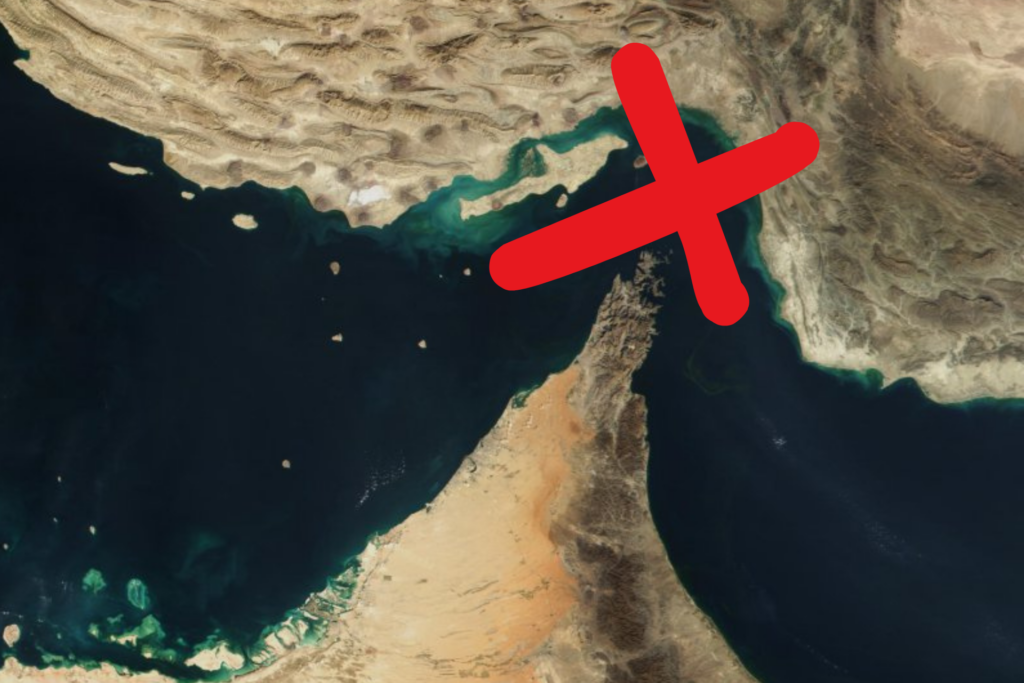
After the US and Israel attacked Iran on 28th February, Iran responded by blocking the Strait of Hormuz, a strategic point in the world’s oil transportation. What does this mean for the world? And how do one even block a strait? Let’s look at it: What Is the Strait of Hormuz? Strait of Hormuz is a 33 kilometres wide (at its narrowest point) strip of water between Iran and Oman connecting the Persian Gulf to the Indian ocean. It’s the only way out for oil tankers from Saudi Arabia, Iraq, Kuwait, the United Arab Emirates, and Iran itself. Every day 25% of the world’s oil passes through the Strait of Hormuz – or actually used to pass… Even though the Strait itself is in international waters, United Nations rules allow countries to control waters up to 12 nautical miles (= 22kilometres) from their coast – and that’s exactly what Iran is doing now. What Does “Blocking the Strait of Hormuz ” Look Like ? Iran’s Islamic Revolutionary Guard Corps broadcasted a message to radios of ships present in the area, that every ship that tries to pass through the Strait of Hormuz would be attacked. And it didn’t just stay with words: Iran actually fired drone and missile strikes on several commercial ships. There is also a suspicion that Iran may have laid sea mines near the strait’s entrance, making passage physically impossible without risking an explosion. What’s the Impact ? As a result of the blockade, the shipping companies are changing routes – now they are mainly using land transport through Jordan and Syria. Which takes much longer, so it costs more and delays deliveries. Due to the war in the Middle East, global oil prices already rose by 20%, hitting 120 dollars per barrel – the highest price since 2008. However, rising oil prices are not the only consequence. The blockade can also affect the development of the whole conflict. Whereas Benjamin Netanyahu (Israeli prime minister) went into this conflict determined to win at all costs, even if it took a long time, his ally Donald Trump (US president) had a different vision… He wanted a quick, decisive strike on Iran – something he would sell as an effective victory with zero costs to its voters. But with the strait blocked, this won’t work. Trump can’t declare victory if the global economy is spiraling into crisis. He could, but who would believe him? Has Something Like This Happened Before? The Strait of Hormuz blockade isn’t the first case where the maritime transport was taken hostage. During the war between Iraq and Iran in the 80s, both sides attacked oil tankers in the Persian Gulf which resulted in an increase in oil prices and panic on global markets until a ceasefire was negotiated. Another example is the Suez Canal Crisis in 1956. After Egyptian President Gamal Abdel Nasser nationalized the Suez Canal, which was previously controlled by Britain and France. Britain, France, and Israel launched a military campaign to retake control of the canal. This led to the blockage of the canal, disrupting the flow of goods and thus increasing transportation costs. The Suez Canal was then blocked once again in 2021. When the Ever Given container ship got stuck in there for six days. This incident cost an estimated $9.6 billion per day in global trade losses. Why Should We Care? Because the blockade of the Strait of Hormuz will cause prices to rise. Not only in transport, when both gasoline and airline tickets will be more expensive, but also in food. Since oil is used not only for fuel but also for fertilizers and packaging. Remember the energy crisis in 2022 when Russia attacked Ukraine… Because the conflict could widen: Trump is already trying to drag other countries in it: Wanna Know More? Check out these articles (that were btw. used to write this article;):
War in Middle East : Story of the Last Week

After February 28, when Israel and the United States “preventively” attacked Iran, the conflict expanded to other states. Which ones? And why? Let’s break it down: Basically, there are four possibilities how other countries got dragged in the war: either they were friends of US or Israel, and because of that they were attacked by Iran; or by its allies; or they were friends with Iran, and decided to support it by attacking Israel or countries that were friends with US or Israel, or they were Iraq. Countries Attacked by Iran All these countries are somehow connected to the United States or Israel – whether it is because they have American bases on their territory, or because they maintain friendly relations with those countries. By attacking them, Iran is trying to destroy American infrastructure, as well as put pressure on their governments to distance themselves from the US/Israel, and to turn public opinion against their leaders for aligning with the West. Countries of Gulf Cooperation Council The Gulf Cooperation Council is a political and economic union of six Arab states bordering the Persian Gulf: Kuwait, Saudi Arabia, Qatar, the United Arab Emirates, Bahrain, and Oman. Founded in 1981 (during the Iran-Iraq War), its purpose was to protect member states from regional instability. All are oil-rich nations that rely on stability for economic prosperity, often acting as mediators in regional conflicts (eg. easing tensions between Israel, the US, and Iran). Naturally, the US-Israel strike on Iran was the last thing they wanted – it threatened their economic interests. They opposed it from the start – but still paid the price… Azerbaijan Despite being a Muslim country, Azerbaijan maintains a good relationship with Israel. Iranian drones struck its autonomous Nakhchivan region. Azerbaijan also accused Iran of planning sabotage operations on its territory – but the Iranian government denied it claiming the sabotages were organized by its enemies who are trying to frame Iran. Turkey Iran also sent two missiles to Turkey. However, NATO, Turkey is part of, neutralized them. Countries Attacking US and Israel Lebanon : Hizbollah Lebanon was drawn into the war by Hezbollah, a Shiite Muslim political party and militant group operating independently of the Lebanese government (basically Hezbollah, is a state within a state). After the US and Israel attacked Iran, Hezbollah struck against Israel. Israel responded to it by attacking Lebanon back. Iraq Iran and Iraq were historically enemies (Iraq even attacked Iran in the 80s), but after Iraqi dictator Saddam Hussein’s fall, the two grew closer. Mainly because both are now led by Shiite muslims. So that’s why, in the current conflict, Iraq supports Iran. Or actually, parts of it do. Because Iraq is divided: between the Kurds, who have a semi-autonomous Kurdish region at the north of Iraq, and the Shiit rest of the country. Whereas the pro-Iranian militias from the Shiite-dominated south support Iran, the Kurds are against it. Kurds even host American bases on their territory. Those bases were bombed by both Iran and military groups from the pro-Iranian part of Iraq. These same pro-Iranian groups also attacked Saudi Arabia and other countries. Countries Attacked by Iranian Allies Cyprus A Lebanese missile struck a British base in Cyprus. While the UK refused to join the US and Israel strikes on Iran, it offered its bases to the US for defense purposes after Iran retaliated. Jordan A longtime US ally, Jordan assisted the US during last summer’s Twelve Day War. Now, its local US bases were attacked and damaged by Iran-backed militias from Iraq. Collaterals: Syria Syria is not officially at war, but due to its geographic position, Iran fires missiles at Israel over Syrian airspace. Debris from intercepted missiles has fallen on Syrian territory, causing damage and minor injuries. What Are the Consequences? The war has reduced and logistically complicated oil exports (e.g. the insurance rates for oil shipping companies skyrocketed because their ships are now in a high risk of strike). This is driving up oil prices. Attacks on oil refineries pose regional ecological threats. For example, a missile strike on a Tehran refinery caused a massive fire, leading to acid rain over the city. Hundreds of thousands of travelers are stranded across the Middle East. Airspace closures (due to missile risks) and mass flight cancellations have left many unable to fly. Sources: A Sprawling Middle East War Explodes | International Crisis Group How the unfolding war is affecting countries in the Middle East | AP News What are the differences between Iraqi Kurdistan and Iraq? From Rivals to Allies: Iran’s Evolving Role in Iraq’s Geopolitics – Middle East Council on Global Affairs Iran-backed militias intensify attacks against US, Israel and allies | Iran | The Guardian How an Incident on the Azerbaijan-Iran Border Became a Test for Diplomacy in the Region – The Times Of Central Asia Why Azerbaijan is important for Israel’s security – JNS.org Syria distances itself from the US-Israeli war on Iran – Enab Baladi Kuwait cuts oil production due to Strait of Hormuz closure
Why is There a War in Ukraine?
Even though the whole world talks about the war in Ukraine, not many people know this conflict’s background. Not because they would be stupid – war in Ukraine is actually pretty simple – but because it takes time to understand it. Some poeple don’t have this time. And then other people try to take advantage of them: spreading misleading or even purposely false information. The following article therefore summarizes all important moments in Ukrainian history relevant to the current war. Yeah, it’s long, but we tried – after all, we’re talking about more than a thousand years of development… We also didn’t want to leave out any important information. Putin and Russian propaganda often justify the war in Ukraine by selecting only what suits them from Ukrainian history – it’s hard to detect if you don’t have the whole picture – so here it is 😉 Kievan Rus’: How it All Began The story begins in the 9th century with Kievan Rus’, the first state formation of Slavs (before there were only tribes). Covering parts of modern-day Ukraine, Russia, and Belarus. Because Kievan Rus’ was very big, its ruler Vladimir the Great divided it into smaller principalities between his sons: But Kievan Rus’ never controlled all of modern Ukraine. The southern steppe dominated Turkic tribes – the Pechenegs and Cumans – who were constantly in conflict with Kievan Rus’ (everyone was constantly in a conflict in this time period). In the 13th century, Mongolian Empire invaded Kievan Rus’. It was more precisely one sector of Mongolian Empire called the Golden Horde. Kievan Rus’ fell apart. Its successor states were Kingdom of Galicia-Volhynia, Novgorod Republic and Vladimir-Suzdal. Ukraine between Poland, Moscow, and the Crimean Khanate Kingdom of Galicia and Volhynia was later divided between Poland and Latvia. Those countries were in their prime at that time, and later they formed a Polish-Lithuanian Union. Novgorod Republic and Vladimir-Suzdal were located in a territory of nowadays Russia, and Vladimir-Suzdal later transformed into Principality of Moscow, which is ancestor to nowadays Russia. In the 15th century, the Golden Horde transformed into the Crimean Khanate, a vessel of the Ottoman Empire. The word vessel can be a little bit confusing: it might feel like a synonym for friend or partner… But keep in mind, at this time of history, all states were competitors trying to secure their own safety, and get as much power as possible – event those three states on the territory of Ukraine: Polish-Lithuanian Union, Principality of Moscow, and Crimean Khanate Cossacks Into this dynamics emerged Cossacks. Semi-independent, combative groups with uncertain ethnic origin, which started to settle around the Dnipro river in the 16th century. Basically at a meeting point of our three states (Polish-Lithuanian Union, Moscow Principality, and Crimean Khanate) The combativeness of Cossacks was making them hard to conquer, and at the same time – in the eyes of Poland and Crimean Khanate – an ideal army: if they paid them enough money, they would go fight anyone. In the 17th century, Cossack leader Bohdan Khmelnytskyi, sought to renew Kievan Rus’. To accomplish that, he allied with the Crimean Khanate. At first they were winning – Cossacks even managed to form their state: so-called Hetmanate (name derived from “hetman”, the leader of the Cossacks). But after some time, the Crimean Khanate got scared by the power Cossacks were gaining and betrayed them. Cossacks had to search for a new ally. Out of all possibilities, Khmelnytskyi resorted to Moscow. He had to – nothing else worked out. This 1654 Pereyaslav Agreement between Cossacks and Moscow was very unequal. Cossacks had to accept the sovereignty of the Tsar. Hetmanate, which was pretty much the majority of nowadays Ukraine, fell under the full control of Russia. After Khmelnytskyi died, his successors tried to get Hetmanate out of the Russian influence – without any success. Since Poland was also making territorial claims, Ukraine was split along the Dnieper River: the west went to Poland, the east stayed with Russia. In the 18th despite its big size, Poland lost its power and neighboring countries Prussia, Russia and the Habsburg monarch decided to use this opportunity and divided Poland between themselves. (It’s called “three partitions of Poland”). This meant the Russian sphere of influence moved more to the west and the only part of nowadays Ukraine left out was Galicia, now belonging to the Habsburg monarchy. Neither Habsburg monarchy nor Russia were ideal for Ukrainians to live in. They were both trying to suppress their national identity. Russia maybe a bit more, since they were trying to claim Ukrainian language is just a branch of Russian language. The German-speaking Habsburg monarchy obviously couldn’t use this argument. When Russians are nowadays making territorial claims about Ukraine, this historical period is one of their arguments. Another one is Crimea. A Glimpse into Crimea While Ukraine’s heartland was divided between Poland and Russia, Crimea followed its own path. Originally ruled by the Crimean Khanate, a vassal of the Ottoman Empire, it fell to Catherine the Great in the 18th century after Russia won in the war against the Ottomans. Crimea stayed under Russia until 1954. As all parts of the Soviet Union, Crimea underwent strong Russification. It was the worst under Stalin, who tried to get rid of Crimea’s indigenous population, Crimean Tatars, by deporting them to gulags. In 1954, Soviet leader Nikita Khrushchev donated Crimea to Ukraine. At that time it was a symbolic gesture with little practical impact, since both were part of the USSR. However it started to be problematic after the fall of the Soviet Union. After the fall of the Soviet Union, there were some attempts to make Crimea independent. Historically and ethnically, Crimean Tatars truly don’t have much in common – neither with Russia, nor with Ukraine. They are a Turkic ethnic group, with a language from Turkic languages family, and their predominant religion is Islam. Plus until the 18th century they had their own country: Crimean Khanate. So, in an
PHOTOREPORTAGE: Solidarity Visit to Ukraine

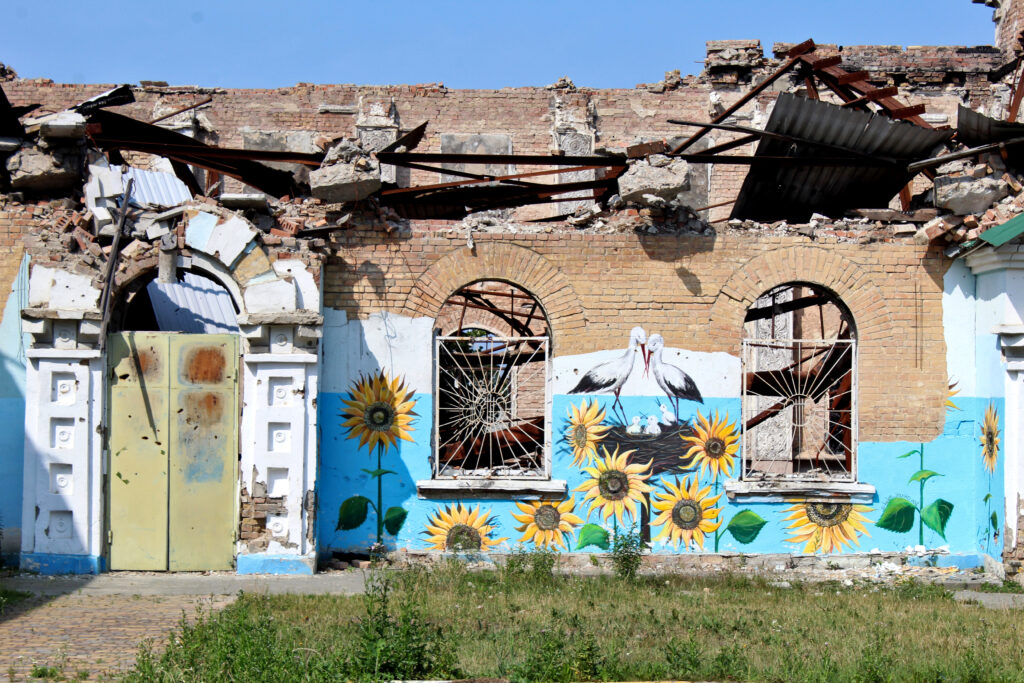
In July 2023, I took part in solidarity visit to Ukraine organised by Ukrainian Leadership Academy. We spend one week visiting Kyiv, Lutsk, and Lviv, and exploring local humanitarian aid organizations.
One day I was a refugee with no country to return to, the next day I was a Syrian in France : AnnaTalks with OMAR

When the refugee crisis began in 2015, I was 14 years old. Back then, I wasn’t yet interested in politics – all my opinions in that regard were adopted from the “trusted adults” in my life (a.k.a. my parents and teachers). I vividly remember the moment when I was cooking in the kitchen, and listening to my dad’s warnings about those “dangerous migrants coming to Europe on boats”. Perhaps at the same moment, a few hundred kilometers away, Omar’s boat was approaching the Greek border… I met Omar in 2023, when we both worked at Radio WNE and when Syria was still under the dictatorship of Bashar al-Assad. When he told me the story of his arrival in Europe, the story you’re about to read, I was shocked – it sounded like an action movie. And yet it is the reality – and quite often the only way for tens of thousands of people to preserve their morals and escape prison or even death. My dad’s words came to mind again: Would he change his opinion about refugees if he heard Omar’s story? Would others change theirs as well? The thing is that while alarmist stories about refugees frighten us on a daily basis, the testimonies from the actual refugees are not as common. This is often due to the language barrier – for example, Omar doesn’t speak English – but also to the fact that people simply tend to stay in their national communities – even though there are many foreigners in France, I know from my own experience that the French and the foreign communities rarely meet in real life… But that’s exactly why podcast AnnaTalks exists and why, in March 2025 I interviewed Omar for it. And because the interview is in French and I don’t want to deprive those of you who don’t understand it, you can find an English translation below. Enjoy reading! What happened in Syria? To begin, could you describe what it was like growing up in Syria for you ? I grew up like most Syrians who were born in Syria, I went to school there and stayed until 2013, when I was about 17 or 18 years old. I lived in a town called Douma, around 15 km from Damascus. We were ordinary people living in their city. How would you describe Syrians as a nation? Is there some trait that all Syrians have in common? My view of Syria is that we actually didn’t know each other before the revolution. In Syria there are around 20 different ethnic and national groups, so there is not a single national identity shared by everyone. I think most Syrians feel like some second-class citizens because we don’t really have this concept of “citizenship” – you never hear it in Syria. But the one thing we did all share was the fear of the secret intelligence services and the feeling that this country does not belong to us. I think the dictatorship we lived under is the only thing that the 24 millions of Syrians share. Could you explain what happened in Syria? Give some context about Assad’s regime and about what happened in 2011? I’ll be very simple: In 1970, Hafez al-Assad, the former Syrian president and the father of Bashar al-Assad, took power through a coup and he ruled for 30 years. When he died in 2000, the Syrian parliament modified the constitution so his son Bashar could take over – just to keep power in the hands of the family. Bashar al-Assad promised us to make political and economic reforms. And he partially did – things got a bit better in the economy. But the political violence in Syria was the same as during his father’s time. In 2011, after the Arab Spring revolutions started first in Tunisia, then in Egypt, it arrived in Syria. In March 2011, a group of boys, between 13 and 15 years old, wrote on the walls of the city of Daraa in the south of Syria “It’s your turn now, Doctor”. “Doctor” referring to Bashar al-Assad, because he used to be an ophthalmologist. That’s when the revolution really started. At first, it was not a military revolution, just peaceful demonstrations, demands for political freedom, freedom of expression. City after city joined. Until we arrived at a moment when the whole of Syria was demonstrating. I was 15 at that time and I joined the demonstrations in my city Douma. And I saw the Syrian army shoot at peaceful people with my own eyes. We weren’t even calling for the fall of the regime at first, nor for the condemnation of Assad – we were too afraid to do that. But the regime escalated the violence. By the end of 2011, they were bombing entire cities. In 2013, they committed the first chemical attack. It was in my city. It was 21 August 2013. At that moment we understood that even if we did not participate in demonstrations or in military actions, we would be killed. Since, we had lost our house, and my parents had lost their jobs, we couldn’t leave so easily. We had to sell our car, and take a bus to the north of Syria, to the Turkish border. We spent 11 or 12 hours on the bus. On that journey, for the first time, I saw Daesh and all the armed groups active in Syria at the time. Can you explain what Daesh is for those who don’t know? Daesh is a jihadist military group that wants to apply Sharia to the entire world. For them, democracy, the concept of citizenship – it doesn’t exist, that’s for the West, for Christians, for people who don’t resemble them. They try to apply the Quran to the people no matter where they are. Daesh is an international group. They are not Syrians, they are not Iraqis, they are not Tunisians. Members of Daesh come from all over the world : France, Belgium, Europe…