
PHOTOREPORTAGE: Czech Media Independence Protests
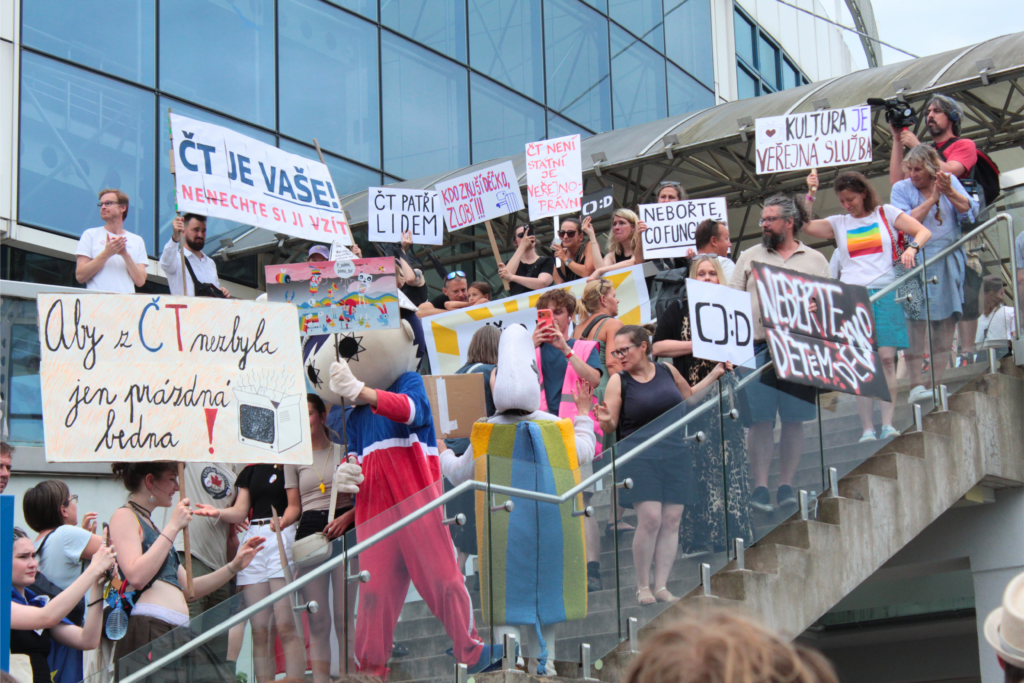
On 15th June 2026, the Czech government approved a law that abolishes licence fees for public service media and replaces them with direct funding from the state budget. This means less money for public service media but also a loss of independence from the Czech government…
US and Iran peace deal explained as if you were five
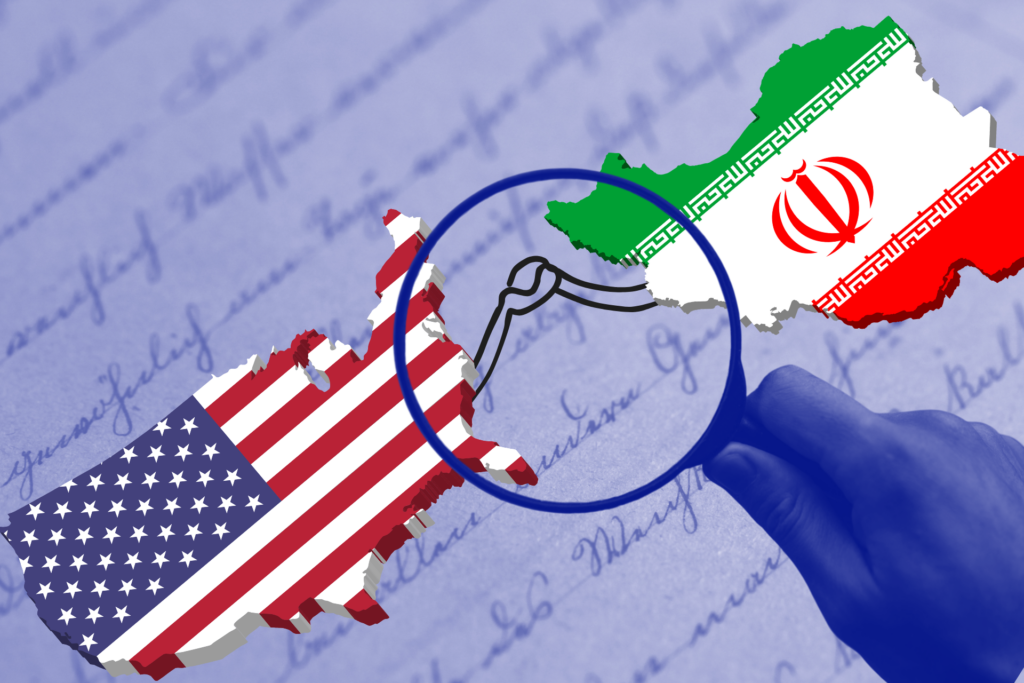
On 17th June, Iran and the United States signed a memorandum to end the war they have been waging since 28th February. Why? Read this article. What did each of them commit to in the memorandum? The best way to find out is, obviously, to read the memorandum directly. “But that memorandum is surely written in terribly difficult administrative English,” you say. And we hear you – therefore we translated it into the mere mortals’ English: Islamabad Memorandum of Understanding between the United States of America and the Islamic Republic of Iran 1 — The United States of America and the Islamic Republic of Iran and their allies in the current war are signing this MOU to declare the immediate and permanent termination of military operations on all fronts, including in Lebanon, and undertake from now on not to initiate any war or any military operation against each other, and to refrain from the threat or use of force against each other, and ensuring the territorial integrity and sovereignty of Lebanon. The final deal will confirm the permanent termination of the war on all fronts, including in Lebanon and other provisions of this paragraph. Translation: The war ends immediately. Both sides promise not to attack each other again – anywhere, not even in Lebanon. This also applies to their allies (a.k.a Israel and Hizballah). This memorandum is just the beginning – a proper final peace deal is yet to come. 2 — The United States of America and the Islamic Republic of Iran undertake to respect each other’s sovereignty and territorial integrity and to refrain from interfering in each other’s internal affairs. Translation: The US and Iran will respect each other’s territorial sovereignty and stop getting into each other’s business. 3 — The United States of America and the Islamic Republic of Iran commit to negotiating and achieving the final deal in maximum 60 days, extendable with mutual consent. Translation: After signing this memorandum they have 60 days to negotiate that proper final peace deal. If they both agree, they can extend this deadline. The Strait of Hormuz 4 — Immediately upon the signing of this MOU, the US will begin the removal of its naval blockade and any disturbances or impediments against Iran, and will fully end the naval blockade within 30 days. During this period, the traffic of vessels will be in proportion to the numbers of pre-war traffic being restored by Iran. The US further undertakes to remove its forces from the proximity of Iran within 30 days after the final deal. Translation: The Strait of Hormuz will be immediately reopened so that as many ships as before the war can pass. The US has 30 days to completely remove its military ships from Hormuz. And, once the final peace deal is signed, 30 days to remove its military forces from the region. 5 — Upon the signing of this MOU, Iran will make arrangements using its best efforts for the safe passage of commercial vessels with no charge, for 60 days only, from the Persian Gulf to the Sea of Oman and vice versa. The traffic of commercial vessels will immediately start, and considering the need for removing the technical and military obstacles, and demining by Iran will be instated within 30 days. Iran will conduct dialog with the Sultanate of Oman to define the future administration and maritime services in the Strait of Hormuz in discussion with other Persian Gulf littoral states in line with the applicable international law and the sovereign rights of coastal states of the Strait of Hormuz. Translation: Iran will reopen Hormuz. For the first 60 days, commercial ships can sail through there for free. Iran will also clear the mines they put there within 30 days. After that, Iran will negotiate with Oman and other Gulf countries about who runs the strait long-term. Financial side of the peace deal 6 — The United States of America undertakes with regional partners to develop a definitive, mutually agreed plan with at least USD 300 billion for the reconstruction and economic development of the Islamic Republic of Iran. The mechanism for the implementation of this plan will be finalized as part of a final deal within 60 days. All required licenses, waivers and permissions needed for the relevant financial transactions will be granted by the United States of America. Translation: The US and its allies will put together at least 300 billion $ to rebuild Iran. And what about sanctions? 7 — The United States of America undertakes to terminate all types of sanctions against the Islamic Republic of Iran, including the United Nations Security Council resolutions, IAEA Board of Governors resolutions, and all unilateral US sanctions, primary and secondary, in an agreed upon schedule as part of the final deal. The Islamic Republic of Iran and the United States of America acknowledge the critical importance of the sanctions termination issue above mentioned, and expressed their intentions to immediately address these issues in the negotiations in order to achieve mutual agreement on them. Translation: The US will drop all sanctions against Iran – everything, from UN resolutions to its own unilateral ones. And Iranian nuclear program? 8 — Iran reaffirms that it shall not procure or develop nuclear weapons. The US and Iran have agreed to resolve the disposition of stockpiled enriched material pursuant to a mechanism that will be mutually agreed upon in accordance with the schedule mentioned in paragraph seven, with the minimum methodology to be down blended on site under the supervision of the IAEA. The two parties also agreed to discuss the issue of enrichment and other mutually agreed matters related to the Islamic Republic of Iran’s nuclear needs, based on a satisfactory framework being agreed upon in the final deal. The final deal will confirm the provisions of this paragraph. The United States of America and the Islamic Republic of Iran acknowledge the critical importance of the nuclear issues above mentioned. They express their intention to immediately
Yes to Israel, no to Russia. Quo vadis, Eurovision?
This year the Eurovision Song Contest celebrated its 70th anniversary. The winner of this jubilee year is Bulgarian singer Dara. Was it because the audience liked “Bangaranga” so much, or rather because Bulgaria is not Israel? And what about Russia? What is Eurovision? The Eurovision Song Contest is an annual music competition organized by the European Broadcasting Union (EBU), a non-profit association of mostly public, but also some commercial, radio and television stations. Eurovision was created in 1956 to unite Europe (that was still a little bit divided after the 2nd world war) in an amusing, laidback way. Which would be also apolitical – at least that’s what’s proclaimed. The reality is a bit more complicated… 💡: Listen to the most legendary Eurovisions songs Can Eurovision be really apolitical? The final round of the 70th Eurovision took place on Saturday, 16th May, in Vienna. And just like the previous year, it was not without a tense atmosphere around the participation of Israel. Several protests took place in the streets of the Austrian capital because of it. And the Netherlands, Ireland, Iceland, Slovenia and Spain even refused to participate. The final vote was also tense, with Bulgarian Dara and Israeli Noam Bettan facing against each other. In the end Bulgaria won by 173 points. This scenario is weirdly similar to what happened last year when Austria beat Israel. Eurovision as Israeli soft power tool Even though Israel won 4 times throughout the history: in 1978, 1979, 1998 and 2018, in other years, we’ve rarely seen it score top ranking spots. Even in 2024, when the world was still shocked by Hamas’s October attack, Israel came 5th. So how come that in 2025, when we could hear much more critical voices on Israel, it almost won? The answer lies in a recent investigation by The New York Times. According to it the Israeli government spent more than a million dollars on online advertisements promoting Israel’s participation in Eurovision. Diplomats and various Israeli advocacy groups also spread videos on social media calling for repeated voting for the Israeli singer. Because yes, in Eurovision you can vote multiple times. Indecisive people surely appreciate that, however it leaves room for cheating. This year, Eurovision prohibited both of the promotion strategies Israel used. Ironically, it was because last year several European media reported that Israel had paid for an online campaign in an attempt to influence the European audience. We’ve already been there… This benevolence of Eurovision towards Israel might seem surprising compared to its attitude towards Russia. After its 2022 invasion of Ukraine, Russia was quickly banned from the competition. Well, “quickly”; after 14 years of controversial behavior, that began with the invasion of Georgia in 2008, continued with the annexation of Crimea and western parts of Ukraine in 2014. Eurovision has long been benevolent towards Russia in the same way it is now benevolent towards Israel. On the contrary, Eurovision was no longer so benevolent when in 2009 Georgia tried to “get back” at Russia at least musically with the song “We Don’t Wanna Put In”. “EBU told Georgia that the song’s lyrics did not comply with the rules about “lyrics, speeches, gestures of a political or similar nature”, and asked Georgia to either re-write the lyrics of the song, or select another to compete. The day after Georgia withdrew from Eurovision 2009 – which was held in Russia,” says the Eurovision website. The boycott of Russia came only after the political consensus on this country unified across Europe as a result of the 2022 invasion. In the case of Israel, this unification simply hasn’t happened yet. The killings Israel is committing in Gaza are being done in the name of its self-defense. And however disproportionate this self-defense is, some Europeans still see it as justifiable because it didn’t come unprovoked. The large Israeli diaspora in European countries also plays a role. Public broadcasters (= members of the EBU) may fear a possible negative response, or even accusations of anti-Semitism, in case they oppose Israel’s practices or participation. Is a boycott even the effective solution? Speaking of boycotts, we should also ask how effective they are. Because even though Russians cannot compete under their own flag, they still find their way in Eurovision. For example, the songwriter of Dara’s winning “Bangaranga”, Dimitris Kontopoulos, worked on several Russian Eurovision songs together with Philipp Kirkorov, who’s a supporter of Russian leader Vladimir Putin. Eden Golan also had some ties to Russia. Although in 2024 she represented Israel in Eurovision, she spent a significant part of her life living in Russia. Where she was trying for a musical breakthrough by performing at various competitions – including in occupied Crimea. Although this doesn’t immediately make her an active Putin supporter, it certainly doesn’t make her his critic Apoliticality or hypocrisy? As a reaction to the accusations of double standards in Eurovision, its director, Martin Green, said that Russia could “theoretically” be allowed to rejoin the competition if its broadcaster proved they are independent of Putin’s regime. He probably wanted to be diplomatic, but it doesn’t paint a very good picture of Eurovision. While it tries to appease openly aggressive countries by turning a blind eye and offering loopholes, it is merciless towards their victims who want to “defend” themselves with nothing but a mere satire… But was it ever any different? Even the organization of the very first Eurovision in 1956 was actually a political concept: to start a cooperation between European public broadcasters. And this year, politics were not absent either. For example, the song by rapper Satoshi “Viva, Moldova!” is basically a patriotic manifesto calling for the pro-Western integration of Moldova. And the Croatian band Lelek did not abandon the political theme either, singing about the oppression faced by Croatian Catholics in Bosnia and Herzegovina under the rule of the former Ottoman Empire. Eurovision is simply never held in a vacuum. The ambition to be “apolitical” won’t magically erase the existing relations between competing countries.
European Parliament in Nutshell: May 2026
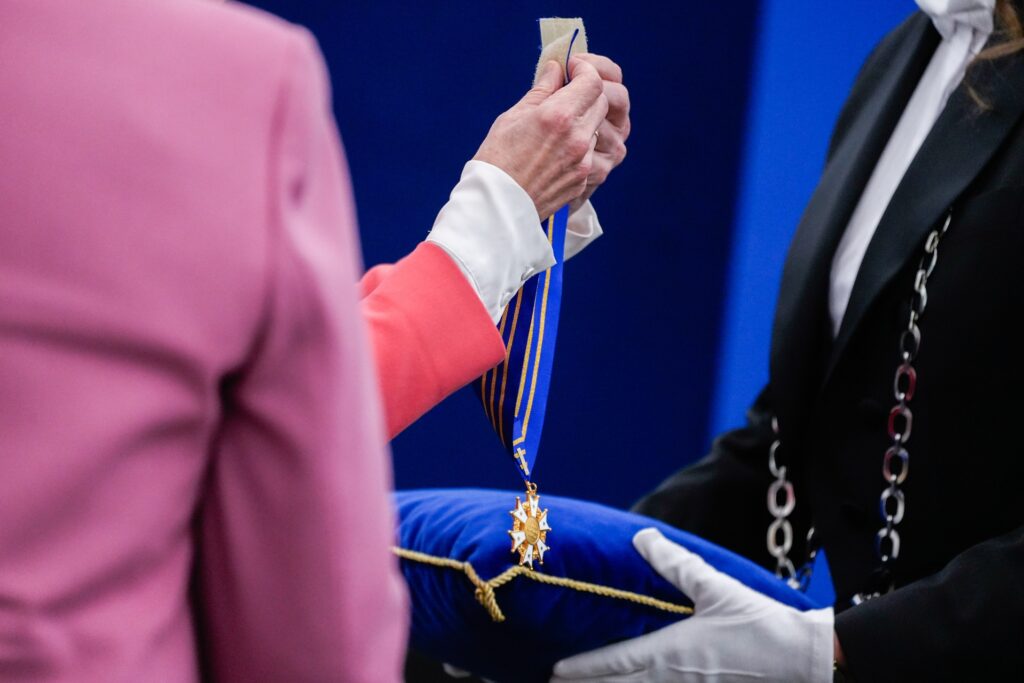
Every month, the European Parliament plenary session takes place in Strasbourg. And every month, IR Media follows it closely. These are the highlights of the last plenary session taking place from 18th to 21st April 2026: Risky foreign investments in EU A strong European Union is the last thing many powerful countries want. Because it’s a competition for them. So some of them are trying to weaken it. Most of the time this happens in a friendly way. For example these countries invest in European sensitive sectors like defence, artificial intelligence, financial services or critical raw materials. Through these investments they not only make Europe dependent on themselves, but they also gain access to sensitive information they could potentially missuse… So this Tuesday, the European Parliament decided that the foreign investments in those sensitive sectors will be screened. And presented the rules for how it will be done. The goal was not to make these rules too complex, so it wouldn’t discourage foreign investors. The EU still wants foreign investors, but given the currrent geopolitical tensions, it wants to have a better overview of them. Deterioration of democracy in Slovakia On Wednesday Eurodeputies adopted a resolution in which they express concern over how the current Slovak government is systematically weakening democracy. For example by reforming criminal law so there would be less strict rules on corruption. Or by changing the constitution, so that it wouldn’t have to respect the European law, and restored the so-called “traditional values”. Which, in the Slovak understanding, means things like not recognizing the existence of trans people or conditioning sex education by parental consent. Slovak government also maintains warm relations with Russia, and is trying more and more to silence public service media and restrict women’s rights. They are also not transparent with how they are using EU funds. A suspicion exists that they are even abusing them to build luxury private properties. Parliament therefore called on the European Commission to look into Slovakia and determine whether it is embezzling European money. European Order of Merit During this plenary session, the European Order of Merit was awarded. The European Order of Merit was invented in 2025 to appreciate individuals who have exceptionally contributed to European unity, democracy, and values. This year, 20 people received the Order. Among them were, for example: The next sitting will be held from 15th to 18th June 2026 in Strasbourg
European Parliament in Nutshell: April 2026

Every month, the European Parliament plenary session takes place in Strasbourg. And every month, IR Media follows it closely. These are the highlights of the last plenary session taking place from 27th to 30th April 2026: Protection of cats and dogs On Tuesday the European Parliament approved the first common European rules for the breeding, sale, and care of dogs and cats. Until now, every country had different rules, which made the system more confusing and easier to abuse by people that were illegally trading animals. The new rules will bring obligatory microchipping and registration of animals in national databases. The regulation also prohibits breeding practices that cause suffering, like inbreeding, or breeding of animals with extreme physical characteristics. These rules will apply even to ordinary pet owners. But don’t worry, after they enter into force, you will have 10 years to register your dog and 15 years to register your cat. Vote by proxy for eurodeputies on maternity leave For a long time, the eurodeputies could vote only if they were physically present in the European Parliament. If they had to stay home to take care of their baby, their vote was wasted… For this reason you could sometimes see eurodeputies bringing their babies into hemicycle – they simply didn’t want to lose their voice. But this changes now. On Wednesday, the European Parliament supported the vote by proxy for its members on maternity leave. Vote by proxy means, that you can delegate someone to vote in your place – usually some colleague… The vote by proxy will be possible between three months before the expected date of birth to six months after the birth. There is one small problem though: this option is only available to women. Men on paternity leave won’t have these accommodations… New definition of rape as sex without consent During this plenary session, MEPs also called on the European Commission, whose role is to propose new EU laws. To propose a uniform definition of rape as sex without consent. Out of 27 EU countries, 17 already define rape like this. But the rest defines rape as an act involving either the use of physical force or some form of coercion like threats, or blackmailing… The problem is that this definition doesn’t take into account cases where the victims are in such a state that the rapists don’t need to use violence or threaten them – for example when they are blacked-out drunk or sleeping like Gisele Pelicot. Redefining rape as the absence of consent would make it easier for such victims to seek justice, and it would cost no one anything (except the rapists) The next sitting will be held from 18th to 21st May 2026 in Strasbourg
Controversial Law Threatens Czech Media Independence : Story of the Last Week

Czech people are protesting over a controversial law that threatens the independence of public service media. What’s going on? The Czech government, more precisely Minister of Culture Oto Klempíř (from the far-right Motorists Party), has proposed a law that would change how public media (= Czech television “ČT” and Czech Radio “ČRo”) are funded. Instead of being financed by licence fees paid by citizens, they would get money directly from the state budget. The government claims this will save money and cut bureaucracy. But journalists, legal experts, and media watchdogs (like Reporters Without Borders or the European Federation of Journalists) warn that this will make media dangerously dependent on the Czech government. Once funding comes from the state, politicians can decide how much (or little) money public media get based on how much those media criticize them. What are public service media? In total, there are 3 types of media: Public service media Public service media are official national media that are not-profit. This doesn’t mean that they wouldn’t make any money, it means that making money is not the main goal of their existence (unlike commercial media). The main aim is to serve the citizens, and their and their country’s interests. So instead of making only content their public wants to see or hear, they also make content their public NEEDS to see or hear as citizens – like emissions about their country’s history, news, or special broadcast during natural disasters or wars with safety instructions… Yes, such content isn’t always the most attractive, but it helps people to step outside their echo chambers and have access to verified information. Because unlike private media, public service media are more transparent about their functioning, funding, informational sources, and ethics. For this reason, public service media are also a good source for you, if you, as a foreigner, want to find out what is happening in some country and want to have it firsthand. Here is the list of public service media by country. Private/commercial media Commercial media are privately owned. There is always one person behind who is trying to get as much money as possible from advertisements placed in their programs. The ultimate goal is to create content that attracts huge numbers of people. Because the more people are watching, the more will see the advertisement (and the more money the medium makes from it). Unlike public media, commercial media have no legal obligations to provide unbiased news, educational content, or emergency information in times of crisis. Community media Community media fall in between these two categories. They are non-profit like public media, but they are not national institutions. So there are no obligations for their content production – similarly like commercial media, they can create whatever they want. Although, unlike commercial media, they are not dependent on advertising (because they aren’t supposed to make huge profits). They are funded by their members and sometimes by subsidies. And since it’s the community who pays, it’s also the community who decides what content the media will produce. IR Media belongs to this category. Types of financing of public service media Even though all public service media are financed by citizens of the countries in which they exist, there are different ways of how it’s done: What does the law propose? The proposed law would replace licence fees with direct funding from the state budget. The government argues this will save money and reduce bureaucracy, since collecting licence fees does cost some administrative resources. But what they forget to say is that it would also put the public media at their mercy… Why is the law controversial? Since the state budget from which the media would be financed is in the hands of the government, the media would also be in the hands of the government. Which is not a very hopeful prospect, given that the current Czech government includes right-wing extremists from Motorists Party, who do not hide their admiration for Nazi ideology, threaten their ideological opponents (including the Czech president), and carry out purges among state employees calling it “deratization”… The change in financing would also mean less money for public media. Licence fees currently bring in around 5 billion CZK per year (about €200 million). The government hasn’t guaranteed the same amount from the state budget, and historically, state-funded media get underfunded – especially when politicians want to silence them. Moreover, the law is poorly written and legally flawed. Experts say it lacks clear definitions of key terms and introduces experimental concepts that aren’t used anywhere else. This makes it easy to abuse – politicians could interpret the rules however they want to punish unloyal media. Why should we care? Because such a law can be easily proposed even in your country. Especially nowadays, when we observe the increase in popularity of far-right populistic movements across countries. When they manage to come to power, one of the first things they do is silencing their critics – including the media. Because such movements already do enormous efforts to convince you that you don’t need public media because you can “pay for the content you want to see”. Because someone needs to do the dirty job of covering boring, commercially unprofitable but important stuff. If public service media didn’t exist, who would it be? Because commercial media certainly wouldn’t… How can you make a difference? Follow the story: check the below-mentioned sources to get deeper information. Support independent media: whether it’s Czech public broadcasters or outlets in your own country, they need audiences and funding to survive. Pressure your politicians: if they try introducing shady laws, sign petitions, go to demonstrations, send complaints… If you’re in the EU, demand that they enforce the European Media Freedom Act. Stay alert: don’t abandon the story once it loses hype. Check out for latest developments. Sources: Public service media debate escalates: Employees on strike alert as Babiš meets Chudárek | Radio Prague International Czechia: government’s chaotic reform of public broadcasters raises alarm,
Elections in Hungary : Who is Péter Magyar ?

For 16 years, Viktor Orbán’s conservative, Eurosceptic and openly pro-Russian Fidesz party ruled (and slowly eroded democracy in) Hungary. But last Sunday’s parliamentary elections brought an end to his rule. On 12th April 2026, Hungary elected Péter Magyar and his Tisza party. Who is Péter Magyar and how much of a change he is for Hungary? Who Is Péter Magyar? Péter Magyar wasn’t always Orbán’s enemy… As a lawyer from a rich family with Catholic education, he was actually the prototype of a Fidesz party member. And so was his wife, Judith Varga, the Minister of Justice under Orbán’s government. For years, Magyar moved in Fides’s inner circle. He held well-paid positions in state and semi-state companies, including the Hungarian Development Bank or the Student Loan Center. But everything changed in 2024… From Orbán’s ally to his greatest enemy In February 2024, it was revealed that Hungary’s president Katalin Novák had pardoned a man convicted of helping cover up child sexual abuse in a state-run children’s home. The pardon was signed by Judith Varga. The scandal shocked Hungary. It was one of the first moments when some of Fidesz’s supporters started questioning their choices. Both Novák and Varga resigned. But these two were only the top of the iceberg – its underwater part remained unmelted. And Péter Magyar started to criticise it. Even though at that time he was already divorced from Varga, at first he somehow defended her in his Facebook post by saying that he “doesn’t want to be a part of a system when the true leaders hide behind women’s skirts.” However, he soon sharpened his rhetoric against Varga too and released a recording he secretly made of her. In this recording Varga describes how government officials removed evidence from court records to cover up their role in corruption. Varga responded by accusing Magyar of domestic violence. Magyar denied, calling it a smear campaign to discredit him. As a result of the whole affair, and Magyar’s appearances in the opposition media (like the below Partizán), where he criticized the Orbán government, Magyar gained visibility and peoples’ trust. Since the European Parliament elections were approaching at that time, he decided to try his political chance. Tisza party Since Magyar didn’t have the time to create a political party “from scratch”, he revived Tisza, a small, and to that point non-significant party. Tisza is a combination of the beginnings of the Hungarian words “respect” and “freedom”. Created in 2020 as an opposition to Viktor Orbán, Tisza was a conservative, pro-European party. We would find it more on the center-right / right side of the political spectrum. However, Tisza has always been (and even under Magyar still is) a populist party. Marketing itself as a party “for all” without taking a clear ideological position so it wouldn’t discourage some of its diverse voters. In the two months remaining until the European election, Péter Magyar managed to gain so much support that he ended up second with 29% of the vote. Why Magyar won? Whereas Orbán built his program on polarizing topics such as LGBTQ+ rights or migration, Magyar focused on fighting issues that everyone could agree are objectively problematic : like corruption, deteriorating healthcare or education… – even voters who wouldn’t normally vote for conservatives. Magyar also managed to market Tisza as a party that came “from below” but that is, at the same time, full of strong leaders who know what they are doing. He mobilized activists in smaller towns. This gave people the impression that with Tisza they can be directly involved in politics, and helped spread the campaign outside of the capital Budapest. At the same time, he filled key party positions with professionals with rich leadership and managerial experience they gained by working for big companies like Shell or Vodafone. Last but not least, Magyar managed to “bypass” pro-orban media by leading an intensive campaign on social media and at the same time meeting voters face to face. Even in areas with a large share of Orbán voters where other opposition parties had already given up. Why should we care ? Because under Orbán Hungary was Russia’s closest ally in the EU. Sometimes even called “Putin’s Trojan Horse”. Since many decisions in which the EU would have taken a more severe stance towards Russia (like freezing Russian assets in Europe or sending financial help to Ukraine) had to be made unanimously and Hungary blocked it. Because the Hungarian case gives hope. Even though, during his 16 years rule, Orbán damaged the democratical system (gaining control over the media, changing laws in his favour…) he didn’t destroy it completely. Magyar’s victory shows that even in a semi-authoritarian state, democracy still has a chance. But people need to fight for it – it won’t happen by itself. Because Magyar is still a populist. His political development shows that he is capable of opportunistically changing his mind as it suits him. And such people can be dangerous. They often start as reformers, but end up authoritarian. We don’t have to go too far for an example – even Orbán posed as an alternative at the beginning and look how it turned out… So we can celebrate, but we should also stay cautious. Sources Who is Péter Magyar, the former Orbán ally heading for power in Hungary? Who is Peter Magyar, Hungary’s new leader who trounced Viktor Orban? Former Hungarian insider releases audio he says is proof of corruption in embattled Orbán government Ex-wife hits out at Hungarian opposition leader Péter Magyar, calling him a traitor How Hungary’s Child Sex Abuse Scandal Contributed To Orban’s Downfall Meet the man behind the downfall of Hungary’s president No Safe Place: How Hungary’s Child Care Abuse Scandal Betrays Romani Children Explaining Tisza’s Hungarian breakthrough
Ceasefire between the US and Iran : Story of the Last Week
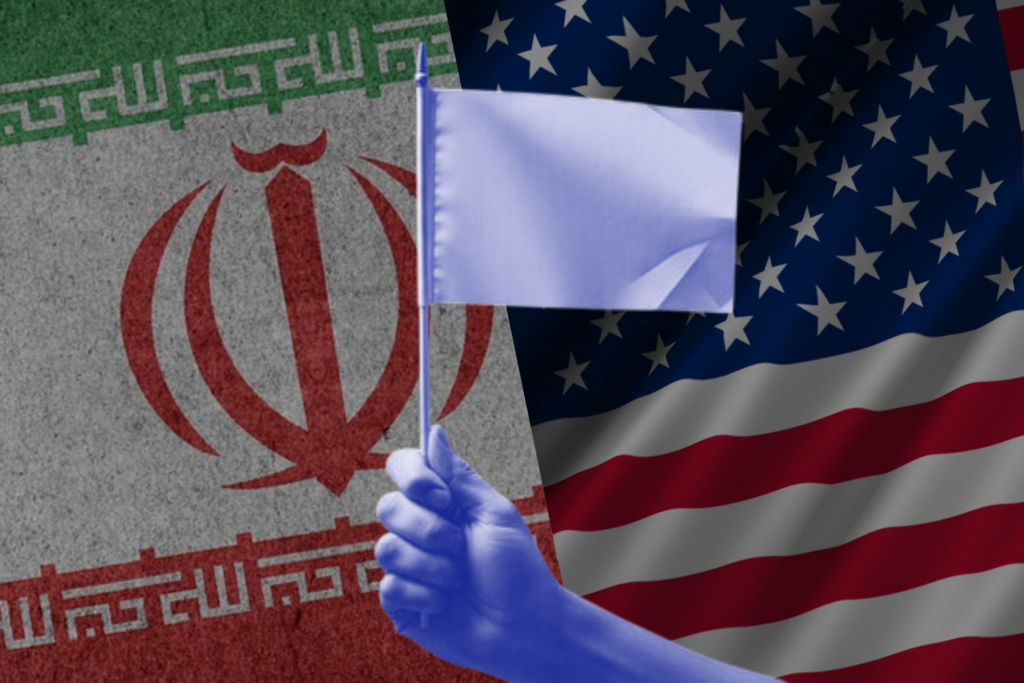
After 38 days of war between the US, Israel and Iran, on April 8th, two week ceasefire was announced What preceded the ceasefire? On 28th February, Israel and the United States “preventively” attacked Iran. You can read more in detail about this attack in our article : US & Israel Attack on Iran. Iran responded by attacking Israel back, and also attacking the allies of the United States and Israel in the region (like Kuwait, Saudi Arabia, Qatar, the United Arab Emirates, Bahrain, or Oman). Soon, military groups from Lebanon and Iraq joined Iran’s side. Iran also blocked the Strait of Hormuz, a strategic point in the world’s oil transportation. This led to an increase in the prices of oil and food (since oil is used for fertilizers and packaging). Donald Trump, the president of the US, didn’t expect this (although he should have). His loss of control over the situation was clearly visible in the level of hysteria in his posts on the Truth Social – a platform he created to communicate his decisions. He was alternating between announcing victory over Iran, negotiations with it, and giving it ultimatums… See for yourself: On April 8th, just hours before his last ultimatum was about to expire, he suddenly switched. And announced a two week ceasefire. How was the ceasefire negotiated ? The ceasefire may seem sudden, but in reality, weeks of negotiations preceded it. Actually, the US and Iran were negotiating even before the war started. Just two days before the “preventive” attack both countries met in Geneva to discuss Iran’s nuclear program (more details in this article). Immediately after the attack, Trump expected negotiations, which Iran denied. Negotiations restarted around mid-March, when the US delivered a 15-point plan to end the war to Iran via Pakistan. So far, this plan is not publicly available. However, the US was supposed to demand heavy restrictions of Iran’s nuclear program and its ballistic-missiles, end of Iran’s support for regional armed groups (like Hizballah in Libanon), and reopening the Strait of Hormuz. In return, the US would lift nuclear-related sanctions on Iran and help it to develop a civilian nuclear program. (This is basically what the US discussed with Iran in Geneva before attacking it.) Iran refused, proposing a 5-point plan instead. In which they demanded the US to stop killing Iranian officials, end all hostilities, guarantee that no other war is waged against Iran, pay reparations, and accept Iran’s sovereignty over the Strait of Hormuz. Pakistan, the mediator in this conflict, then issued another 5-point initiative together with China. Demanding immediate end of all hostilities, start of peace talks, security of nonmilitary targets, security of shipping lanes, and respect of the United Nations Charter. On 1st April, Trump claimed that Iran asked him for a ceasefire. Iran denied it. While Trump was giving ultimatums and tweeting that “the whole civilization will die tonight”, diplomatic negotiations were culminating in Pakistan. The American side was represented by the US vice president JD Vance, US special envoy to the Middle East Steve Witkoff, and Trump’s son in law Jared Kushner. The Iranian delegation was composed of Foreign Minister Abbas Araghchi, Parliament Speaker Mohammad Bagher Ghalibaf, and four senior commanders from Iran’s Revolutionary Guard. Although the composition of this group sounds a bit like the beginning of a joke, together they negotiated a temporary ceasefire. Terms of the ceasefire The ceasefire has 10 points. However, what these points are, is not yet crystal clear… Several versions are circulating in the press. And the whole situation is complicated by the fact that before this final 10-point plan, there was another 10-point plan proposed by Iran (and strongly rejected by the US). Certain is that the ceasefire will last for 14 days, during that time attacks on both sides will stop and the Strait of Hormuz will be reopened. The versions circulating in the press most often mention these other conditions : Aftermath The ceasefire is only a temporary solution. Diplomatic negotiations continue in its background. It is possible that the US and Iran will extend the ceasefire or end the war altogether. However, it is also possible that they will not reach an agreement and, when the ceasefire ends after two weeks, they will start attacking each other again. So far, this scenario seems more realistic given that: Why should we care about it? Because a ceasefire does not mean the end of the conflict. But people often make the mistake to interpret it that way. So, they miss the “final solution”. Remember how the ceasefire in Gaza turned out? – Exactly! Sources: Khamenei’s top aide Larijani rules out negotiations with US after Trump says ‘I have agreed to talk’ — What’s next for Iran Iran rejects US ceasefire plan, issues its own demands as strikes land across the Mideast – The Washington Post U.S. Sends Iran 15-Point Plan to End War | UANI Iran dismisses U.S. ceasefire plan, issues counterproposal as strikes land across the Mideast | PBS News Five-Point Initiative of China and Pakistan For Restoring Peace and Stability in the Gulf and Middle East Region_Ministry of Foreign Affairs of the People’s Republic of China Oil, strait of Hormuz and empty threats: a timeline of Trump’s flip-flopping on the Iran war | Donald Trump | The Guardian Pakistan says ceasefire efforts underway as Iran war continues | Arab News The Islamabad Accords: Framework, Preparations, and the Long View Iran warns it will respond if Israeli attacks on Lebanon don’t stop immediately – BBC News Has Iran’s 10-point plan changed, as JD Vance claims? | US-Israel war on Iran News | Al Jazeera Iran warns it will respond if Israeli attacks on Lebanon don’t stop immediately – BBC News What is Iran’s 10-point conditions for ceasefire and negotiations – The Hindu Will the Cease-Fire With Iran Hold? | Foreign Affairs What we know about the US and Iran’s ceasefire deal
Israel’s death penalty law for Palestinians : Story of the Last Week
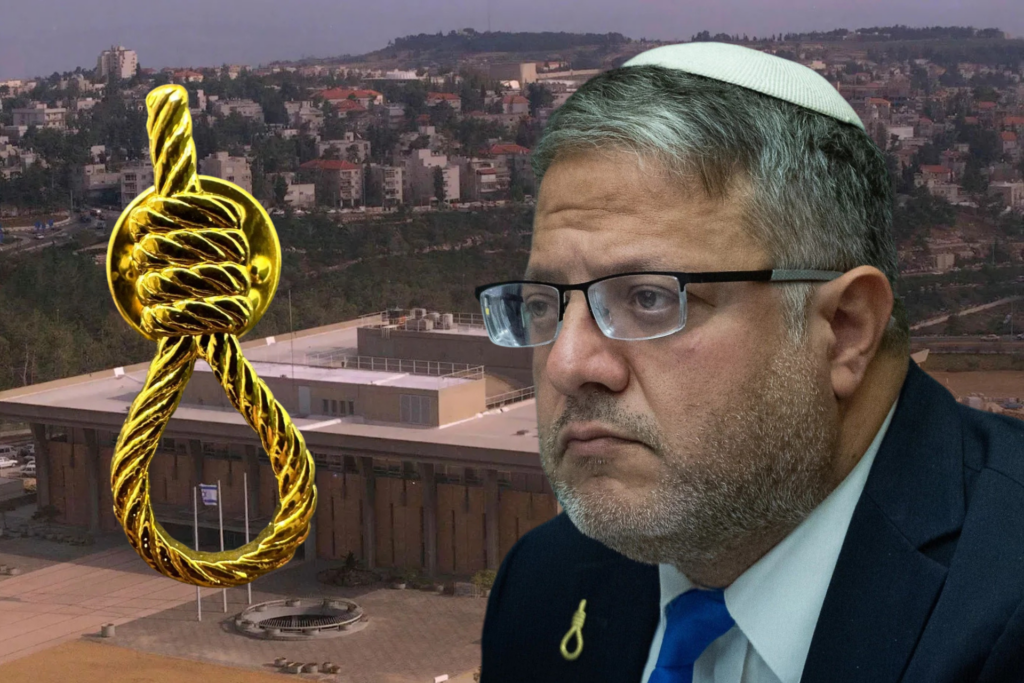
On March 30, 2026, the Israeli parliament (= Knesset), passed a controversial law allowing the death penalty by hanging for Palestinians living in the West Bank convicted of terrorism. What’s this law about? Let’s look at its key excerpt: “A resident of the Area who intentionally causes the death of a person, where the act constitutes an act of terrorism as defined in the Counter-Terrorism Law, shall be sentenced to death, and this punishment only; however, if the Military Court finds, that special circumstances exist for which it is appropriate to sentence the terrorist to life imprisonment, it may impose such a sentence” By “Area” law means Judea and Samaria, which is the West Bank of the Jordan. And by “resident of the Area” law means a person “who is registered in the population registry of the Area or one who resides in the Area even if not registered in said registry, excluding an Israeli citizen or an Israeli resident” 💡: For the original law see here, you can find the unofficial English translation here. Why is it controversial? By its formulation, the law explicitly excludes Israelis from the death penalty, so it doesn’t apply to everyone equally. This is a discriminatory practice that is against the constitution which says that all people are equal. According to the law, executions are fasttracked and stripped of safety mechanisms. The death penalty can be simply decided by a majority of the court without the prosecutor having to propose it. And the execution should be carried out within 90 days of the verdict. Convicted people should not be allowed to receive visitors in prison beforehand. And they can consult their lawyers only via video calls. The death penalty is the default punishment unless the court finds “special circumstances” to change the sentence to life imprisonment. However, the law does not define what these “special circumstances” are, leaving it open to interpretation. Moreover, the law is not “kosher” even according to Jewish morality… Judaic texts say, the death penalty is possible. But they also say that a court that issues a death sentence more often than once every 70 years is considered a bloody court. For this reason, some representatives of Orthodox parties also have a problem with the law. Who wanted this law? The law was presented by Israeli far-right political party Otzma Yehudit. After current Israeli prime minister Benjamin Netanyahu won the 2022 parliamentary elections with his right-wing Likud party, he formed a coalition with Otzma Yehudit, and other far-right parties to gain the majority in the parliament. Otzma Yehudit is an ultranationalist, kahanist party. Kahanism is a movement aiming for the total expulsion of Palestinians from both Israeli and Palestinian territories created by Orthodox US-born rabbi Meir Kahane. Kahane later founded the Jewish Defense League and Kach party. Both of these organized numerous attacks on Arabs in the US, Israel and sometimes other countries. The Kach party was ultimately banned in Israel for its extremist views and listed as a terrorist organisation in the US. Otzma Yehudit is sometimes considered as a kind of successor to Kach. And its leader Itamar Ben-Gvir, currently serving as Israel’s National Security Minister, is not beating the allegations… In the past, he has been convicted of incitement to racism and supporting a terrorist organization for carrying signs saying, “Expel the Arab enemy” and “Rabbi Kahane was right: The Arab MKs are a fifth column.” The fact that the members of the party wore noose-shaped pins to show their support of the law only underlines what kind of party it is… The law passed with 62 votes in favor and 48 against. Are all Israelis in favor of this law? Not all of them. Although after the Hamas attack on Israel on October 7, 2023, Israel is much more radical on security issues, and the society is in favor of similar radical laws (mainly because the current far-right government fuels hostile sentiments towards the Palestinians), some Israelis, human rights organization, legal experts and Knesset members still criticise the law. Given how discriminatory the law is, it wouldn’t be surprising if the Supreme Court struck it down. Yes, the same Supreme Court whose powers Netanyahu successfully tried to limit with his so-called “judicial reform” in 2023… What does this law mean for Israel? The law, naturally, doesn’t create a good image of Israel abroad… It is criticized by the United Nations, Amnesty International, and many countries including Germany, France, Italy, Great Britain, Spain or Ireland… The law thus joins a series of Israeli controversies that are gradually increasing negative views of Israel abroad. The most recent such controversy was Israel’s preventive attack on Iran, joined by the United States. This attack destabilised the whole Middle East and skyrocketed oil prices. As a result, negative views of Israel are also growing in the US, which has always been Israel’s greatest ally – some Americans don’t consider the war in Iran an American war, but an Israeli war into which they have been dragged… Even inside Israel, the law risks deepening divisions. Many Israelis, especially those on the political left and within the human rights community, see it as a dangerous step toward authoritarianism. Why should we care? Because this law does not apply equally to everyone. If we do not want to live in an Orwellian novel, then that should be reason enough Because this law is a part of a broader current world trend, where democratic institutions are being weakened in the name of “higher good”, “greater efficiency”, or “reduced costs”. Don’t buy this Because this is the prime example of what happens if you let extremists into your government: not only will it disrupt order in your country, and bring injustice, but it will also ruin your foreign reputation Sources: The death penalty law for Palestinians convicted of deadly acts of terror is unconstitutional | The Times of Israel Israel: Discriminatory Death Penalty Bill Passes | Human Rights Watch Palestinians convicted of lethal attacks face
World Trade Organisation Ministerial Conference : Story of the Last Week
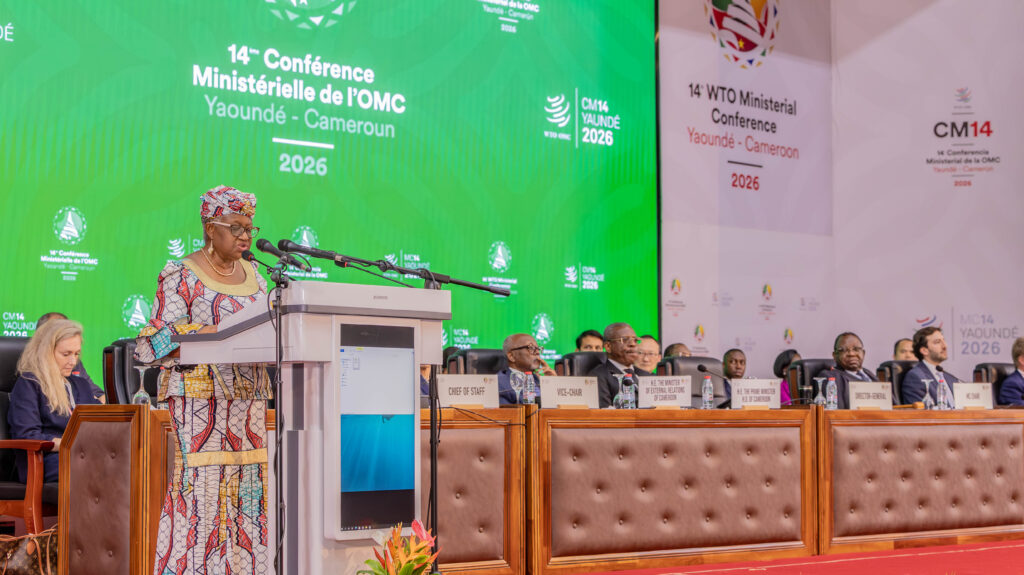
From March 26 to 29, 2026, the World Trade Organization (WTO) held its 14th Ministerial Conference (MC14) in Yaoundé, Cameroon. What is the World Trade Organisation Ministerial Conference? The Ministerial Conference is the top decision making body of the World Trade Organization. It happens usually every two years. It brings together trade ministers from WTO member countries to set the direction of global trade. The conference is also attended by various lobbyists, or NGOs who are trying to influence the decision making. What is the World Trade Organization? The World Trade Organization (WTO) is an international organization based in Geneva. Its main role is to set the rules for international trade and make sure smaller countries don’t get crusehd by economic giants. Founded in 1995, it replaced the General Agreement on Tariffs and Trade (GATT). The GATT was signed in 1948 to reduce barriers to international trade. Which helped rebuild the economy after World War II. Nowadays the WTO has 166 member countries. What was on the table at MC14? Fisheries subsidies – a.k.a. fight against illegal fishing The biggest deal at MC14 was an agreement to ban fisheries subsidies that encourage overfishing. This agreement was negotiated back in 2022, but has only officially entered into force now. The agreement specifically bans subsidies that enable illegal, unreported, or unsustainable fishing. Like subsidies for vessels that violate quotas, fish in protected areas, or target overfished species (like bluefin tuna). Thanks to this agreement illegal fishing will lose its profitability and therefore its appeal to people. However, since this measure relies on self-reporting of governments, there are still some possible loopholes. For example, countries that profit from illegal fishing may try to manipulate the data… But that’s why the Committee on Fisheries Subsidies was established this year to oversee implementation of the Agreement. At the same time there is also the so-called “Fish fund”. WTO member countries can contribute to it to help developing and least-developed countries implement the Agreement. Investment Facilitation for Development (IFD) – a.k.a. attracting foreign investors to developing countries During the Conference ministers were also discussing the IFD Agreement. Which was negotiated in 2023 at the initiative of developing countries that wished to attract foreign investors. The IFD Agreement helped them to do that. Because it introduced measures that make investing in those countries easier for foreign investors. For example, it sets consistent global rules for investing, so businesses know what to expect in any country. And since these rules can only be reformed at the international level, they are immune against local political instabilities. This gives investors a greater sense of security. The Agreement also guarantees technical assistance to developing countries and creates a global forum where they can share their practices, and help each other. Although the Agreement was concluded in 2023, it is not yet in force. That was the subject of this year’s Conference, where countries discussed the incorporation of the IFD Agreement into the legal framework of the WTO. Concretely into the 4th article of the WTO Agreement a.k.a. the Marrakesch Agreement (= the founding document of the WTO). Only after this implementation will the IFD Agreement enter into force. E-Commerce and customs – a.k.a. will we pay customs duty for sending an email? 💡 e-commerce = buying and selling of goods and services over the internet (via websites, mobile apps, social media…) Like every Conference, this year ministers debated extending the so-called “Moratorium on customs duties for electronic transmissions“. This moratorium ensures that cross-border electronic transmissions – like sending an email, making a Zoom call, streaming a movie, or an online payment – remain tariff-free (unlike physical goods). Although the Moratorium has been in place since 1998, when WTO members agreed not to impose tariffs on digital transmissions (because it was simpler and cheaper that way), it is not permanent. The moratorium only lasts two years, and every Conference countries must vote to renew it. But not all of them agree. While countries that export digital services (like the US) support the Moratorium. Nations that import these services (and aspire to develop their own) naturally oppose it. Because if the Moratorium wasn’t extended, they could impose tariffs on US Big Tech, which would gain them some money and reduce the foreign competition to their national tech companies. This year’s Conference discussed possible reforms to Moratorium (like making it permanent or creating a special committee for it). But in the end, the Moratorium was just simply extended as usual. Boost for small economies The ministers also adopted two measures to economically boost so-called Least Developed Countries (LDCs) = the world’s poorest nations: Why should we care? Because the decisions that are made at the conference affect the entire world market . Which means that the WTO is often directly or indirectly responsible for how much things cost. Because watching the conference and understanding what is being decided makes you realize that some countries that are considered “incompetent” are not succeeding because they are lazy and not trying hard enough… But because some decisions of the majority simply don’t work in their favor. Because in the midst of all the wars and aggressions today, the Conference where countries work together instead of fighting, restores a faith in humanity a bit. Sources WTO | Understanding the WTO – Whose WTO is it anyway? MC14 opens in Yaoundé with call to reinvigorate WTO in time of crisis Ministers exchange views on key WTO topics, consider paths forward at MC14 The WTO Agreement on Fisheries Subsidies Investment Facilitation for Development Agreementf EU and other WTO Members reach landmark deal to facilitate investment and support development – Trade and Economic Security Members participating in IFD showcase progress, urge incorporation of Agreement into WTO MC14 event calls for scaling up support for Trade in Services for Development initiative WTO | E-commerce – Briefing note – 14th WTO Ministerial Conference Members adopt a pathway to bring E‑Commerce Agreement into force via interim arrangements Adding value to cotton in Africa