
Hungary Blocking Aid for Ukraine : Story of the Last Week
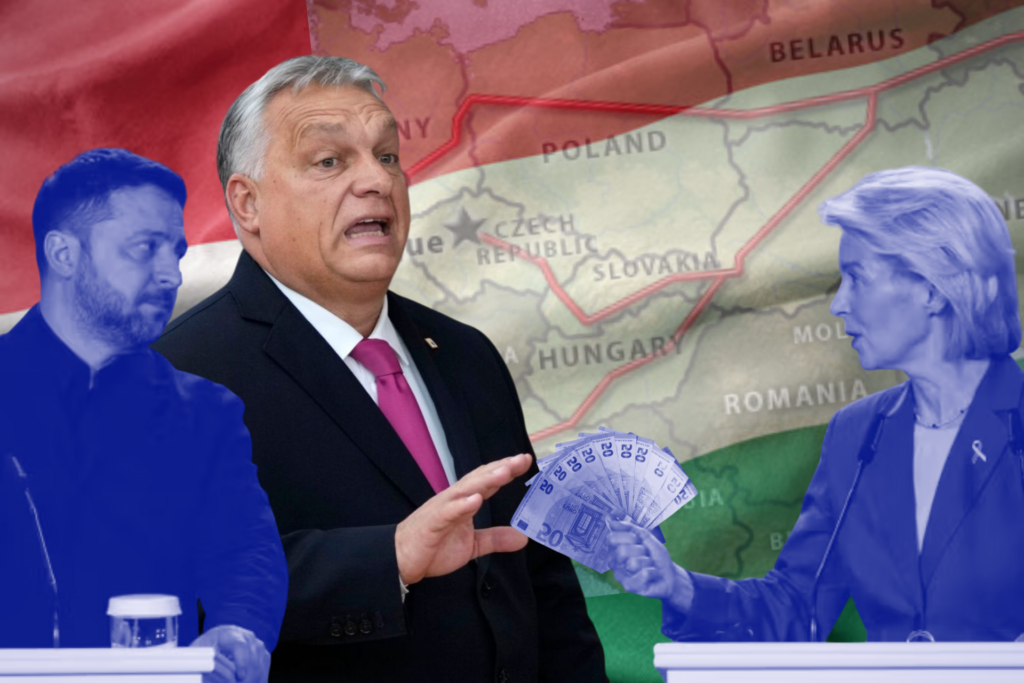
Even after the European Council summit, last week Hungary is still blocking the 90 billion euro loan for Ukraine. How is this even possible? And why is Hungary doing it? What was the loan about? In February 2026, the European Parliament approved a 90 billion euro loan for Ukraine to help it resist Russia’s invasion. The loan was agreed under so-called enhanced cooperation procedure – mechanism that allows something to be implemented within the EU even if not all 27 member countries agree on it. All financial responsibility for it then goes only to the countries that wanted it – not to the EU as a whole. In this case, 24 EU member states supported the loan for Ukraine, except the Czech Republic, Hungary and Slovakia. Ukraine was supposed to repay the loan after it received war reparations from Russia. Wait, how come Hungary is blocking the loan, when it doesn’t have to participate in it, you may wonder… How can Hungary block the loan if it’s not obliged to pay? The problem is the loan was meant to come from the EU’s joint budget. And when it comes to paying something from the EU joint budget, all member states must agree on it – even those that won’t contribute financially. If they don’t agree, they can use veto, that blocks everything. Which is exactly what Hungary, and its prime minister Victor Orbán, is doing right now. Why is Orbán doing it? Victor Orbán claims Hungary is blocking the loan because Ukraine stopped oil flows through the Druzhba pipeline, which supplies Hungary with Russian oil and runs through the territory of Ukraine. In January (2026), this pipeline was damaged by a Russian attack. But instead of directing his anger at the perpetrator, Orbán is taking it out on Ukraine: accusing it of deliberately delaying repairs of the pipeline to energetically harm his country. Slovakia joined Hungary with the same arguments. For some reason, both countries chose to stay dependent on Russian oil even after the 2009 gas crisis showed them it wasn’t the best idea… As for the Czech Republic, although it did not support the loan, at least it is not blocking its sending now. Why is Orbán REALLY doing it? In reality, not even Orbán himself believes that Ukraine is actually to blame for Russia destroying its own oil pipeline… But he’s well aware that if he pretends to believe so and blocks the loan on that basis, he can force the EU into making some concessions towards Hungary. Like for example unfreezing Hungarian funds that have been frozen in 2024 due his violations of rule-of-law in Hungary. In addition, Orbán has long held anti-European stance and, conversely, a warm attitude towards Russia. Specifically, since 2010, when he became prime minister after his Fidesz party won the elections. Since then, he has been gradually undermining democracy in the country by limiting media freedom, and judicial independence, and fighting against NGOs. Like every populist, Orbán sees the European Union as something restrictive to his ambitions, while Russia, where a powerful leader does whatever he wants and no one interferes, as an inspiration. This position naturally translates into animosity towards Ukraine (since Ukraine is Russia’s number one enemy) and has already manifested itself in several conflicts. For example, in 2017, when Ukraine passed a law making Ukrainian the required language of study in state schools to fight against growing Russian influence in some of its regions. Orbán framed this as an attack on the Hungarian minority living in Ukraine. He continuously opposed the integration of Ukraine to NATO. And after the Russian invasion of Ukraine in 2022, he refused to sanction Russia, spreading Russian narratives and portraying the attacked country as the aggressor. Current political context: upcoming elections The veto on aid for Ukraine is happening in the light of upcoming Hungary’s parliamentary elections in April 2026. To some extent it is also Orban’s strategy to activate his voters. Because this time Orbán is facing his toughest opponent yet: Péter Magyar and his Tizsa party, conservative, pro-European party, currently leading in the election polls. Last Sunday, Budapest saw two massive rallies: one organized by Orbán’s Fidesz party under the name of “Peace march” with a strong anti-European and anti-Ukrainian sentiment, and another by the Magyar’s Tizsa party demanding democracy and support for Ukraine. Why should we care? Because Orbán’s blockade doesn’t concern only Ukraine. Its aim is to weaken the EU. As the famous saying goes: where two are fighting, the third wins. The third being Russia, which is constantly trying to convince European countries to abandon bigger structures like European Union because isolated they would be an easier target for Russia. Because Russia’s aggression won’t stop at Ukraine. If Putin sees that the West is divided, he may target other countries. Not to mention that this will inspire other countries with expansive tendencies to do the same – which is already happening… Because, it’s all immoral: imagine how you would feel if someone broke into your home, and set it on fire, only for your neighbor to call the police on you for not putting out the flames fast enough. (Also, it would turn out that the neighbor is friends with the person who set your home on fire…) Sources:
Hormuz Crisis : Story of the Last Week
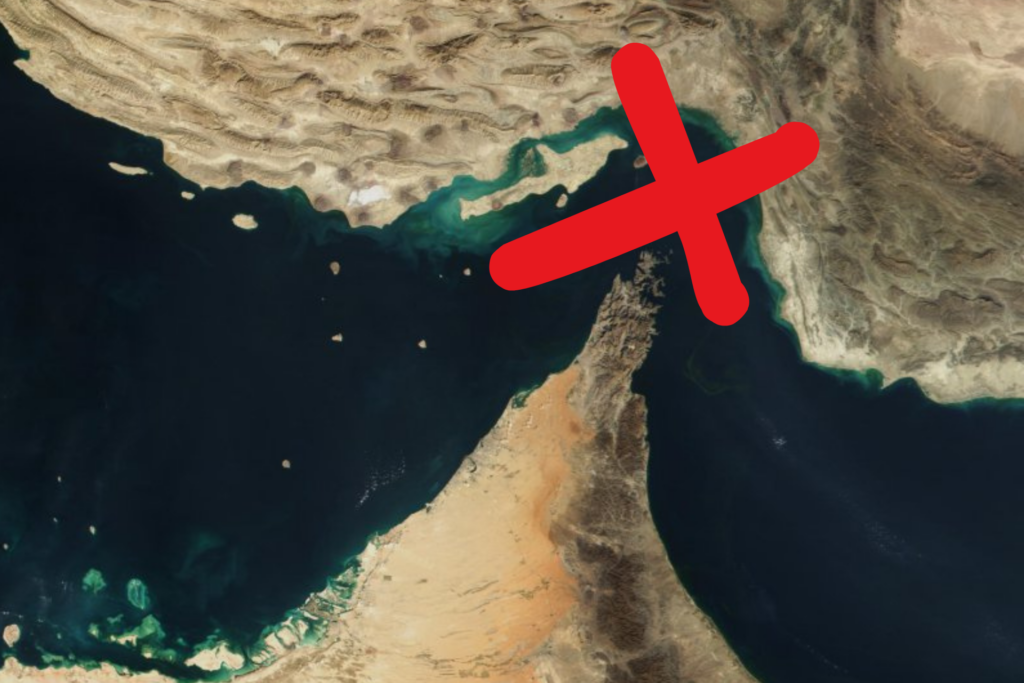
After the US and Israel attacked Iran on 28th February, Iran responded by blocking the Strait of Hormuz, a strategic point in the world’s oil transportation. What does this mean for the world? And how do one even block a strait? Let’s look at it: What Is the Strait of Hormuz? Strait of Hormuz is a 33 kilometres wide (at its narrowest point) strip of water between Iran and Oman connecting the Persian Gulf to the Indian ocean. It’s the only way out for oil tankers from Saudi Arabia, Iraq, Kuwait, the United Arab Emirates, and Iran itself. Every day 25% of the world’s oil passes through the Strait of Hormuz – or actually used to pass… Even though the Strait itself is in international waters, United Nations rules allow countries to control waters up to 12 nautical miles (= 22kilometres) from their coast – and that’s exactly what Iran is doing now. What Does “Blocking the Strait of Hormuz ” Look Like ? Iran’s Islamic Revolutionary Guard Corps broadcasted a message to radios of ships present in the area, that every ship that tries to pass through the Strait of Hormuz would be attacked. And it didn’t just stay with words: Iran actually fired drone and missile strikes on several commercial ships. There is also a suspicion that Iran may have laid sea mines near the strait’s entrance, making passage physically impossible without risking an explosion. What’s the Impact ? As a result of the blockade, the shipping companies are changing routes – now they are mainly using land transport through Jordan and Syria. Which takes much longer, so it costs more and delays deliveries. Due to the war in the Middle East, global oil prices already rose by 20%, hitting 120 dollars per barrel – the highest price since 2008. However, rising oil prices are not the only consequence. The blockade can also affect the development of the whole conflict. Whereas Benjamin Netanyahu (Israeli prime minister) went into this conflict determined to win at all costs, even if it took a long time, his ally Donald Trump (US president) had a different vision… He wanted a quick, decisive strike on Iran – something he would sell as an effective victory with zero costs to its voters. But with the strait blocked, this won’t work. Trump can’t declare victory if the global economy is spiraling into crisis. He could, but who would believe him? Has Something Like This Happened Before? The Strait of Hormuz blockade isn’t the first case where the maritime transport was taken hostage. During the war between Iraq and Iran in the 80s, both sides attacked oil tankers in the Persian Gulf which resulted in an increase in oil prices and panic on global markets until a ceasefire was negotiated. Another example is the Suez Canal Crisis in 1956. After Egyptian President Gamal Abdel Nasser nationalized the Suez Canal, which was previously controlled by Britain and France. Britain, France, and Israel launched a military campaign to retake control of the canal. This led to the blockage of the canal, disrupting the flow of goods and thus increasing transportation costs. The Suez Canal was then blocked once again in 2021. When the Ever Given container ship got stuck in there for six days. This incident cost an estimated $9.6 billion per day in global trade losses. Why Should We Care? Because the blockade of the Strait of Hormuz will cause prices to rise. Not only in transport, when both gasoline and airline tickets will be more expensive, but also in food. Since oil is used not only for fuel but also for fertilizers and packaging. Remember the energy crisis in 2022 when Russia attacked Ukraine… Because the conflict could widen: Trump is already trying to drag other countries in it: Wanna Know More? Check out these articles (that were btw. used to write this article;):
European Parliament in Nutshell: March 2026
Every month, the European Parliament plenary session takes place in Strasbourg. And every month, IR Media follows it closely. These are the highlights of the last plenary session taking place from 9th to 12nd March 2026: European Parliament against gender pay gap On Wednesday eurodeputies voted on the report prepared by the Committee on Women’s Rights and Gender Equality. This report maps the gender pay gap in the European Union, its consequences and proposes solutions to combat it. Gender pay gap is a difference between the average gross hourly earnings of men and women. In the EU it’s currently 12 %. This doesn’t mean that jobs would give women automatically a 12% lower salary just because they are women… The gender pay gap is more of a structural problem. Stereotypes that there are “men’s jobs” and “women’s jobs” still persist in society and influence our career choices. Those “women’s jobs”, are considered less prestigious, therefore less paid. If women try to get into “men’s jobs”, they face backlash and sexism not all of them can withstand. Moreover, women are still expected to perform the majority of housework and childcare. Tasks that are unpaid, and often force women to interrupt their careers. Which results in women having lower pensions. Some of the solutions this report proposes are: AI will have to respect copyright On Tuesday, MEPs adopted a series of recommendations to protect copyrighted creative work from use by artificial intelligence. Because right now, AI uses copyrighted works freely with no limits. Eurodeputies want authors to be paid if their works are used by AI, ideally even retrospectively. And, to guarantee them an option to completely opt-out from their work being used by AI. They also want to make AI companies transparent about what copyrighted works they used to train their models. Now it’s up for the European Commission to transform these recommendations into concrete laws. Chat Control reached a compromise On Wednesday, the European parliament voted to extend exemption from ePrivacy Directive. This directive normally prohibits the scanning of private messages, but the exception allows it. The goal was to enable big digital platforms to detect child sexual abuse materials by scaning their users’ messages. But it was a bit double-edged because it could be misused to spy on citizens by authoritarian governments. Fortunately, MPs also voted that scanning private messages can only take place under a court order in case of a suspected sexual abuse. Last but not least, do you remember how the last plenary session, the Special Committee on the Housing Crisis came up with recommendations to deal with the housing crisis in the EU? This session they presented it to the whole Parliament, and the parliament voted yes. The next sitting will be held from 27th to 30th April 2026 in Strasbourg
War in Middle East : Story of the Last Week

After February 28, when Israel and the United States “preventively” attacked Iran, the conflict expanded to other states. Which ones? And why? Let’s break it down: Basically, there are four possibilities how other countries got dragged in the war: either they were friends of US or Israel, and because of that they were attacked by Iran; or by its allies; or they were friends with Iran, and decided to support it by attacking Israel or countries that were friends with US or Israel, or they were Iraq. Countries Attacked by Iran All these countries are somehow connected to the United States or Israel – whether it is because they have American bases on their territory, or because they maintain friendly relations with those countries. By attacking them, Iran is trying to destroy American infrastructure, as well as put pressure on their governments to distance themselves from the US/Israel, and to turn public opinion against their leaders for aligning with the West. Countries of Gulf Cooperation Council The Gulf Cooperation Council is a political and economic union of six Arab states bordering the Persian Gulf: Kuwait, Saudi Arabia, Qatar, the United Arab Emirates, Bahrain, and Oman. Founded in 1981 (during the Iran-Iraq War), its purpose was to protect member states from regional instability. All are oil-rich nations that rely on stability for economic prosperity, often acting as mediators in regional conflicts (eg. easing tensions between Israel, the US, and Iran). Naturally, the US-Israel strike on Iran was the last thing they wanted – it threatened their economic interests. They opposed it from the start – but still paid the price… Azerbaijan Despite being a Muslim country, Azerbaijan maintains a good relationship with Israel. Iranian drones struck its autonomous Nakhchivan region. Azerbaijan also accused Iran of planning sabotage operations on its territory – but the Iranian government denied it claiming the sabotages were organized by its enemies who are trying to frame Iran. Turkey Iran also sent two missiles to Turkey. However, NATO, Turkey is part of, neutralized them. Countries Attacking US and Israel Lebanon : Hizbollah Lebanon was drawn into the war by Hezbollah, a Shiite Muslim political party and militant group operating independently of the Lebanese government (basically Hezbollah, is a state within a state). After the US and Israel attacked Iran, Hezbollah struck against Israel. Israel responded to it by attacking Lebanon back. Iraq Iran and Iraq were historically enemies (Iraq even attacked Iran in the 80s), but after Iraqi dictator Saddam Hussein’s fall, the two grew closer. Mainly because both are now led by Shiite muslims. So that’s why, in the current conflict, Iraq supports Iran. Or actually, parts of it do. Because Iraq is divided: between the Kurds, who have a semi-autonomous Kurdish region at the north of Iraq, and the Shiit rest of the country. Whereas the pro-Iranian militias from the Shiite-dominated south support Iran, the Kurds are against it. Kurds even host American bases on their territory. Those bases were bombed by both Iran and military groups from the pro-Iranian part of Iraq. These same pro-Iranian groups also attacked Saudi Arabia and other countries. Countries Attacked by Iranian Allies Cyprus A Lebanese missile struck a British base in Cyprus. While the UK refused to join the US and Israel strikes on Iran, it offered its bases to the US for defense purposes after Iran retaliated. Jordan A longtime US ally, Jordan assisted the US during last summer’s Twelve Day War. Now, its local US bases were attacked and damaged by Iran-backed militias from Iraq. Collaterals: Syria Syria is not officially at war, but due to its geographic position, Iran fires missiles at Israel over Syrian airspace. Debris from intercepted missiles has fallen on Syrian territory, causing damage and minor injuries. What Are the Consequences? The war has reduced and logistically complicated oil exports (e.g. the insurance rates for oil shipping companies skyrocketed because their ships are now in a high risk of strike). This is driving up oil prices. Attacks on oil refineries pose regional ecological threats. For example, a missile strike on a Tehran refinery caused a massive fire, leading to acid rain over the city. Hundreds of thousands of travelers are stranded across the Middle East. Airspace closures (due to missile risks) and mass flight cancellations have left many unable to fly. Sources: A Sprawling Middle East War Explodes | International Crisis Group How the unfolding war is affecting countries in the Middle East | AP News What are the differences between Iraqi Kurdistan and Iraq? From Rivals to Allies: Iran’s Evolving Role in Iraq’s Geopolitics – Middle East Council on Global Affairs Iran-backed militias intensify attacks against US, Israel and allies | Iran | The Guardian How an Incident on the Azerbaijan-Iran Border Became a Test for Diplomacy in the Region – The Times Of Central Asia Why Azerbaijan is important for Israel’s security – JNS.org Syria distances itself from the US-Israeli war on Iran – Enab Baladi Kuwait cuts oil production due to Strait of Hormuz closure
US & Israel Attack on Iran : Story of the Last Week
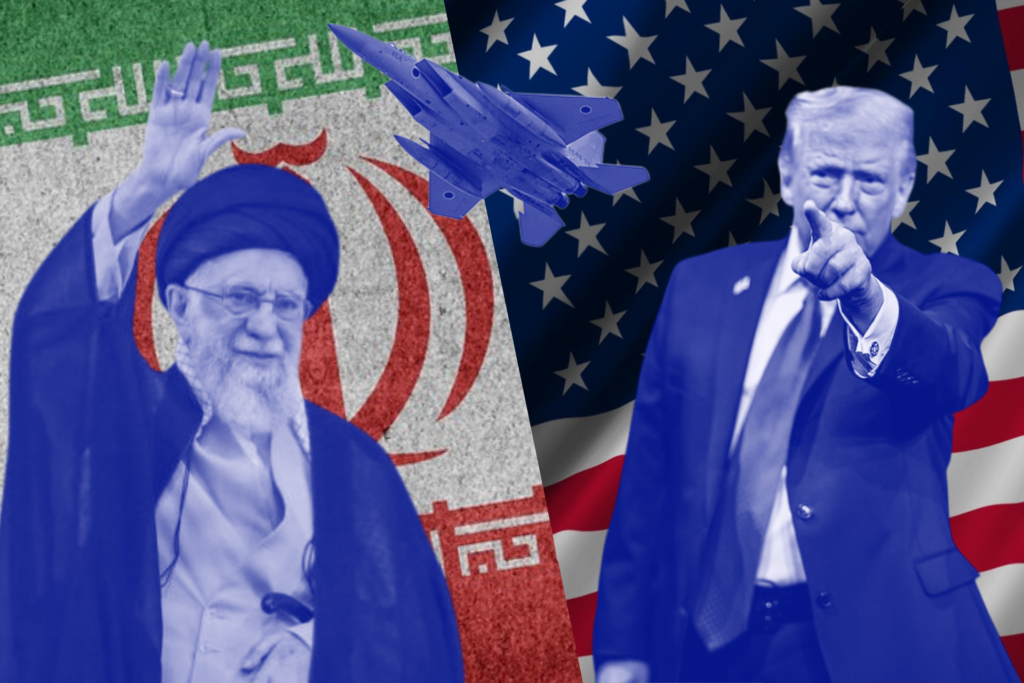
In the morning hours of 28th February, Israel and the United States “preventively” attacked Iran. They mainly bombed government buildings, however, the Iranian government claims that they also bombed civilian targets. During the attack, Iranian Supreme Leader Ali Khamenei, was killed. Ali Khamenei brutally ruled the country since 1983, having the blood of tens of thousands of Iranian people on his hands. One would expect that the Iranian undemocratic regime was the main reason for the intervention… However, the United States and Israel justify their “preventive” attack by fearing that Iran was expanding its nuclear program. Note that both the US and Israel have their own nuclear programs – Israel even undeclared (similarly like Iran). Iranian Nuclear Programme Iran started to develop its nuclear program in the 50s. During the reign of Shah Mohammad Reza Pahlavi, who wanted to turn Iran into a modern, Western-style superpower. The Iranian nuclear program was on of the ways to achieve his goal. Shah worked on it with the United States as part of the “Atoms for Peace” program. A nuclear program for non-war purposes – so basically nuclear power plants. Attention: When a country has a “nuclear program”, it doesn’t always mean they produce nuclear weapons. Nuclear program means even an ordinary nuclear power plant. However, if a country has a nuclear power plant, it’s theoretically able to produce nuclear weapons since the technology is similar. After the Islamic Revolution of 1979, the situation reversed. The Supreme Leader Ruhollah Khomeini completely stopped the Iranian nuclear program, saying that it was “against Islamic values”. But in the 80s, the Iranian government realized that if they wanted to be energy independent and able to scare-off neighboring countries (such as Iraq, which attacked them in the 80s), they simply needed the program… So they revived it again. Except this time Iran did not cooperate on it with the West, but with the Soviet Union, Pakistan and China. Officially, this nuclear program was only for “peaceful purposes”. But if you started digging deeper into it, you would discover that the program was suspiciously big. Given that Iran had only one nuclear power plant – for example: It was all revealed in 2002 during an IAEA (= International Atomic Energy Agency) inspection. Attempts followed to pressure Iran to limit its nuclear program. In 2003, Iran voluntarily signed and implemented the Additional Protocol to the Nuclear Non-Proliferation Treaty. The Nuclear Non-Proliferation Treaty (NPT) is an international agreement signed in 1968 where countries possessing nuclear weapons (= United States, Russia, United Kingdom, France and China) promised not to use them or spread them to other countries, and eventually get rid of them completely. And the non-nuclear countries agreed to never try acquiring nuclear weapons. In return, the five nuclear countries promised to help them with a peaceful nuclear program (such as the Atoms for Peace). In this Additional Protocol of NPT Iran agreed to permit more intensive IAEA inspections. But after two years it abandoned it. As a response Western countries imposed sanctions on Iran. After very difficult negotiations, in 2015 then-US president Barack Obama managed to negotiate a Joint Comprehensive Plan of Action (JCOPA) with Iran. In this agreement Iran promised to limit its nuclear program for the next 15 years in exchange for the lifting of sanctions. In addition to the USA and Iran, the agreement was signed by 6 other powers, including China and Russia. But then one American president canceled it… Surprise surprise, it was no one else than Donald Trump during his first presidency in 2018. Also, he imposed sanctions not only on Iran but also on European states if they wanted to trade with Iran. Since then, Iran has been moving closer to a nuclear weapon faster than before. Could We Have Predicted the Attack on Iran ? In July 2025, Israel attacked Iran, waging the so-called Twelve-Day War, which the United States later joined. It was an escalation of long-lasting rivalry between the two countries. Both had been indirectly attacking each other for a long time – this was their first direct clash. Basically: Israel is a western ally in the Middle East who “guards”, that local states – which happened to emerge in territories rich in now highly valued oil and which also share the same religion – from forming another global power that could challenge Western hegemony. In return, the West helps Israel maintain its position in the Middle East. So that’s why, for example, Western countries tolerate Israel’s nuclear program, while opposing the nuclear program of countries like Iran. Iran, even in its pre-revolutionary democratic era always had high ambitions. It wanted to become one of the great powers, not just be their ally. After the revolution, this ambition became even stronger, since the political leadership was officially anti-Western and on top of that there was the religious dimension. But this is geopolitics. The official Israeli and US pretext was – already in July 2025 – the expansion of Iran’s nuclear program. Btw. after the Twelve Day War, Donald Trump bragged that Iran’s nuclear program was 100% destroyed. Saturday’s attack was preceded by a series of negotiations between the US and Iran. These had been going on practically since the cancellation of the JCOPA in 2018. But they did not bring any success: Iran insisted on maintaining its nuclear program, the US on its absolute abolition. The latest round of negotiations between the US and Iran took place in Geneva on Thursday 26th February – two days before the attack. Which proves that Trump did not really want an agreement but a war with Iran. A war he swore he wouldn’t start to his voters… You cannot coordinate a joint attack in a few hours – he had to plan it with Netanyahu for at least several weeks. How Did Iran Respond to the Attack? The Iranian regime repaid the payment – not to the United States, but to Israel. They also tried to cover up Khamenei’s death for several hours.
Munich Security Conference : Story of the Last Week

As every year, world leaders gathered in Munich in the second week of February for one of the world’s most important meetings on global security and diplomacy. This year for its 62nd edition. Origin of Munich Security Conference The Munich Security Conference was first organized in 1963 as a small meeting of 60 countries by Ewald-Heinrich von Kleist-Schmenzin. Ewald-Heinrich was the youngest plotter of the famous attempt to assassinate Hitler in Wolf’s Lair. He was supposed to be a part of a group who would organize a coup in case of its success. All this at the age of just 22 years! After the operation went unsuccessful, he managed to cover up his resistance activities. Luckily – because if not, he would have most likely ended up with a death sentence. This way Nazis “just” sent him to the concentration camp, where he managed to survive until the end of war. What’s the Purpose of the Munich Security Conference? In 1963 he came up with an idea to organise a Wehrkundetagung in Munich. The name was a bit of a tongue twister, but there was a simple idea behind it. Von Kleist wanted to make sure such a horrendous conflict as the 2nd World War would never happen again. Therefore he organised a meeting of about 60 important world leaders and international relations experts. Together thy discuss (often hot) security topics. What started as a small private event, has groven to giant proportions over the years Famous speeches at Munich Security Conference During its 62 years of existence, some famous speeches have been given by important actors in international relations on MSC. Such as: Make no mistake, the Munich Security Conference is still a private event. Unlike official government meetings, decisions made here are not legally binding on anyone. But that’s exactly the reason why this event is so worthy to observe. Politicians here dare to be more honest about their intentions. The highlights of MSC 2026 This year’s conference was much less revolutionary… There were no groundbreaking speeches, no strong words, no magical solutions. And compared to previous years, it had overall a little more pessimistic tone. Maybe that’s why didn’t hear that much about it from press. But despite this – or perhaps precisely because of this – we should keep an eye on it. The main topics were: The Collapse of the International Order and the Rise of Destructive Policies Caused mainly by the current dominant world power United States under the leadership of its president Donald Trump. Who is democratically destructive both domestically and internationally (remember, for example, his claims to Greenland). Compared to last year, when the US criticized Europe for its freedom of speech during the Conference, this year their rhetoric was a little more diplomatic. But the message stayed pretty much the same. The US will continue to play by its own rules – whether Europe likes it or not. The quote of the Minister of Foreign Affairs of the US, Marco Rubio summs it all up. “We can no longer place the so-called global order above the vital interests of our people and our nation”. While Europe is still going through the 5 stages of grief over its relationship with the US, countries of the Global South, who never had many reasons to idealize the US, see the change in the international order more positively – especially as an opportunity to establish new trade agreements, now that America made itself unattractive business partner with its high tariffs. The War in Ukraine and European Security This topic is closely related to the previous one – since we only have to speak about it because certain actors chose to undermine the international order. Those actors being Russia, and more recently the US… The Greenland crisis at the beginning of this year raised an uncomfortable question: would NATO act or crumble in case of an escalation? And at the same time it gave Europe a push to start addressing its security not just through speeches, but through action. After the US decreased its military aid to Ukraine by 99 % over the last year, Europe had to step up – recently, the European Union approved a 90 billion euros loan to Ukraine. But more will be needed. However, there were no specific new proposals – only old ones that have been talked about for a long time (such as confiscating frozen Russian funds). The Ukrainian president, Volodymyr Zelenskyy came to the Conference to stress that Ukraine would not be able to defend Europe indefinitely, and urged for increased European help and pressure on Russia and its enablers. Regional Conflicts The Munich Security Conference also addressed regional conflicts – like those which emerged in Syria after the fall of Assad regime or civil war in Sudan that has been going on since 2023 Some attention was also paid to technology, and AI. The Conference didn’t forget about climate crisis either. For example, speakers addressed the access to drinkable water that will be problematic in the future. However, due to the current tense security situation in the world, this topic remained in the background compared to previous years. Why should we care? Because the Munich Security Conference does not generate any legally binding policies, world leaders don’t try that hard to mask their controversial intentions – so it gives us an ideal opportunity to see their true collors… …and to understand the REAL reasons why they want us to support (or not) certain of their decisions. Because MSC can help us get a better overview on priorities of different countries and on relationships between them.
Why is There a War in Ukraine?
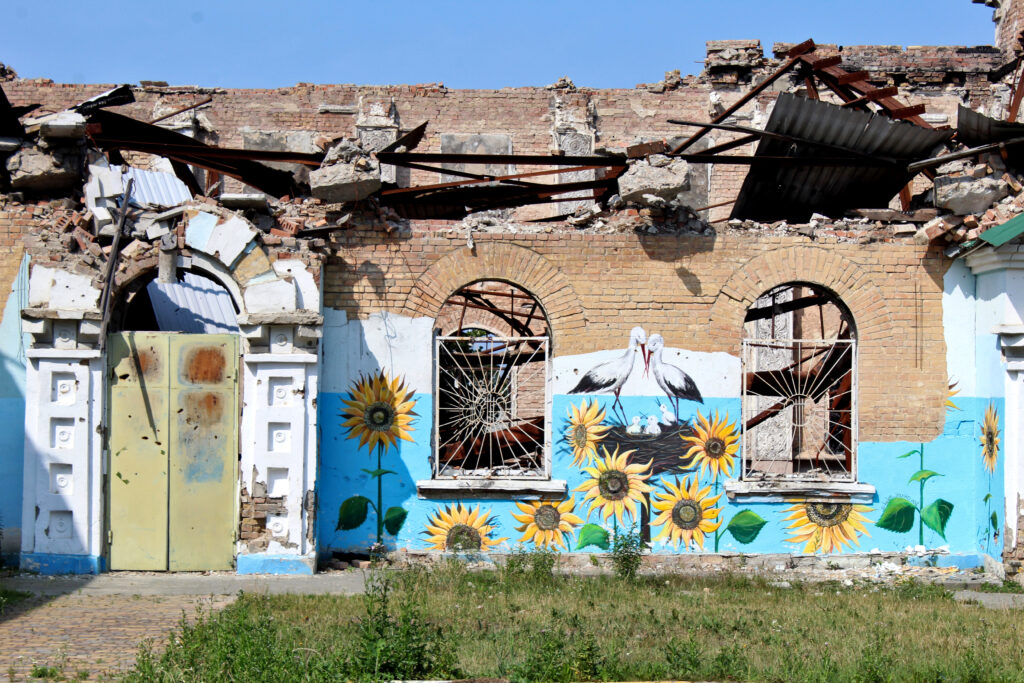
Even though the whole world talks about the war in Ukraine, not many people know this conflict’s background. Not because they would be stupid – war in Ukraine is actually pretty simple – but because it takes time to understand it. Some poeple don’t have this time. And then other people try to take advantage of them: spreading misleading or even purposely false information. The following article therefore summarizes all important moments in Ukrainian history relevant to the current war. Yeah, it’s long, but we tried – after all, we’re talking about more than a thousand years of development… We also didn’t want to leave out any important information. Putin and Russian propaganda often justify the war in Ukraine by selecting only what suits them from Ukrainian history – it’s hard to detect if you don’t have the whole picture – so here it is 😉 Kievan Rus’: How it All Began The story begins in the 9th century with Kievan Rus’, the first state formation of Slavs (before there were only tribes). Covering parts of modern-day Ukraine, Russia, and Belarus. Because Kievan Rus’ was very big, its ruler Vladimir the Great divided it into smaller principalities between his sons: But Kievan Rus’ never controlled all of modern Ukraine. The southern steppe dominated Turkic tribes – the Pechenegs and Cumans – who were constantly in conflict with Kievan Rus’ (everyone was constantly in a conflict in this time period). In the 13th century, Mongolian Empire invaded Kievan Rus’. It was more precisely one sector of Mongolian Empire called the Golden Horde. Kievan Rus’ fell apart. Its successor states were Kingdom of Galicia-Volhynia, Novgorod Republic and Vladimir-Suzdal. Ukraine between Poland, Moscow, and the Crimean Khanate Kingdom of Galicia and Volhynia was later divided between Poland and Latvia. Those countries were in their prime at that time, and later they formed a Polish-Lithuanian Union. Novgorod Republic and Vladimir-Suzdal were located in a territory of nowadays Russia, and Vladimir-Suzdal later transformed into Principality of Moscow, which is ancestor to nowadays Russia. In the 15th century, the Golden Horde transformed into the Crimean Khanate, a vessel of the Ottoman Empire. The word vessel can be a little bit confusing: it might feel like a synonym for friend or partner… But keep in mind, at this time of history, all states were competitors trying to secure their own safety, and get as much power as possible – event those three states on the territory of Ukraine: Polish-Lithuanian Union, Principality of Moscow, and Crimean Khanate Cossacks Into this dynamics emerged Cossacks. Semi-independent, combative groups with uncertain ethnic origin, which started to settle around the Dnipro river in the 16th century. Basically at a meeting point of our three states (Polish-Lithuanian Union, Moscow Principality, and Crimean Khanate) The combativeness of Cossacks was making them hard to conquer, and at the same time – in the eyes of Poland and Crimean Khanate – an ideal army: if they paid them enough money, they would go fight anyone. In the 17th century, Cossack leader Bohdan Khmelnytskyi, sought to renew Kievan Rus’. To accomplish that, he allied with the Crimean Khanate. At first they were winning – Cossacks even managed to form their state: so-called Hetmanate (name derived from “hetman”, the leader of the Cossacks). But after some time, the Crimean Khanate got scared by the power Cossacks were gaining and betrayed them. Cossacks had to search for a new ally. Out of all possibilities, Khmelnytskyi resorted to Moscow. He had to – nothing else worked out. This 1654 Pereyaslav Agreement between Cossacks and Moscow was very unequal. Cossacks had to accept the sovereignty of the Tsar. Hetmanate, which was pretty much the majority of nowadays Ukraine, fell under the full control of Russia. After Khmelnytskyi died, his successors tried to get Hetmanate out of the Russian influence – without any success. Since Poland was also making territorial claims, Ukraine was split along the Dnieper River: the west went to Poland, the east stayed with Russia. In the 18th despite its big size, Poland lost its power and neighboring countries Prussia, Russia and the Habsburg monarch decided to use this opportunity and divided Poland between themselves. (It’s called “three partitions of Poland”). This meant the Russian sphere of influence moved more to the west and the only part of nowadays Ukraine left out was Galicia, now belonging to the Habsburg monarchy. Neither Habsburg monarchy nor Russia were ideal for Ukrainians to live in. They were both trying to suppress their national identity. Russia maybe a bit more, since they were trying to claim Ukrainian language is just a branch of Russian language. The German-speaking Habsburg monarchy obviously couldn’t use this argument. When Russians are nowadays making territorial claims about Ukraine, this historical period is one of their arguments. Another one is Crimea. A Glimpse into Crimea While Ukraine’s heartland was divided between Poland and Russia, Crimea followed its own path. Originally ruled by the Crimean Khanate, a vassal of the Ottoman Empire, it fell to Catherine the Great in the 18th century after Russia won in the war against the Ottomans. Crimea stayed under Russia until 1954. As all parts of the Soviet Union, Crimea underwent strong Russification. It was the worst under Stalin, who tried to get rid of Crimea’s indigenous population, Crimean Tatars, by deporting them to gulags. In 1954, Soviet leader Nikita Khrushchev donated Crimea to Ukraine. At that time it was a symbolic gesture with little practical impact, since both were part of the USSR. However it started to be problematic after the fall of the Soviet Union. After the fall of the Soviet Union, there were some attempts to make Crimea independent. Historically and ethnically, Crimean Tatars truly don’t have much in common – neither with Russia, nor with Ukraine. They are a Turkic ethnic group, with a language from Turkic languages family, and their predominant religion is Islam. Plus until the 18th century they had their own country: Crimean Khanate. So, in an
European Parliament in Nutshell: February 2026
Every month, the European Parliament plenary session takes place in Strasbourg. And every month, IR Media follows it closely. These are the highlights of the last plenary session taking place from 9th to 12nd February 2026: Change in European migration policy The European Parliament voted for creation of a so-called: “EU list of safe countries of origin”. Which is basically a list of countries from which it is assumed people have no reason to migrate. So if you try to migrate from them, they will most likely sent you back in an accelerated process. So far, each EU country had its own such list. Now they want to make a common one and add Bangladesh, Colombia, Egypt, Kosovo, India, Morocco and Tunisia to it, as well as the EU candidate countries. Parliament also validated so-called “safe third country” concept. Instead of accepting asylum seekers, EU countries could redirect them to some other country, through which the applicant either transited, has some connection with (like language or family), or none of that and the two countries juste have an agreement with each other. On the one hand, this will save EU some time and work. On the other hand some “safe” countries are not safe for everyone – think about homosexuals or political dissidents… European Parliament Approves €90 Billion Ukraine Support Loan The European Parliament approved a 90 billion euro loan for Ukraine to help it resist Russian invasion, which is approaching its 5th anniversary. The loan was agreed under so-called enhanced cooperation procedure. This mechanism allows something to be implemented within the EU even if not all countries agree on it. All financial responsibility for it then goes only to the countries that wanted it – not to the EU as a whole. In this case, 24 EU member states supported the loan, while the Czech Republic, Hungary and Slovakia did not. The EU is providing the loan on the condition that Ukraine continues to promote democracy, the rule of law, respect for human rights and the fight against corruption. Ukraine will repay the loan after it receives war reparations from Russia. How to deal with Europe’s Housing crisis ? The European Parliament’s Special Committee on the Housing Crisis came up with recommendations to deal with the housing crisis in the EU. The MEPs proposed things like: making new houses more energy efficient, limiting short-term rentals, offering more public and social housing, introducing tax breaks for low- and middle-income households, simplifying the administration for new housing projects or better use of EU funds… This session they voted on it within the committee. The next step will be to present it to the whole Parliament, which will happen in March. The next sitting will be held from 9th to 12th March 2026 in Strasbourg
New release of Epstein Files : Story of the Last Week

On 30th January, the United States Department of Justice released a new series of Epstein Files. Over 3 million pages of documents, 2 000 videos and 180 000 images related to Epstein’s crimes and connections with global elites were released under the Epstein Files Transparency Act, a law passed in November 2025. This is what you need to know: Who Was Jeffrey Epstein? Jeffrey Epstein was born in 1953 in New York to an average working-class family. Some of his (ex)associates claim(ed) that he was a mathematical genius, but we should take it with a grain of salt… In reality Epstein was a college dropout, who had to scam his way even into his first job : a math and physics teacher at Dalton School (a prestigious private high school) by falsifying his university diploma. Although he wasn’t outright stupid, Epstein was no rocket scientist either… Dalton School soon dismissed him for not meeting its high standards. However, with his strong charisma, persuasive skills, scheming and desire to get rich, he impressed the wealthy parents of his students. One of them helped him get a job at Bear Stearns investment bank. That’s how began Epstein’s financial advisor career. After some time he started his own financial consulting firm : helping billionaires to manage their money. Which eventually made him a millionaire. Fun fact: nearly all his wealth came from working with just two clients: Leon Black and Les Wexner – and of course from scamming and shady business practices: he avoided taxes by hiding his money in offshore tax heavens (like the US Virgin Islands), he took money from his clients for projects he never delivered… Sometimes he would straight up steal from them assuming (correctly) that they wouldn’t notice or be too embarrassed to call him out. And then there was his dirtiest business: sex-trafficking. The Epstein Case: What Was It About? According to some of his students, Epstein was already giving off creepy vibes during his teacher era. He was always a womanizer, pursuing rich and famous women as a way to infiltrate elite social circles and gain access to rich clients. However, the first documented accounts of his sex-trafficking date back to the 90s. In that time he coupled up with Ghislaine Maxwell, who helped him “scout” underage girls. Maxwell would target young naive girls who came from unstable backgrounds, so they needed money, and at the same time they had no one to turn to for help. She approached them with a seemingly harmless offer: extra cash for giving massages to her friend. This “friend” turned out to be Epstein, and the “massages” prostitution. But the girls, many of them teenagers (some as young as 14), were too inexperienced to recognize the danger. When Epstein demanded sex from them in the middle of a massage, they were shocked, confused and scared. Maxwell and Epstein were also gaslighting them: framing their perverse demands as something perfectly normal – even beneficial financially. This made the girls doubt their own instincts and comply. Epstein and Maxwell “recruited” girls from all over the world. On their luxury estates – the most notorious is the Little Saint James island a.k.a. “Epstein Island” in the US Virgin Islands – they sexually abused them and sold them to their powerful friends. How Epstein got uncovered? In 2005, a woman reported to the police that Epstein molested her 14 years old daughter. The following investigations managed to gather evidence about 36 underage victims. But then-US Attorney Alexander Acosta ruined everything. Instead of punishing Epstein he made a secret so-called “non-prosecution agreement” with him. Thanks to this agreement, Epstein avoided federal (= national level) prosecution, the level his crimes demanded. He was charged only under Florida state law, which carried far lighter consequences. Instead of facing decades in federal prison, he got just 13 months in a county jail with work-release privileges that allowed him to leave for up to 12 hours a day, six days a week. The agreement also sealed the investigation, keeping the names of Epstein’s accomplices hidden and making it impossible for some of his victims to justify. Since the investigation was secret, they simply didn’t learn about it. But they continued speaking up and fighting for justice. As the years passed, new evidence emerged, the people who protected Epstein changed positions, the infamous non-prosecution agreement was found invalid, public opinion developed… Finally, in 2019, Epstein was arrested again, this time facing federal charges of sex-trafficking that could send him to prison for 45 years. However, the same year, before his trial could even began, Epstein committed suicide. He hanged himself in his jail cell. This provoked and still provokes a number of conspiracy theories. Ghislaine Maxwell, was sentenced to 20 years in prison in 2022. To this day she’s the only person convicted for participation in Epstein’s sex trafficking. What Are the Epstein Files? The Epstein files is a collection of all documents, mails, photos, and videos gathered during the investigations of Epstein’s crimes. Totally it makes over 6 million pages. They include court records, flight logs, financial transactions, and communications between Epstein and his associates. For years, his victims (and the public) demanded the release of these files to expose the full truth about Epstein’s network. And they partially succeeded – some heavily censored fractions of the files were made public. But it always had to be done through standard legal ways (by civil lawsuits, freedom of Information requests, or court orders…) There was no law requiring the entirety of Epstein’s files to be made public… Naturally, for many politicians, the release of the Files became an opportunity to score political points. No one seized it more aggressively than Donald Trump, who promised during his 2024 presidential campaign that he would release the Files if elected. But once in office, despite having the authority to release them, Trump’s administration blocked the process. In the end, the Congress stepped in. Congressmen (both Republicans and Democrats) teamed up and passed
European Parliament in Nutshell: January 2026

Every month, the European Parliament plenary session takes place in Strasbourg. And every month, IR Media follows it closely. These are the highlights of the last plenary session taking place from 19th to 22nd January 2026: European Parliament stood up for passenger rights On Wednesday, the European Parliament rejected the European Council’s proposal to weaken the rights of air passengers. These rights have been in force since 2004. The European Council consists of ministers from all EU countries. In this case it was the Ministers for Transport who made this proposal in June 2025. They proposed to reimburse the passengers only if their flight is delayed by four to six hours depending on the flight distance. instead of the current three hours. And tried to reduce the upper limit of compensation for flight delays or cancellations from 600€ to 500€. Parliament refused that. The MEPs also want to introduce pre-filled forms to simplify the process of claiming a reimbursement. And they want to give passengers a year to file this request. Free trade agreement between EU and Latin America paused On Wednesday Eurodeputies voted to refer the free trade agreement between EU and MERCOSUR to the Court of Justice of the European Union to assess if the agreement is compatible with European law. MERCOSUR is the abbreviation of Southern Common Market, which is a trade bloc of South American countries: Argentina, Brazil, Paraguay and Uruguay… But Mercosur is also used as a global term for that free trade agreement. European Parliament discussed this free trade agreement for years because it’s quite controversial. On the one hand, it will create the largest free trade zone in the world, strengthen the European economy, and help Latin American countries. On the other hand, importing goods from there will be environmentally unfriendly and create a strong competition for European farmers. Despite their numerous protests, the European parliament adopted the agreement. The weekend before this Plenary session the President of the European Commission, Ursula von der Leyen even signed it. But right now it’s frozen and awaits the decision of the Court. European Parliament stands with Iran On Thursday the European Parliament adopted a resolution against the repressions and mass murders committed by the Iranian regime against protesters in Iran. If you want to know more about what’s happening in Iran, we made a Story of the Last Week about this topic. By this resolution the EP demands the immediate and unconditional release of all protesters held under arrest. Parliament also calls on the EU and its member states to take strict measures against the regime like visa bans, money freezing, and providing technical and financial support to fight against the censorship happening in Iran. The next sitting will be held from 9th to 12th February 2026 in Strasbourg