
Why is There a War in Ukraine?
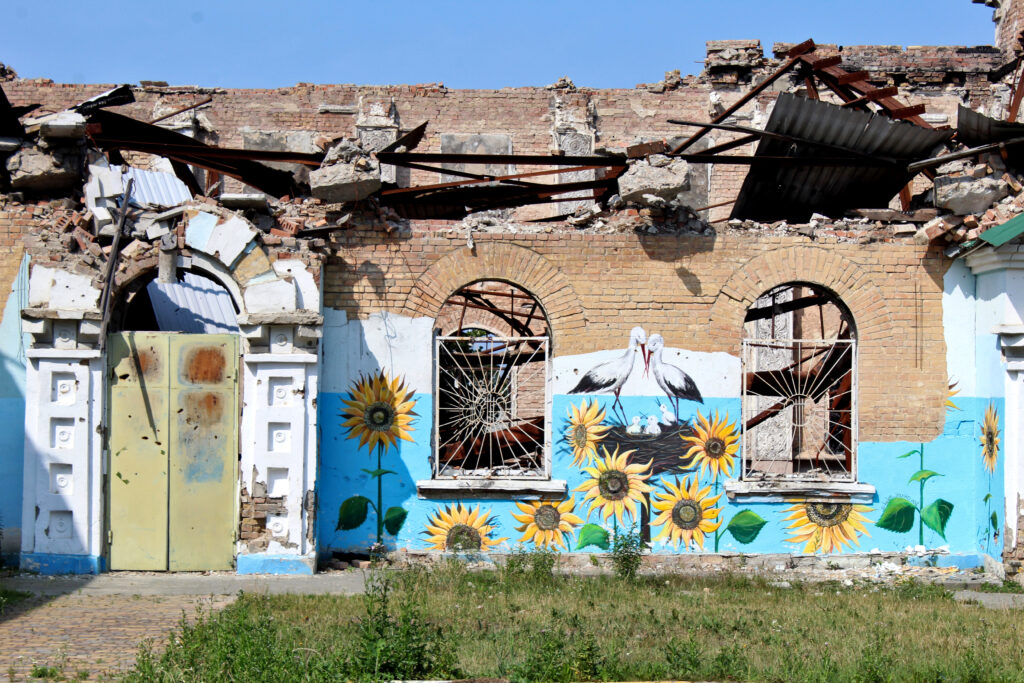
Even though the whole world talks about the war in Ukraine, not many people know this conflict’s background. Not because they would be stupid – war in Ukraine is actually pretty simple – but because it takes time to understand it. Some poeple don’t have this time. And then other people try to take advantage of them: spreading misleading or even purposely false information. The following article therefore summarizes all important moments in Ukrainian history relevant to the current war. Yeah, it’s long, but we tried – after all, we’re talking about more than a thousand years of development… We also didn’t want to leave out any important information. Putin and Russian propaganda often justify the war in Ukraine by selecting only what suits them from Ukrainian history – it’s hard to detect if you don’t have the whole picture – so here it is 😉 Kievan Rus’: How it All Began The story begins in the 9th century with Kievan Rus’, the first state formation of Slavs (before there were only tribes). Covering parts of modern-day Ukraine, Russia, and Belarus. Because Kievan Rus’ was very big, its ruler Vladimir the Great divided it into smaller principalities between his sons: But Kievan Rus’ never controlled all of modern Ukraine. The southern steppe dominated Turkic tribes – the Pechenegs and Cumans – who were constantly in conflict with Kievan Rus’ (everyone was constantly in a conflict in this time period). In the 13th century, Mongolian Empire invaded Kievan Rus’. It was more precisely one sector of Mongolian Empire called the Golden Horde. Kievan Rus’ fell apart. Its successor states were Kingdom of Galicia-Volhynia, Novgorod Republic and Vladimir-Suzdal. Ukraine between Poland, Moscow, and the Crimean Khanate Kingdom of Galicia and Volhynia was later divided between Poland and Latvia. Those countries were in their prime at that time, and later they formed a Polish-Lithuanian Union. Novgorod Republic and Vladimir-Suzdal were located in a territory of nowadays Russia, and Vladimir-Suzdal later transformed into Principality of Moscow, which is ancestor to nowadays Russia. In the 15th century, the Golden Horde transformed into the Crimean Khanate, a vessel of the Ottoman Empire. The word vessel can be a little bit confusing: it might feel like a synonym for friend or partner… But keep in mind, at this time of history, all states were competitors trying to secure their own safety, and get as much power as possible – event those three states on the territory of Ukraine: Polish-Lithuanian Union, Principality of Moscow, and Crimean Khanate Cossacks Into this dynamics emerged Cossacks. Semi-independent, combative groups with uncertain ethnic origin, which started to settle around the Dnipro river in the 16th century. Basically at a meeting point of our three states (Polish-Lithuanian Union, Moscow Principality, and Crimean Khanate) The combativeness of Cossacks was making them hard to conquer, and at the same time – in the eyes of Poland and Crimean Khanate – an ideal army: if they paid them enough money, they would go fight anyone. In the 17th century, Cossack leader Bohdan Khmelnytskyi, sought to renew Kievan Rus’. To accomplish that, he allied with the Crimean Khanate. At first they were winning – Cossacks even managed to form their state: so-called Hetmanate (name derived from “hetman”, the leader of the Cossacks). But after some time, the Crimean Khanate got scared by the power Cossacks were gaining and betrayed them. Cossacks had to search for a new ally. Out of all possibilities, Khmelnytskyi resorted to Moscow. He had to – nothing else worked out. This 1654 Pereyaslav Agreement between Cossacks and Moscow was very unequal. Cossacks had to accept the sovereignty of the Tsar. Hetmanate, which was pretty much the majority of nowadays Ukraine, fell under the full control of Russia. After Khmelnytskyi died, his successors tried to get Hetmanate out of the Russian influence – without any success. Since Poland was also making territorial claims, Ukraine was split along the Dnieper River: the west went to Poland, the east stayed with Russia. In the 18th despite its big size, Poland lost its power and neighboring countries Prussia, Russia and the Habsburg monarch decided to use this opportunity and divided Poland between themselves. (It’s called “three partitions of Poland”). This meant the Russian sphere of influence moved more to the west and the only part of nowadays Ukraine left out was Galicia, now belonging to the Habsburg monarchy. Neither Habsburg monarchy nor Russia were ideal for Ukrainians to live in. They were both trying to suppress their national identity. Russia maybe a bit more, since they were trying to claim Ukrainian language is just a branch of Russian language. The German-speaking Habsburg monarchy obviously couldn’t use this argument. When Russians are nowadays making territorial claims about Ukraine, this historical period is one of their arguments. Another one is Crimea. A Glimpse into Crimea While Ukraine’s heartland was divided between Poland and Russia, Crimea followed its own path. Originally ruled by the Crimean Khanate, a vassal of the Ottoman Empire, it fell to Catherine the Great in the 18th century after Russia won in the war against the Ottomans. Crimea stayed under Russia until 1954. As all parts of the Soviet Union, Crimea underwent strong Russification. It was the worst under Stalin, who tried to get rid of Crimea’s indigenous population, Crimean Tatars, by deporting them to gulags. In 1954, Soviet leader Nikita Khrushchev donated Crimea to Ukraine. At that time it was a symbolic gesture with little practical impact, since both were part of the USSR. However it started to be problematic after the fall of the Soviet Union. After the fall of the Soviet Union, there were some attempts to make Crimea independent. Historically and ethnically, Crimean Tatars truly don’t have much in common – neither with Russia, nor with Ukraine. They are a Turkic ethnic group, with a language from Turkic languages family, and their predominant religion is Islam. Plus until the 18th century they had their own country: Crimean Khanate. So, in an