
European Parliament in Nutshell: March 2026
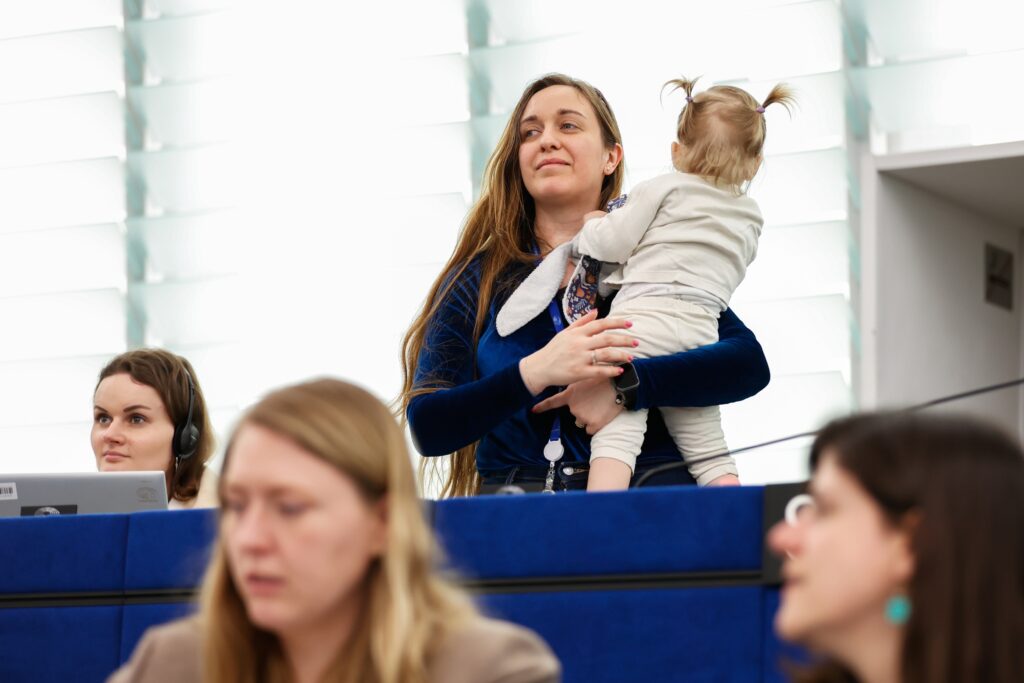
Every month, the European Parliament plenary session takes place in Strasbourg. And every month, IR Media follows it closely. These are the highlights of the last plenary session taking place from 9th to 12nd March 2026: European Parliament against gender pay gap On Wednesday eurodeputies voted on the report prepared by the Committee on Women’s Rights and Gender Equality. This report maps the gender pay gap in the European Union, its consequences and proposes solutions to combat it. Gender pay gap is a difference between the average gross hourly earnings of men and women. In the EU it’s currently 12 %. This doesn’t mean that jobs would give women automatically a 12% lower salary just because they are women… The gender pay gap is more of a structural problem. Stereotypes that there are “men’s jobs” and “women’s jobs” still persist in society and influence our career choices. Those “women’s jobs”, are considered less prestigious, therefore less paid. If women try to get into “men’s jobs”, they face backlash and sexism not all of them can withstand. Moreover, women are still expected to perform the majority of housework and childcare. Tasks that are unpaid, and often force women to interrupt their careers. Which results in women having lower pensions. Some of the solutions this report proposes are: AI will have to respect copyright On Tuesday, MEPs adopted a series of recommendations to protect copyrighted creative work from use by artificial intelligence. Because right now, AI uses copyrighted works freely with no limits. Eurodeputies want authors to be paid if their works are used by AI, ideally even retrospectively. And, to guarantee them an option to completely opt-out from their work being used by AI. They also want to make AI companies transparent about what copyrighted works they used to train their models. Now it’s up for the European Commission to transform these recommendations into concrete laws. Chat Control reached a compromise On Wednesday, the European parliament voted to extend exemption from ePrivacy Directive. This directive normally prohibits the scanning of private messages, but the exception allows it. The goal was to enable big digital platforms to detect child sexual abuse materials by scaning their users’ messages. But it was a bit double-edged because it could be misused to spy on citizens by authoritarian governments. Fortunately, MPs also voted that scanning private messages can only take place under a court order in case of a suspected sexual abuse. Last but not least, do you remember how the last plenary session, the Special Committee on the Housing Crisis came up with recommendations to deal with the housing crisis in the EU? This session they presented it to the whole Parliament, and the parliament voted yes. The next sitting will be held from 27th to 30th April 2026 in Strasbourg
European Parliament in Nutshell: January 2026

Every month, the European Parliament plenary session takes place in Strasbourg. And every month, IR Media follows it closely. These are the highlights of the last plenary session taking place from 19th to 22nd January 2026: European Parliament stood up for passenger rights On Wednesday, the European Parliament rejected the European Council’s proposal to weaken the rights of air passengers. These rights have been in force since 2004. The European Council consists of ministers from all EU countries. In this case it was the Ministers for Transport who made this proposal in June 2025. They proposed to reimburse the passengers only if their flight is delayed by four to six hours depending on the flight distance. instead of the current three hours. And tried to reduce the upper limit of compensation for flight delays or cancellations from 600€ to 500€. Parliament refused that. The MEPs also want to introduce pre-filled forms to simplify the process of claiming a reimbursement. And they want to give passengers a year to file this request. Free trade agreement between EU and Latin America paused On Wednesday Eurodeputies voted to refer the free trade agreement between EU and MERCOSUR to the Court of Justice of the European Union to assess if the agreement is compatible with European law. MERCOSUR is the abbreviation of Southern Common Market, which is a trade bloc of South American countries: Argentina, Brazil, Paraguay and Uruguay… But Mercosur is also used as a global term for that free trade agreement. European Parliament discussed this free trade agreement for years because it’s quite controversial. On the one hand, it will create the largest free trade zone in the world, strengthen the European economy, and help Latin American countries. On the other hand, importing goods from there will be environmentally unfriendly and create a strong competition for European farmers. Despite their numerous protests, the European parliament adopted the agreement. The weekend before this Plenary session the President of the European Commission, Ursula von der Leyen even signed it. But right now it’s frozen and awaits the decision of the Court. European Parliament stands with Iran On Thursday the European Parliament adopted a resolution against the repressions and mass murders committed by the Iranian regime against protesters in Iran. If you want to know more about what’s happening in Iran, we made a Story of the Last Week about this topic. By this resolution the EP demands the immediate and unconditional release of all protesters held under arrest. Parliament also calls on the EU and its member states to take strict measures against the regime like visa bans, money freezing, and providing technical and financial support to fight against the censorship happening in Iran. The next sitting will be held from 9th to 12th February 2026 in Strasbourg
European Parliament in Nutshell: December 2025

Every month, the European Parliament plenary session takes place in Strasbourg. And every month, IR Media follows it closely. These are the highlights of the last plenary session taking place from 15th to 18th December 2025: European Parliament supported “My voice, my choice” initiative for safe and accessible abortion On Wednesday 17th December, eurodeputies supported the European Citizens´Initiative “My voice, my choice” for safe and accessible abortion. A European Citizens’ Initiative is a tool for people from the EU to ask the European Commission to propose some new legislation. To be considered, the initiative must collect at least one million signatures in 7 member states. In this case, the initiative calls for creation of some financial mechanism that would be available to all member states that choose to take part and would allow them to finance abortion care for women who cannot access it in their own country. The European Commission now has time until March 2026 to explain how it will respond to this initiative. Gradual ban of Russian gas The main point of the European plenary session this month was the Russian gas imports. On Wednesday 17th December eurodeputies voted to gradually move away from Russian LNG (= liquified natural gas) and pipeline gas. This comes in response to Russia’s weaponisation of energy supplies, which was happening for the last two decades and escalated with the Russian invasion of Ukraine in 2022. The ban will come gradually. First on the short-term supply contracts for LNG in April 2026, then on the short-term supply contracts for pipeline gas in July 2026, then on the long-term LNG contracts in January 2027 and lastly on the long-term pipeline gas contracts in September 2027. Sakharov prize 2025 As every year, the European Parliament awarded the Sakharov Prize for Freedom of Thought during its December session. This year, to journalists Andrzej Poczobut and Mzia Amaglobeli. Who are currently imprisoned by the political regimes in their countries because of their work. Andrzej Poczobut, a member of the Polish minority in Belarus, was sentenced to 3 years in prison in 2021 for allegedly insulting the President of Belarus and inciting ethnic hatred. In 2023, he received an additional sentence of 8 years for what authorities described as actions harming Belarusian national security. Mzia Amaglobeli was arrested at the beginning of this year for taking part in protests against the Georgian government who is trying to pull the country away from its pro-European course and bring it closer to Russia. Amaglobeli is Georgia’s first female political prisoner since Georgia´s independence in 1992 after the fall of the Soviet Union. Did you know? The Sakharov Prize bears the name of Andrei Sakharov, a Soviet scientist and dissident. He spoke out against political repression and became a symbol of the fight for human rights and freedom of expression. The next sitting will be held from 19th to 22nd January 2026 in Strasbourg