
Ceasefire between the US and Iran : Story of the Last Week
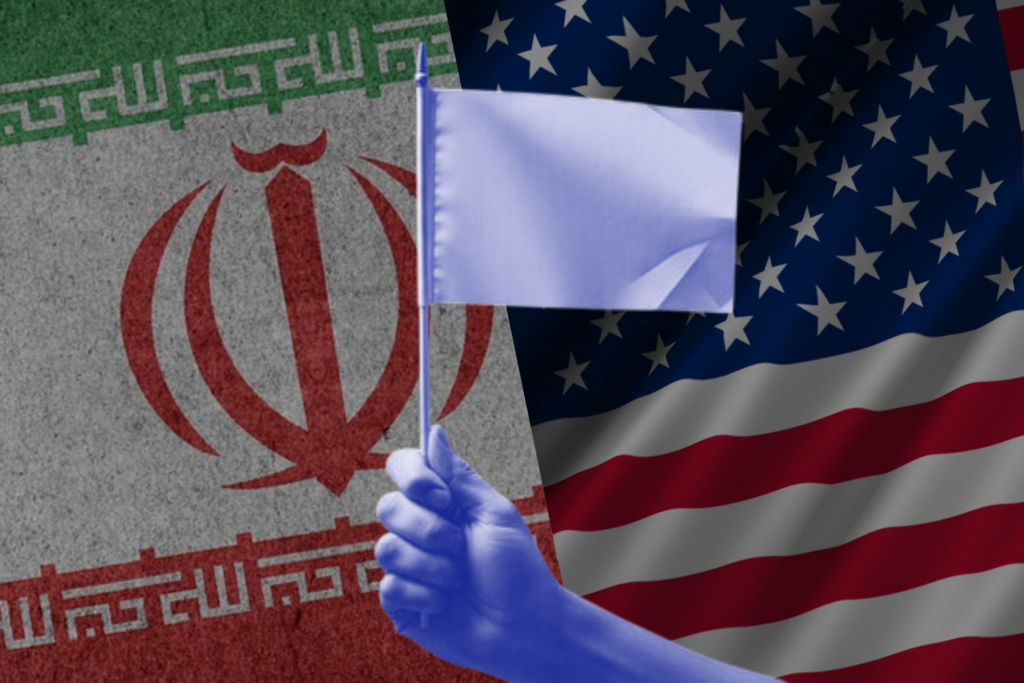
After 38 days of war between the US, Israel and Iran, on April 8th, two week ceasefire was announced What preceded the ceasefire? On 28th February, Israel and the United States “preventively” attacked Iran. You can read more in detail about this attack in our article : US & Israel Attack on Iran. Iran responded by attacking Israel back, and also attacking the allies of the United States and Israel in the region (like Kuwait, Saudi Arabia, Qatar, the United Arab Emirates, Bahrain, or Oman). Soon, military groups from Lebanon and Iraq joined Iran’s side. Iran also blocked the Strait of Hormuz, a strategic point in the world’s oil transportation. This led to an increase in the prices of oil and food (since oil is used for fertilizers and packaging). Donald Trump, the president of the US, didn’t expect this (although he should have). His loss of control over the situation was clearly visible in the level of hysteria in his posts on the Truth Social – a platform he created to communicate his decisions. He was alternating between announcing victory over Iran, negotiations with it, and giving it ultimatums… See for yourself: On April 8th, just hours before his last ultimatum was about to expire, he suddenly switched. And announced a two week ceasefire. How was the ceasefire negotiated ? The ceasefire may seem sudden, but in reality, weeks of negotiations preceded it. Actually, the US and Iran were negotiating even before the war started. Just two days before the “preventive” attack both countries met in Geneva to discuss Iran’s nuclear program (more details in this article). Immediately after the attack, Trump expected negotiations, which Iran denied. Negotiations restarted around mid-March, when the US delivered a 15-point plan to end the war to Iran via Pakistan. So far, this plan is not publicly available. However, the US was supposed to demand heavy restrictions of Iran’s nuclear program and its ballistic-missiles, end of Iran’s support for regional armed groups (like Hizballah in Libanon), and reopening the Strait of Hormuz. In return, the US would lift nuclear-related sanctions on Iran and help it to develop a civilian nuclear program. (This is basically what the US discussed with Iran in Geneva before attacking it.) Iran refused, proposing a 5-point plan instead. In which they demanded the US to stop killing Iranian officials, end all hostilities, guarantee that no other war is waged against Iran, pay reparations, and accept Iran’s sovereignty over the Strait of Hormuz. Pakistan, the mediator in this conflict, then issued another 5-point initiative together with China. Demanding immediate end of all hostilities, start of peace talks, security of nonmilitary targets, security of shipping lanes, and respect of the United Nations Charter. On 1st April, Trump claimed that Iran asked him for a ceasefire. Iran denied it. While Trump was giving ultimatums and tweeting that “the whole civilization will die tonight”, diplomatic negotiations were culminating in Pakistan. The American side was represented by the US vice president JD Vance, US special envoy to the Middle East Steve Witkoff, and Trump’s son in law Jared Kushner. The Iranian delegation was composed of Foreign Minister Abbas Araghchi, Parliament Speaker Mohammad Bagher Ghalibaf, and four senior commanders from Iran’s Revolutionary Guard. Although the composition of this group sounds a bit like the beginning of a joke, together they negotiated a temporary ceasefire. Terms of the ceasefire The ceasefire has 10 points. However, what these points are, is not yet crystal clear… Several versions are circulating in the press. And the whole situation is complicated by the fact that before this final 10-point plan, there was another 10-point plan proposed by Iran (and strongly rejected by the US). Certain is that the ceasefire will last for 14 days, during that time attacks on both sides will stop and the Strait of Hormuz will be reopened. The versions circulating in the press most often mention these other conditions : Aftermath The ceasefire is only a temporary solution. Diplomatic negotiations continue in its background. It is possible that the US and Iran will extend the ceasefire or end the war altogether. However, it is also possible that they will not reach an agreement and, when the ceasefire ends after two weeks, they will start attacking each other again. So far, this scenario seems more realistic given that: Why should we care about it? Because a ceasefire does not mean the end of the conflict. But people often make the mistake to interpret it that way. So, they miss the “final solution”. Remember how the ceasefire in Gaza turned out? – Exactly! Sources: Khamenei’s top aide Larijani rules out negotiations with US after Trump says ‘I have agreed to talk’ — What’s next for Iran Iran rejects US ceasefire plan, issues its own demands as strikes land across the Mideast – The Washington Post U.S. Sends Iran 15-Point Plan to End War | UANI Iran dismisses U.S. ceasefire plan, issues counterproposal as strikes land across the Mideast | PBS News Five-Point Initiative of China and Pakistan For Restoring Peace and Stability in the Gulf and Middle East Region_Ministry of Foreign Affairs of the People’s Republic of China Oil, strait of Hormuz and empty threats: a timeline of Trump’s flip-flopping on the Iran war | Donald Trump | The Guardian Pakistan says ceasefire efforts underway as Iran war continues | Arab News The Islamabad Accords: Framework, Preparations, and the Long View Iran warns it will respond if Israeli attacks on Lebanon don’t stop immediately – BBC News Has Iran’s 10-point plan changed, as JD Vance claims? | US-Israel war on Iran News | Al Jazeera Iran warns it will respond if Israeli attacks on Lebanon don’t stop immediately – BBC News What is Iran’s 10-point conditions for ceasefire and negotiations – The Hindu Will the Cease-Fire With Iran Hold? | Foreign Affairs What we know about the US and Iran’s ceasefire deal
Hormuz Crisis : Story of the Last Week
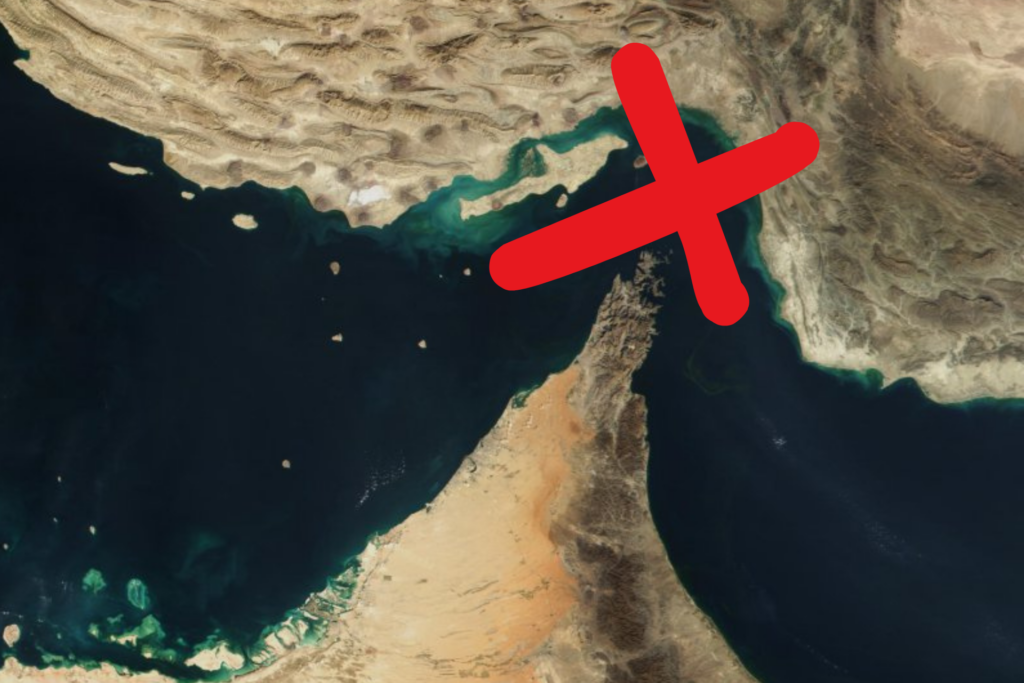
After the US and Israel attacked Iran on 28th February, Iran responded by blocking the Strait of Hormuz, a strategic point in the world’s oil transportation. What does this mean for the world? And how do one even block a strait? Let’s look at it: What Is the Strait of Hormuz? Strait of Hormuz is a 33 kilometres wide (at its narrowest point) strip of water between Iran and Oman connecting the Persian Gulf to the Indian ocean. It’s the only way out for oil tankers from Saudi Arabia, Iraq, Kuwait, the United Arab Emirates, and Iran itself. Every day 25% of the world’s oil passes through the Strait of Hormuz – or actually used to pass… Even though the Strait itself is in international waters, United Nations rules allow countries to control waters up to 12 nautical miles (= 22kilometres) from their coast – and that’s exactly what Iran is doing now. What Does “Blocking the Strait of Hormuz ” Look Like ? Iran’s Islamic Revolutionary Guard Corps broadcasted a message to radios of ships present in the area, that every ship that tries to pass through the Strait of Hormuz would be attacked. And it didn’t just stay with words: Iran actually fired drone and missile strikes on several commercial ships. There is also a suspicion that Iran may have laid sea mines near the strait’s entrance, making passage physically impossible without risking an explosion. What’s the Impact ? As a result of the blockade, the shipping companies are changing routes – now they are mainly using land transport through Jordan and Syria. Which takes much longer, so it costs more and delays deliveries. Due to the war in the Middle East, global oil prices already rose by 20%, hitting 120 dollars per barrel – the highest price since 2008. However, rising oil prices are not the only consequence. The blockade can also affect the development of the whole conflict. Whereas Benjamin Netanyahu (Israeli prime minister) went into this conflict determined to win at all costs, even if it took a long time, his ally Donald Trump (US president) had a different vision… He wanted a quick, decisive strike on Iran – something he would sell as an effective victory with zero costs to its voters. But with the strait blocked, this won’t work. Trump can’t declare victory if the global economy is spiraling into crisis. He could, but who would believe him? Has Something Like This Happened Before? The Strait of Hormuz blockade isn’t the first case where the maritime transport was taken hostage. During the war between Iraq and Iran in the 80s, both sides attacked oil tankers in the Persian Gulf which resulted in an increase in oil prices and panic on global markets until a ceasefire was negotiated. Another example is the Suez Canal Crisis in 1956. After Egyptian President Gamal Abdel Nasser nationalized the Suez Canal, which was previously controlled by Britain and France. Britain, France, and Israel launched a military campaign to retake control of the canal. This led to the blockage of the canal, disrupting the flow of goods and thus increasing transportation costs. The Suez Canal was then blocked once again in 2021. When the Ever Given container ship got stuck in there for six days. This incident cost an estimated $9.6 billion per day in global trade losses. Why Should We Care? Because the blockade of the Strait of Hormuz will cause prices to rise. Not only in transport, when both gasoline and airline tickets will be more expensive, but also in food. Since oil is used not only for fuel but also for fertilizers and packaging. Remember the energy crisis in 2022 when Russia attacked Ukraine… Because the conflict could widen: Trump is already trying to drag other countries in it: Wanna Know More? Check out these articles (that were btw. used to write this article;):
War in Middle East : Story of the Last Week

After February 28, when Israel and the United States “preventively” attacked Iran, the conflict expanded to other states. Which ones? And why? Let’s break it down: Basically, there are four possibilities how other countries got dragged in the war: either they were friends of US or Israel, and because of that they were attacked by Iran; or by its allies; or they were friends with Iran, and decided to support it by attacking Israel or countries that were friends with US or Israel, or they were Iraq. Countries Attacked by Iran All these countries are somehow connected to the United States or Israel – whether it is because they have American bases on their territory, or because they maintain friendly relations with those countries. By attacking them, Iran is trying to destroy American infrastructure, as well as put pressure on their governments to distance themselves from the US/Israel, and to turn public opinion against their leaders for aligning with the West. Countries of Gulf Cooperation Council The Gulf Cooperation Council is a political and economic union of six Arab states bordering the Persian Gulf: Kuwait, Saudi Arabia, Qatar, the United Arab Emirates, Bahrain, and Oman. Founded in 1981 (during the Iran-Iraq War), its purpose was to protect member states from regional instability. All are oil-rich nations that rely on stability for economic prosperity, often acting as mediators in regional conflicts (eg. easing tensions between Israel, the US, and Iran). Naturally, the US-Israel strike on Iran was the last thing they wanted – it threatened their economic interests. They opposed it from the start – but still paid the price… Azerbaijan Despite being a Muslim country, Azerbaijan maintains a good relationship with Israel. Iranian drones struck its autonomous Nakhchivan region. Azerbaijan also accused Iran of planning sabotage operations on its territory – but the Iranian government denied it claiming the sabotages were organized by its enemies who are trying to frame Iran. Turkey Iran also sent two missiles to Turkey. However, NATO, Turkey is part of, neutralized them. Countries Attacking US and Israel Lebanon : Hizbollah Lebanon was drawn into the war by Hezbollah, a Shiite Muslim political party and militant group operating independently of the Lebanese government (basically Hezbollah, is a state within a state). After the US and Israel attacked Iran, Hezbollah struck against Israel. Israel responded to it by attacking Lebanon back. Iraq Iran and Iraq were historically enemies (Iraq even attacked Iran in the 80s), but after Iraqi dictator Saddam Hussein’s fall, the two grew closer. Mainly because both are now led by Shiite muslims. So that’s why, in the current conflict, Iraq supports Iran. Or actually, parts of it do. Because Iraq is divided: between the Kurds, who have a semi-autonomous Kurdish region at the north of Iraq, and the Shiit rest of the country. Whereas the pro-Iranian militias from the Shiite-dominated south support Iran, the Kurds are against it. Kurds even host American bases on their territory. Those bases were bombed by both Iran and military groups from the pro-Iranian part of Iraq. These same pro-Iranian groups also attacked Saudi Arabia and other countries. Countries Attacked by Iranian Allies Cyprus A Lebanese missile struck a British base in Cyprus. While the UK refused to join the US and Israel strikes on Iran, it offered its bases to the US for defense purposes after Iran retaliated. Jordan A longtime US ally, Jordan assisted the US during last summer’s Twelve Day War. Now, its local US bases were attacked and damaged by Iran-backed militias from Iraq. Collaterals: Syria Syria is not officially at war, but due to its geographic position, Iran fires missiles at Israel over Syrian airspace. Debris from intercepted missiles has fallen on Syrian territory, causing damage and minor injuries. What Are the Consequences? The war has reduced and logistically complicated oil exports (e.g. the insurance rates for oil shipping companies skyrocketed because their ships are now in a high risk of strike). This is driving up oil prices. Attacks on oil refineries pose regional ecological threats. For example, a missile strike on a Tehran refinery caused a massive fire, leading to acid rain over the city. Hundreds of thousands of travelers are stranded across the Middle East. Airspace closures (due to missile risks) and mass flight cancellations have left many unable to fly. Sources: A Sprawling Middle East War Explodes | International Crisis Group How the unfolding war is affecting countries in the Middle East | AP News What are the differences between Iraqi Kurdistan and Iraq? From Rivals to Allies: Iran’s Evolving Role in Iraq’s Geopolitics – Middle East Council on Global Affairs Iran-backed militias intensify attacks against US, Israel and allies | Iran | The Guardian How an Incident on the Azerbaijan-Iran Border Became a Test for Diplomacy in the Region – The Times Of Central Asia Why Azerbaijan is important for Israel’s security – JNS.org Syria distances itself from the US-Israeli war on Iran – Enab Baladi Kuwait cuts oil production due to Strait of Hormuz closure
Protests in Iran: Story of the Last Week

Over the past week, Iran has seen a new wave of protests. It all started economically on December 28, 2025, in Tehran, Iran’s capital, when local merchants protested after another sharp drop of the Iranian currency (the rial). This time, however, it reached its lowest value in history: inflation has risen to 40%. Iran’s worsening economic situation is due to both corruption and sanctions imposed on Iran over its nuclear program. Students soon joined, and the demonstrations turned political, with slogans targeting Supreme Leader Ali Khamenei. While Iran has a president, his role is purely ceremonial. The real power lies with the Supreme Leader – a position created after the 1979 revolution, when Iran became an Islamic state. Only two men have held this lifelong role: Ruhollah Khomeini and the current leader, Ali Khamenei, who has ruled for 36 years and is now facing protests The protests in Iran are the largest protests since 2022, with over 550 people killed and 20,000 detained after the death of Mahsa Amini. But let’s start from the beginning… How did Iran get here? Although Russia and Britain always tried to get Iran under their influence, Iran maintained its independence for a long time. Until World War II, when it sided with Germany. Fearing this alliance, Britain and the USSR invaded, removed the Shah, and installed his son, Mohammad Reza Pahlavi. Unlike his father, the new Shah was not afraid to open the country to foreign – mainly Western – influences. But the Iranian people were a bit more skeptical of his open foreign policy. In 1951, they democratically elected Mohammad Mossadegh as prime minister. Mossadegh nationalized Iran’s oil industry, controlled by the British at that time. This upset the British, so they convinced the US that Mossadegh’s rule would inevitably lead to a communist coup and that Iran would side with the Soviet Union in the Cold War. In 1953, the American and British secret services orchestrated a coup, overthrowing Mossadegh. Initially, Mohammad Reza was against it, but he quickly realized that with such an attitude, the British and Americans wouldn’t let him stay in power for long, so eventually, he joined the coup. Because of that, the Iranians started to consider him a coward. To prove to them (and to himself) that he was not, he began to implement various socio-economic reforms. His goal? To turn Iran into a modern, Western-style superpower. He redistributed land from large landowners to small farmers, built dams and power plants, fighted illiteracy, and gave women the right to vote… And, to REALLY show that he was no coward, he became more autocratic. He even established a secret police, SAVAK, that brutally suppressed any opposition to him. Mohammad Reza’s style of government inevitably led to increased US influence in Iran – at least economically. Concerning security, the Americans were not so eager to guarantee military help to Iran in case of an attack by the USSR. But if the mountain will not come to Muhammad, then Muhammad will go to the mountain. In this case, Mohammad Reza began negotiations with the Soviet Union about a non-aggression pact. Of course, the American president didn’t like that, so he convinced Mohammad to back down from these negotiations – which in turn angered the Soviet Union, who began supporting Mohammad Reza’s opponents. Iran Islamic revolution in 1979 And he had quite a few opponents: Ruhollah Khomeini, a Shia cleric, became the loudest critic of Mohammad Reza’s rule – not only in religious circles – he managed to appeal to a wide spectrum of dissatisfied people. What’s the difference between Shia and Sunni Islam? Simply put, the two groups differ over who they recognize as Muhammad’s rightful successor. Shia Muslims (the majority in Iran) believe leadership should be hereditary, passing to Muhammad’s descendants. Sunni Muslims (the majority globally) argue that the leader should be elected. The Revolution Anti-government protests began in October 1977 and gradually intensified, escalating in the spring of 1979, when Mohammad Reza fled into exile and Khomeini took over the government. Shortly after, he held a referendum on whether Iran “should become an Islamic Republic or not”. According to official results, 99% of people voted “yes,” and the turnout was 99%. Mohammad Reza was indeed unpopular, but the fact that the elections were held publicly and that the ballots were color-coded (green for yes, red for no) certainly played some role in this result. At the same time, the question “Islamic Republic: yes or no” is quite vague. Even today, in the age of the internet, it’s hard to understand what you’re signing up for – let alone in the 70s as someone living in extreme poverty… Many, focused on survival, didn’t grasp the implications until later – when it was too late. Life Under Sharia Law Since the revolution, Iran’s legal and political system has been strictly based on so-called Sharia law. Sharia law is not some uniformly codified law written in black and white somewhere. It’s more like different interpretations of how people should live according to the Quran (in the case of Iran, this interpretation is led by the Supreme Leader). This is a deeply problematic system because everyone can interpret the Quran basically however they want, since Islam does not have any central authority, like the Pope, to which they would be accountable. Iran is living proof of that. What exactly does living in accordance with the Quran mean according to its Supreme Leaders? For example: Sanctions on Iran Frankly, it’s primarily women who are negatively affected. But they are not the only ones with a reason to protest: Since the revolution, Iran has been regularly subject to sanctions – mainly from the United Nations, US, UK, and EU, primarily because of its nuclear program (on which Iran cooperates with China and Russia). Sanctions have led to an increasingly deteriorating economic situation, affecting everyone. There have been several big protests in Iran’s history: Unfortunately for Iranians, each wave of protest has been met