
Ceasefire between the US and Iran : Story of the Last Week
After 38 days of war between the US, Israel and Iran, on April 8th, two week ceasefire was announced What preceded the ceasefire? On 28th February, Israel and the United States “preventively” attacked Iran. You can read more in detail about this attack in our article : US & Israel Attack on Iran. Iran responded by attacking Israel back, and also attacking the allies of the United States and Israel in the region (like Kuwait, Saudi Arabia, Qatar, the United Arab Emirates, Bahrain, or Oman). Soon, military groups from Lebanon and Iraq joined Iran’s side. Iran also blocked the Strait of Hormuz, a strategic point in the world’s oil transportation. This led to an increase in the prices of oil and food (since oil is used for fertilizers and packaging). Donald Trump, the president of the US, didn’t expect this (although he should have). His loss of control over the situation was clearly visible in the level of hysteria in his posts on the Truth Social – a platform he created to communicate his decisions. He was alternating between announcing victory over Iran, negotiations with it, and giving it ultimatums… See for yourself: On April 8th, just hours before his last ultimatum was about to expire, he suddenly switched. And announced a two week ceasefire. How was the ceasefire negotiated ? The ceasefire may seem sudden, but in reality, weeks of negotiations preceded it. Actually, the US and Iran were negotiating even before the war started. Just two days before the “preventive” attack both countries met in Geneva to discuss Iran’s nuclear program (more details in this article). Immediately after the attack, Trump expected negotiations, which Iran denied. Negotiations restarted around mid-March, when the US delivered a 15-point plan to end the war to Iran via Pakistan. So far, this plan is not publicly available. However, the US was supposed to demand heavy restrictions of Iran’s nuclear program and its ballistic-missiles, end of Iran’s support for regional armed groups (like Hizballah in Libanon), and reopening the Strait of Hormuz. In return, the US would lift nuclear-related sanctions on Iran and help it to develop a civilian nuclear program. (This is basically what the US discussed with Iran in Geneva before attacking it.) Iran refused, proposing a 5-point plan instead. In which they demanded the US to stop killing Iranian officials, end all hostilities, guarantee that no other war is waged against Iran, pay reparations, and accept Iran’s sovereignty over the Strait of Hormuz. Pakistan, the mediator in this conflict, then issued another 5-point initiative together with China. Demanding immediate end of all hostilities, start of peace talks, security of nonmilitary targets, security of shipping lanes, and respect of the United Nations Charter. On 1st April, Trump claimed that Iran asked him for a ceasefire. Iran denied it. While Trump was giving ultimatums and tweeting that “the whole civilization will die tonight”, diplomatic negotiations were culminating in Pakistan. The American side was represented by the US vice president JD Vance, US special envoy to the Middle East Steve Witkoff, and Trump’s son in law Jared Kushner. The Iranian delegation was composed of Foreign Minister Abbas Araghchi, Parliament Speaker Mohammad Bagher Ghalibaf, and four senior commanders from Iran’s Revolutionary Guard. Although the composition of this group sounds a bit like the beginning of a joke, together they negotiated a temporary ceasefire. Terms of the ceasefire The ceasefire has 10 points. However, what these points are, is not yet crystal clear… Several versions are circulating in the press. And the whole situation is complicated by the fact that before this final 10-point plan, there was another 10-point plan proposed by Iran (and strongly rejected by the US). Certain is that the ceasefire will last for 14 days, during that time attacks on both sides will stop and the Strait of Hormuz will be reopened. The versions circulating in the press most often mention these other conditions : Aftermath The ceasefire is only a temporary solution. Diplomatic negotiations continue in its background. It is possible that the US and Iran will extend the ceasefire or end the war altogether. However, it is also possible that they will not reach an agreement and, when the ceasefire ends after two weeks, they will start attacking each other again. So far, this scenario seems more realistic given that: Why should we care about it? Because a ceasefire does not mean the end of the conflict. But people often make the mistake to interpret it that way. So, they miss the “final solution”. Remember how the ceasefire in Gaza turned out? – Exactly! Sources: Khamenei’s top aide Larijani rules out negotiations with US after Trump says ‘I have agreed to talk’ — What’s next for Iran Iran rejects US ceasefire plan, issues its own demands as strikes land across the Mideast – The Washington Post U.S. Sends Iran 15-Point Plan to End War | UANI Iran dismisses U.S. ceasefire plan, issues counterproposal as strikes land across the Mideast | PBS News Five-Point Initiative of China and Pakistan For Restoring Peace and Stability in the Gulf and Middle East Region_Ministry of Foreign Affairs of the People’s Republic of China Oil, strait of Hormuz and empty threats: a timeline of Trump’s flip-flopping on the Iran war | Donald Trump | The Guardian Pakistan says ceasefire efforts underway as Iran war continues | Arab News The Islamabad Accords: Framework, Preparations, and the Long View Iran warns it will respond if Israeli attacks on Lebanon don’t stop immediately – BBC News Has Iran’s 10-point plan changed, as JD Vance claims? | US-Israel war on Iran News | Al Jazeera Iran warns it will respond if Israeli attacks on Lebanon don’t stop immediately – BBC News What is Iran’s 10-point conditions for ceasefire and negotiations – The Hindu Will the Cease-Fire With Iran Hold? | Foreign Affairs What we know about the US and Iran’s ceasefire deal
Israel’s death penalty law for Palestinians : Story of the Last Week
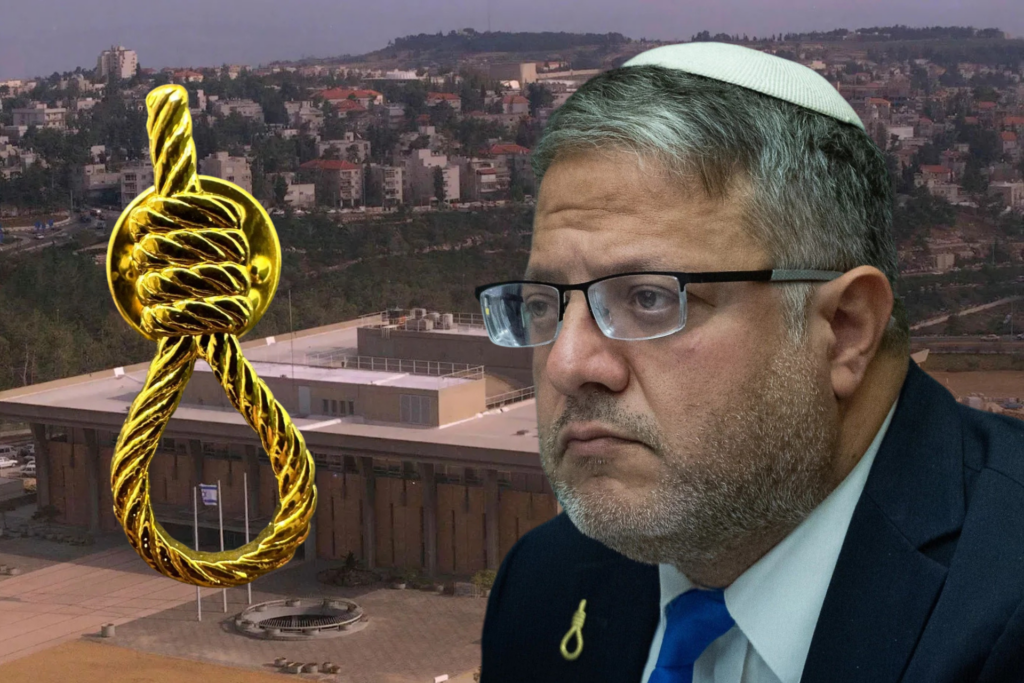
On March 30, 2026, the Israeli parliament (= Knesset), passed a controversial law allowing the death penalty by hanging for Palestinians living in the West Bank convicted of terrorism. What’s this law about? Let’s look at its key excerpt: “A resident of the Area who intentionally causes the death of a person, where the act constitutes an act of terrorism as defined in the Counter-Terrorism Law, shall be sentenced to death, and this punishment only; however, if the Military Court finds, that special circumstances exist for which it is appropriate to sentence the terrorist to life imprisonment, it may impose such a sentence” By “Area” law means Judea and Samaria, which is the West Bank of the Jordan. And by “resident of the Area” law means a person “who is registered in the population registry of the Area or one who resides in the Area even if not registered in said registry, excluding an Israeli citizen or an Israeli resident” 💡: For the original law see here, you can find the unofficial English translation here. Why is it controversial? By its formulation, the law explicitly excludes Israelis from the death penalty, so it doesn’t apply to everyone equally. This is a discriminatory practice that is against the constitution which says that all people are equal. According to the law, executions are fasttracked and stripped of safety mechanisms. The death penalty can be simply decided by a majority of the court without the prosecutor having to propose it. And the execution should be carried out within 90 days of the verdict. Convicted people should not be allowed to receive visitors in prison beforehand. And they can consult their lawyers only via video calls. The death penalty is the default punishment unless the court finds “special circumstances” to change the sentence to life imprisonment. However, the law does not define what these “special circumstances” are, leaving it open to interpretation. Moreover, the law is not “kosher” even according to Jewish morality… Judaic texts say, the death penalty is possible. But they also say that a court that issues a death sentence more often than once every 70 years is considered a bloody court. For this reason, some representatives of Orthodox parties also have a problem with the law. Who wanted this law? The law was presented by Israeli far-right political party Otzma Yehudit. After current Israeli prime minister Benjamin Netanyahu won the 2022 parliamentary elections with his right-wing Likud party, he formed a coalition with Otzma Yehudit, and other far-right parties to gain the majority in the parliament. Otzma Yehudit is an ultranationalist, kahanist party. Kahanism is a movement aiming for the total expulsion of Palestinians from both Israeli and Palestinian territories created by Orthodox US-born rabbi Meir Kahane. Kahane later founded the Jewish Defense League and Kach party. Both of these organized numerous attacks on Arabs in the US, Israel and sometimes other countries. The Kach party was ultimately banned in Israel for its extremist views and listed as a terrorist organisation in the US. Otzma Yehudit is sometimes considered as a kind of successor to Kach. And its leader Itamar Ben-Gvir, currently serving as Israel’s National Security Minister, is not beating the allegations… In the past, he has been convicted of incitement to racism and supporting a terrorist organization for carrying signs saying, “Expel the Arab enemy” and “Rabbi Kahane was right: The Arab MKs are a fifth column.” The fact that the members of the party wore noose-shaped pins to show their support of the law only underlines what kind of party it is… The law passed with 62 votes in favor and 48 against. Are all Israelis in favor of this law? Not all of them. Although after the Hamas attack on Israel on October 7, 2023, Israel is much more radical on security issues, and the society is in favor of similar radical laws (mainly because the current far-right government fuels hostile sentiments towards the Palestinians), some Israelis, human rights organization, legal experts and Knesset members still criticise the law. Given how discriminatory the law is, it wouldn’t be surprising if the Supreme Court struck it down. Yes, the same Supreme Court whose powers Netanyahu successfully tried to limit with his so-called “judicial reform” in 2023… What does this law mean for Israel? The law, naturally, doesn’t create a good image of Israel abroad… It is criticized by the United Nations, Amnesty International, and many countries including Germany, France, Italy, Great Britain, Spain or Ireland… The law thus joins a series of Israeli controversies that are gradually increasing negative views of Israel abroad. The most recent such controversy was Israel’s preventive attack on Iran, joined by the United States. This attack destabilised the whole Middle East and skyrocketed oil prices. As a result, negative views of Israel are also growing in the US, which has always been Israel’s greatest ally – some Americans don’t consider the war in Iran an American war, but an Israeli war into which they have been dragged… Even inside Israel, the law risks deepening divisions. Many Israelis, especially those on the political left and within the human rights community, see it as a dangerous step toward authoritarianism. Why should we care? Because this law does not apply equally to everyone. If we do not want to live in an Orwellian novel, then that should be reason enough Because this law is a part of a broader current world trend, where democratic institutions are being weakened in the name of “higher good”, “greater efficiency”, or “reduced costs”. Don’t buy this Because this is the prime example of what happens if you let extremists into your government: not only will it disrupt order in your country, and bring injustice, but it will also ruin your foreign reputation Sources: The death penalty law for Palestinians convicted of deadly acts of terror is unconstitutional | The Times of Israel Israel: Discriminatory Death Penalty Bill Passes | Human Rights Watch Palestinians convicted of lethal attacks face
World Trade Organisation Ministerial Conference : Story of the Last Week
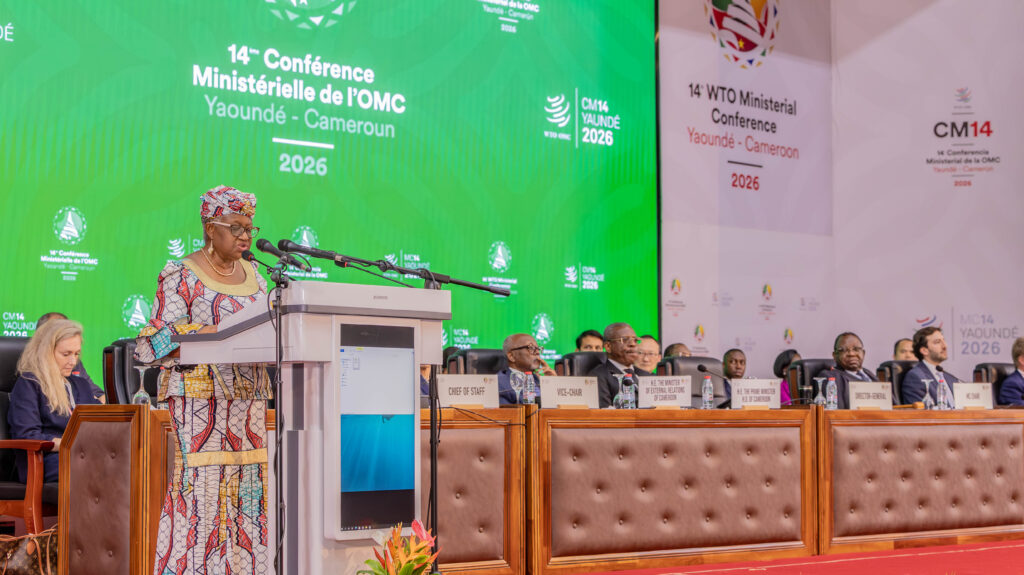
From March 26 to 29, 2026, the World Trade Organization (WTO) held its 14th Ministerial Conference (MC14) in Yaoundé, Cameroon. What is the World Trade Organisation Ministerial Conference? The Ministerial Conference is the top decision making body of the World Trade Organization. It happens usually every two years. It brings together trade ministers from WTO member countries to set the direction of global trade. The conference is also attended by various lobbyists, or NGOs who are trying to influence the decision making. What is the World Trade Organization? The World Trade Organization (WTO) is an international organization based in Geneva. Its main role is to set the rules for international trade and make sure smaller countries don’t get crusehd by economic giants. Founded in 1995, it replaced the General Agreement on Tariffs and Trade (GATT). The GATT was signed in 1948 to reduce barriers to international trade. Which helped rebuild the economy after World War II. Nowadays the WTO has 166 member countries. What was on the table at MC14? Fisheries subsidies – a.k.a. fight against illegal fishing The biggest deal at MC14 was an agreement to ban fisheries subsidies that encourage overfishing. This agreement was negotiated back in 2022, but has only officially entered into force now. The agreement specifically bans subsidies that enable illegal, unreported, or unsustainable fishing. Like subsidies for vessels that violate quotas, fish in protected areas, or target overfished species (like bluefin tuna). Thanks to this agreement illegal fishing will lose its profitability and therefore its appeal to people. However, since this measure relies on self-reporting of governments, there are still some possible loopholes. For example, countries that profit from illegal fishing may try to manipulate the data… But that’s why the Committee on Fisheries Subsidies was established this year to oversee implementation of the Agreement. At the same time there is also the so-called “Fish fund”. WTO member countries can contribute to it to help developing and least-developed countries implement the Agreement. Investment Facilitation for Development (IFD) – a.k.a. attracting foreign investors to developing countries During the Conference ministers were also discussing the IFD Agreement. Which was negotiated in 2023 at the initiative of developing countries that wished to attract foreign investors. The IFD Agreement helped them to do that. Because it introduced measures that make investing in those countries easier for foreign investors. For example, it sets consistent global rules for investing, so businesses know what to expect in any country. And since these rules can only be reformed at the international level, they are immune against local political instabilities. This gives investors a greater sense of security. The Agreement also guarantees technical assistance to developing countries and creates a global forum where they can share their practices, and help each other. Although the Agreement was concluded in 2023, it is not yet in force. That was the subject of this year’s Conference, where countries discussed the incorporation of the IFD Agreement into the legal framework of the WTO. Concretely into the 4th article of the WTO Agreement a.k.a. the Marrakesch Agreement (= the founding document of the WTO). Only after this implementation will the IFD Agreement enter into force. E-Commerce and customs – a.k.a. will we pay customs duty for sending an email? 💡 e-commerce = buying and selling of goods and services over the internet (via websites, mobile apps, social media…) Like every Conference, this year ministers debated extending the so-called “Moratorium on customs duties for electronic transmissions“. This moratorium ensures that cross-border electronic transmissions – like sending an email, making a Zoom call, streaming a movie, or an online payment – remain tariff-free (unlike physical goods). Although the Moratorium has been in place since 1998, when WTO members agreed not to impose tariffs on digital transmissions (because it was simpler and cheaper that way), it is not permanent. The moratorium only lasts two years, and every Conference countries must vote to renew it. But not all of them agree. While countries that export digital services (like the US) support the Moratorium. Nations that import these services (and aspire to develop their own) naturally oppose it. Because if the Moratorium wasn’t extended, they could impose tariffs on US Big Tech, which would gain them some money and reduce the foreign competition to their national tech companies. This year’s Conference discussed possible reforms to Moratorium (like making it permanent or creating a special committee for it). But in the end, the Moratorium was just simply extended as usual. Boost for small economies The ministers also adopted two measures to economically boost so-called Least Developed Countries (LDCs) = the world’s poorest nations: Why should we care? Because the decisions that are made at the conference affect the entire world market . Which means that the WTO is often directly or indirectly responsible for how much things cost. Because watching the conference and understanding what is being decided makes you realize that some countries that are considered “incompetent” are not succeeding because they are lazy and not trying hard enough… But because some decisions of the majority simply don’t work in their favor. Because in the midst of all the wars and aggressions today, the Conference where countries work together instead of fighting, restores a faith in humanity a bit. Sources WTO | Understanding the WTO – Whose WTO is it anyway? MC14 opens in Yaoundé with call to reinvigorate WTO in time of crisis Ministers exchange views on key WTO topics, consider paths forward at MC14 The WTO Agreement on Fisheries Subsidies Investment Facilitation for Development Agreementf EU and other WTO Members reach landmark deal to facilitate investment and support development – Trade and Economic Security Members participating in IFD showcase progress, urge incorporation of Agreement into WTO MC14 event calls for scaling up support for Trade in Services for Development initiative WTO | E-commerce – Briefing note – 14th WTO Ministerial Conference Members adopt a pathway to bring E‑Commerce Agreement into force via interim arrangements Adding value to cotton in Africa
Hungary Blocking Aid for Ukraine : Story of the Last Week
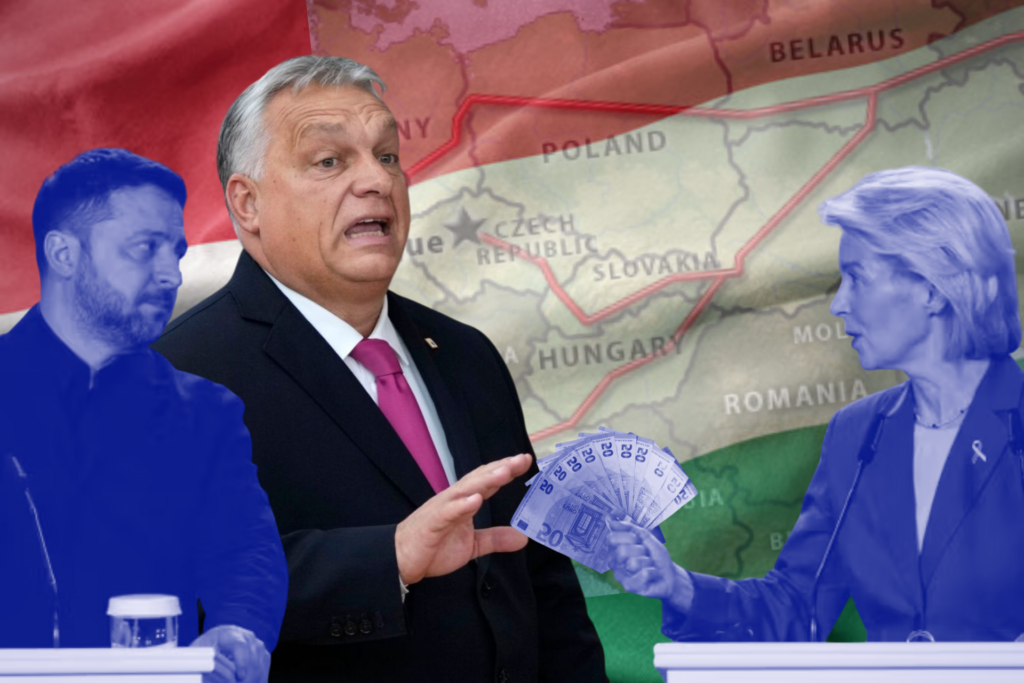
Even after the European Council summit, last week Hungary is still blocking the 90 billion euro loan for Ukraine. How is this even possible? And why is Hungary doing it? What was the loan about? In February 2026, the European Parliament approved a 90 billion euro loan for Ukraine to help it resist Russia’s invasion. The loan was agreed under so-called enhanced cooperation procedure – mechanism that allows something to be implemented within the EU even if not all 27 member countries agree on it. All financial responsibility for it then goes only to the countries that wanted it – not to the EU as a whole. In this case, 24 EU member states supported the loan for Ukraine, except the Czech Republic, Hungary and Slovakia. Ukraine was supposed to repay the loan after it received war reparations from Russia. Wait, how come Hungary is blocking the loan, when it doesn’t have to participate in it, you may wonder… How can Hungary block the loan if it’s not obliged to pay? The problem is the loan was meant to come from the EU’s joint budget. And when it comes to paying something from the EU joint budget, all member states must agree on it – even those that won’t contribute financially. If they don’t agree, they can use veto, that blocks everything. Which is exactly what Hungary, and its prime minister Victor Orbán, is doing right now. Why is Orbán doing it? Victor Orbán claims Hungary is blocking the loan because Ukraine stopped oil flows through the Druzhba pipeline, which supplies Hungary with Russian oil and runs through the territory of Ukraine. In January (2026), this pipeline was damaged by a Russian attack. But instead of directing his anger at the perpetrator, Orbán is taking it out on Ukraine: accusing it of deliberately delaying repairs of the pipeline to energetically harm his country. Slovakia joined Hungary with the same arguments. For some reason, both countries chose to stay dependent on Russian oil even after the 2009 gas crisis showed them it wasn’t the best idea… As for the Czech Republic, although it did not support the loan, at least it is not blocking its sending now. Why is Orbán REALLY doing it? In reality, not even Orbán himself believes that Ukraine is actually to blame for Russia destroying its own oil pipeline… But he’s well aware that if he pretends to believe so and blocks the loan on that basis, he can force the EU into making some concessions towards Hungary. Like for example unfreezing Hungarian funds that have been frozen in 2024 due his violations of rule-of-law in Hungary. In addition, Orbán has long held anti-European stance and, conversely, a warm attitude towards Russia. Specifically, since 2010, when he became prime minister after his Fidesz party won the elections. Since then, he has been gradually undermining democracy in the country by limiting media freedom, and judicial independence, and fighting against NGOs. Like every populist, Orbán sees the European Union as something restrictive to his ambitions, while Russia, where a powerful leader does whatever he wants and no one interferes, as an inspiration. This position naturally translates into animosity towards Ukraine (since Ukraine is Russia’s number one enemy) and has already manifested itself in several conflicts. For example, in 2017, when Ukraine passed a law making Ukrainian the required language of study in state schools to fight against growing Russian influence in some of its regions. Orbán framed this as an attack on the Hungarian minority living in Ukraine. He continuously opposed the integration of Ukraine to NATO. And after the Russian invasion of Ukraine in 2022, he refused to sanction Russia, spreading Russian narratives and portraying the attacked country as the aggressor. Current political context: upcoming elections The veto on aid for Ukraine is happening in the light of upcoming Hungary’s parliamentary elections in April 2026. To some extent it is also Orban’s strategy to activate his voters. Because this time Orbán is facing his toughest opponent yet: Péter Magyar and his Tizsa party, conservative, pro-European party, currently leading in the election polls. Last Sunday, Budapest saw two massive rallies: one organized by Orbán’s Fidesz party under the name of “Peace march” with a strong anti-European and anti-Ukrainian sentiment, and another by the Magyar’s Tizsa party demanding democracy and support for Ukraine. Why should we care? Because Orbán’s blockade doesn’t concern only Ukraine. Its aim is to weaken the EU. As the famous saying goes: where two are fighting, the third wins. The third being Russia, which is constantly trying to convince European countries to abandon bigger structures like European Union because isolated they would be an easier target for Russia. Because Russia’s aggression won’t stop at Ukraine. If Putin sees that the West is divided, he may target other countries. Not to mention that this will inspire other countries with expansive tendencies to do the same – which is already happening… Because, it’s all immoral: imagine how you would feel if someone broke into your home, and set it on fire, only for your neighbor to call the police on you for not putting out the flames fast enough. (Also, it would turn out that the neighbor is friends with the person who set your home on fire…) Sources:
Hormuz Crisis : Story of the Last Week
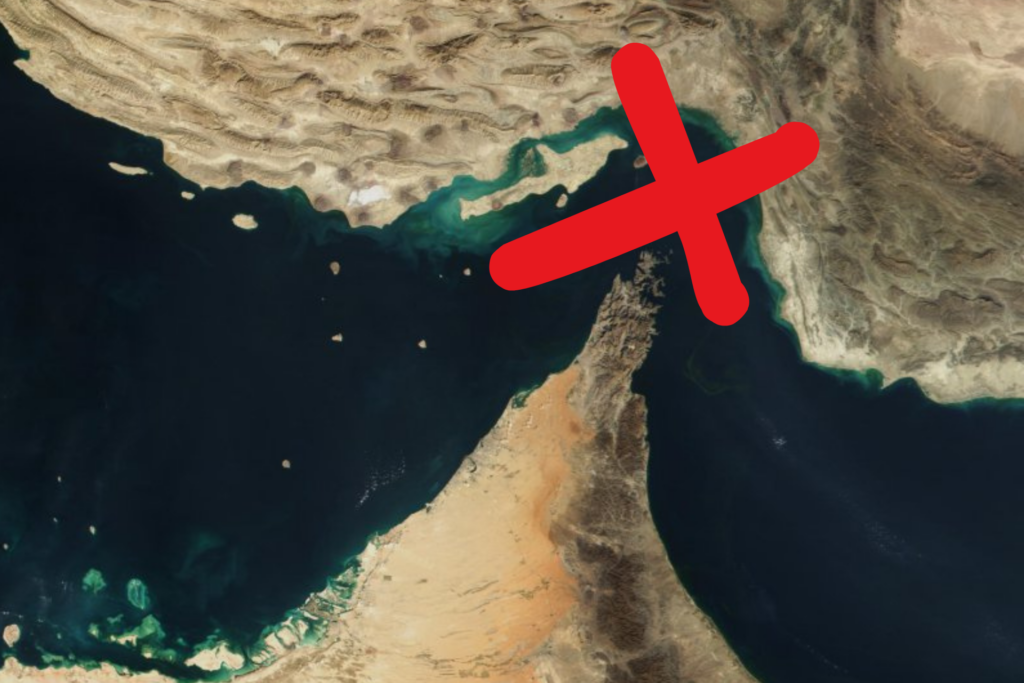
After the US and Israel attacked Iran on 28th February, Iran responded by blocking the Strait of Hormuz, a strategic point in the world’s oil transportation. What does this mean for the world? And how do one even block a strait? Let’s look at it: What Is the Strait of Hormuz? Strait of Hormuz is a 33 kilometres wide (at its narrowest point) strip of water between Iran and Oman connecting the Persian Gulf to the Indian ocean. It’s the only way out for oil tankers from Saudi Arabia, Iraq, Kuwait, the United Arab Emirates, and Iran itself. Every day 25% of the world’s oil passes through the Strait of Hormuz – or actually used to pass… Even though the Strait itself is in international waters, United Nations rules allow countries to control waters up to 12 nautical miles (= 22kilometres) from their coast – and that’s exactly what Iran is doing now. What Does “Blocking the Strait of Hormuz ” Look Like ? Iran’s Islamic Revolutionary Guard Corps broadcasted a message to radios of ships present in the area, that every ship that tries to pass through the Strait of Hormuz would be attacked. And it didn’t just stay with words: Iran actually fired drone and missile strikes on several commercial ships. There is also a suspicion that Iran may have laid sea mines near the strait’s entrance, making passage physically impossible without risking an explosion. What’s the Impact ? As a result of the blockade, the shipping companies are changing routes – now they are mainly using land transport through Jordan and Syria. Which takes much longer, so it costs more and delays deliveries. Due to the war in the Middle East, global oil prices already rose by 20%, hitting 120 dollars per barrel – the highest price since 2008. However, rising oil prices are not the only consequence. The blockade can also affect the development of the whole conflict. Whereas Benjamin Netanyahu (Israeli prime minister) went into this conflict determined to win at all costs, even if it took a long time, his ally Donald Trump (US president) had a different vision… He wanted a quick, decisive strike on Iran – something he would sell as an effective victory with zero costs to its voters. But with the strait blocked, this won’t work. Trump can’t declare victory if the global economy is spiraling into crisis. He could, but who would believe him? Has Something Like This Happened Before? The Strait of Hormuz blockade isn’t the first case where the maritime transport was taken hostage. During the war between Iraq and Iran in the 80s, both sides attacked oil tankers in the Persian Gulf which resulted in an increase in oil prices and panic on global markets until a ceasefire was negotiated. Another example is the Suez Canal Crisis in 1956. After Egyptian President Gamal Abdel Nasser nationalized the Suez Canal, which was previously controlled by Britain and France. Britain, France, and Israel launched a military campaign to retake control of the canal. This led to the blockage of the canal, disrupting the flow of goods and thus increasing transportation costs. The Suez Canal was then blocked once again in 2021. When the Ever Given container ship got stuck in there for six days. This incident cost an estimated $9.6 billion per day in global trade losses. Why Should We Care? Because the blockade of the Strait of Hormuz will cause prices to rise. Not only in transport, when both gasoline and airline tickets will be more expensive, but also in food. Since oil is used not only for fuel but also for fertilizers and packaging. Remember the energy crisis in 2022 when Russia attacked Ukraine… Because the conflict could widen: Trump is already trying to drag other countries in it: Wanna Know More? Check out these articles (that were btw. used to write this article;):
European Parliament in Nutshell: March 2026
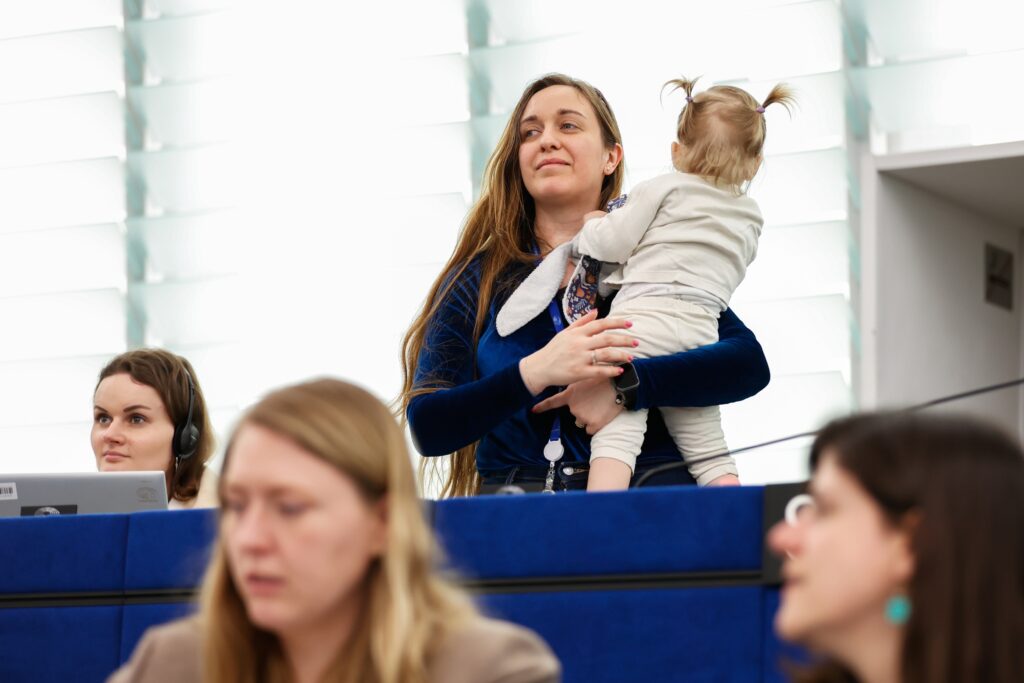
Every month, the European Parliament plenary session takes place in Strasbourg. And every month, IR Media follows it closely. These are the highlights of the last plenary session taking place from 9th to 12nd March 2026: European Parliament against gender pay gap On Wednesday eurodeputies voted on the report prepared by the Committee on Women’s Rights and Gender Equality. This report maps the gender pay gap in the European Union, its consequences and proposes solutions to combat it. Gender pay gap is a difference between the average gross hourly earnings of men and women. In the EU it’s currently 12 %. This doesn’t mean that jobs would give women automatically a 12% lower salary just because they are women… The gender pay gap is more of a structural problem. Stereotypes that there are “men’s jobs” and “women’s jobs” still persist in society and influence our career choices. Those “women’s jobs”, are considered less prestigious, therefore less paid. If women try to get into “men’s jobs”, they face backlash and sexism not all of them can withstand. Moreover, women are still expected to perform the majority of housework and childcare. Tasks that are unpaid, and often force women to interrupt their careers. Which results in women having lower pensions. Some of the solutions this report proposes are: AI will have to respect copyright On Tuesday, MEPs adopted a series of recommendations to protect copyrighted creative work from use by artificial intelligence. Because right now, AI uses copyrighted works freely with no limits. Eurodeputies want authors to be paid if their works are used by AI, ideally even retrospectively. And, to guarantee them an option to completely opt-out from their work being used by AI. They also want to make AI companies transparent about what copyrighted works they used to train their models. Now it’s up for the European Commission to transform these recommendations into concrete laws. Chat Control reached a compromise On Wednesday, the European parliament voted to extend exemption from ePrivacy Directive. This directive normally prohibits the scanning of private messages, but the exception allows it. The goal was to enable big digital platforms to detect child sexual abuse materials by scaning their users’ messages. But it was a bit double-edged because it could be misused to spy on citizens by authoritarian governments. Fortunately, MPs also voted that scanning private messages can only take place under a court order in case of a suspected sexual abuse. Last but not least, do you remember how the last plenary session, the Special Committee on the Housing Crisis came up with recommendations to deal with the housing crisis in the EU? This session they presented it to the whole Parliament, and the parliament voted yes. The next sitting will be held from 27th to 30th April 2026 in Strasbourg
War in Middle East : Story of the Last Week

After February 28, when Israel and the United States “preventively” attacked Iran, the conflict expanded to other states. Which ones? And why? Let’s break it down: Basically, there are four possibilities how other countries got dragged in the war: either they were friends of US or Israel, and because of that they were attacked by Iran; or by its allies; or they were friends with Iran, and decided to support it by attacking Israel or countries that were friends with US or Israel, or they were Iraq. Countries Attacked by Iran All these countries are somehow connected to the United States or Israel – whether it is because they have American bases on their territory, or because they maintain friendly relations with those countries. By attacking them, Iran is trying to destroy American infrastructure, as well as put pressure on their governments to distance themselves from the US/Israel, and to turn public opinion against their leaders for aligning with the West. Countries of Gulf Cooperation Council The Gulf Cooperation Council is a political and economic union of six Arab states bordering the Persian Gulf: Kuwait, Saudi Arabia, Qatar, the United Arab Emirates, Bahrain, and Oman. Founded in 1981 (during the Iran-Iraq War), its purpose was to protect member states from regional instability. All are oil-rich nations that rely on stability for economic prosperity, often acting as mediators in regional conflicts (eg. easing tensions between Israel, the US, and Iran). Naturally, the US-Israel strike on Iran was the last thing they wanted – it threatened their economic interests. They opposed it from the start – but still paid the price… Azerbaijan Despite being a Muslim country, Azerbaijan maintains a good relationship with Israel. Iranian drones struck its autonomous Nakhchivan region. Azerbaijan also accused Iran of planning sabotage operations on its territory – but the Iranian government denied it claiming the sabotages were organized by its enemies who are trying to frame Iran. Turkey Iran also sent two missiles to Turkey. However, NATO, Turkey is part of, neutralized them. Countries Attacking US and Israel Lebanon : Hizbollah Lebanon was drawn into the war by Hezbollah, a Shiite Muslim political party and militant group operating independently of the Lebanese government (basically Hezbollah, is a state within a state). After the US and Israel attacked Iran, Hezbollah struck against Israel. Israel responded to it by attacking Lebanon back. Iraq Iran and Iraq were historically enemies (Iraq even attacked Iran in the 80s), but after Iraqi dictator Saddam Hussein’s fall, the two grew closer. Mainly because both are now led by Shiite muslims. So that’s why, in the current conflict, Iraq supports Iran. Or actually, parts of it do. Because Iraq is divided: between the Kurds, who have a semi-autonomous Kurdish region at the north of Iraq, and the Shiit rest of the country. Whereas the pro-Iranian militias from the Shiite-dominated south support Iran, the Kurds are against it. Kurds even host American bases on their territory. Those bases were bombed by both Iran and military groups from the pro-Iranian part of Iraq. These same pro-Iranian groups also attacked Saudi Arabia and other countries. Countries Attacked by Iranian Allies Cyprus A Lebanese missile struck a British base in Cyprus. While the UK refused to join the US and Israel strikes on Iran, it offered its bases to the US for defense purposes after Iran retaliated. Jordan A longtime US ally, Jordan assisted the US during last summer’s Twelve Day War. Now, its local US bases were attacked and damaged by Iran-backed militias from Iraq. Collaterals: Syria Syria is not officially at war, but due to its geographic position, Iran fires missiles at Israel over Syrian airspace. Debris from intercepted missiles has fallen on Syrian territory, causing damage and minor injuries. What Are the Consequences? The war has reduced and logistically complicated oil exports (e.g. the insurance rates for oil shipping companies skyrocketed because their ships are now in a high risk of strike). This is driving up oil prices. Attacks on oil refineries pose regional ecological threats. For example, a missile strike on a Tehran refinery caused a massive fire, leading to acid rain over the city. Hundreds of thousands of travelers are stranded across the Middle East. Airspace closures (due to missile risks) and mass flight cancellations have left many unable to fly. Sources: A Sprawling Middle East War Explodes | International Crisis Group How the unfolding war is affecting countries in the Middle East | AP News What are the differences between Iraqi Kurdistan and Iraq? From Rivals to Allies: Iran’s Evolving Role in Iraq’s Geopolitics – Middle East Council on Global Affairs Iran-backed militias intensify attacks against US, Israel and allies | Iran | The Guardian How an Incident on the Azerbaijan-Iran Border Became a Test for Diplomacy in the Region – The Times Of Central Asia Why Azerbaijan is important for Israel’s security – JNS.org Syria distances itself from the US-Israeli war on Iran – Enab Baladi Kuwait cuts oil production due to Strait of Hormuz closure
Munich Security Conference : Story of the Last Week

As every year, world leaders gathered in Munich in the second week of February for one of the world’s most important meetings on global security and diplomacy. This year for its 62nd edition. Origin of Munich Security Conference The Munich Security Conference was first organized in 1963 as a small meeting of 60 countries by Ewald-Heinrich von Kleist-Schmenzin. Ewald-Heinrich was the youngest plotter of the famous attempt to assassinate Hitler in Wolf’s Lair. He was supposed to be a part of a group who would organize a coup in case of its success. All this at the age of just 22 years! After the operation went unsuccessful, he managed to cover up his resistance activities. Luckily – because if not, he would have most likely ended up with a death sentence. This way Nazis “just” sent him to the concentration camp, where he managed to survive until the end of war. What’s the Purpose of the Munich Security Conference? In 1963 he came up with an idea to organise a Wehrkundetagung in Munich. The name was a bit of a tongue twister, but there was a simple idea behind it. Von Kleist wanted to make sure such a horrendous conflict as the 2nd World War would never happen again. Therefore he organised a meeting of about 60 important world leaders and international relations experts. Together thy discuss (often hot) security topics. What started as a small private event, has groven to giant proportions over the years Famous speeches at Munich Security Conference During its 62 years of existence, some famous speeches have been given by important actors in international relations on MSC. Such as: Make no mistake, the Munich Security Conference is still a private event. Unlike official government meetings, decisions made here are not legally binding on anyone. But that’s exactly the reason why this event is so worthy to observe. Politicians here dare to be more honest about their intentions. The highlights of MSC 2026 This year’s conference was much less revolutionary… There were no groundbreaking speeches, no strong words, no magical solutions. And compared to previous years, it had overall a little more pessimistic tone. Maybe that’s why didn’t hear that much about it from press. But despite this – or perhaps precisely because of this – we should keep an eye on it. The main topics were: The Collapse of the International Order and the Rise of Destructive Policies Caused mainly by the current dominant world power United States under the leadership of its president Donald Trump. Who is democratically destructive both domestically and internationally (remember, for example, his claims to Greenland). Compared to last year, when the US criticized Europe for its freedom of speech during the Conference, this year their rhetoric was a little more diplomatic. But the message stayed pretty much the same. The US will continue to play by its own rules – whether Europe likes it or not. The quote of the Minister of Foreign Affairs of the US, Marco Rubio summs it all up. “We can no longer place the so-called global order above the vital interests of our people and our nation”. While Europe is still going through the 5 stages of grief over its relationship with the US, countries of the Global South, who never had many reasons to idealize the US, see the change in the international order more positively – especially as an opportunity to establish new trade agreements, now that America made itself unattractive business partner with its high tariffs. The War in Ukraine and European Security This topic is closely related to the previous one – since we only have to speak about it because certain actors chose to undermine the international order. Those actors being Russia, and more recently the US… The Greenland crisis at the beginning of this year raised an uncomfortable question: would NATO act or crumble in case of an escalation? And at the same time it gave Europe a push to start addressing its security not just through speeches, but through action. After the US decreased its military aid to Ukraine by 99 % over the last year, Europe had to step up – recently, the European Union approved a 90 billion euros loan to Ukraine. But more will be needed. However, there were no specific new proposals – only old ones that have been talked about for a long time (such as confiscating frozen Russian funds). The Ukrainian president, Volodymyr Zelenskyy came to the Conference to stress that Ukraine would not be able to defend Europe indefinitely, and urged for increased European help and pressure on Russia and its enablers. Regional Conflicts The Munich Security Conference also addressed regional conflicts – like those which emerged in Syria after the fall of Assad regime or civil war in Sudan that has been going on since 2023 Some attention was also paid to technology, and AI. The Conference didn’t forget about climate crisis either. For example, speakers addressed the access to drinkable water that will be problematic in the future. However, due to the current tense security situation in the world, this topic remained in the background compared to previous years. Why should we care? Because the Munich Security Conference does not generate any legally binding policies, world leaders don’t try that hard to mask their controversial intentions – so it gives us an ideal opportunity to see their true collors… …and to understand the REAL reasons why they want us to support (or not) certain of their decisions. Because MSC can help us get a better overview on priorities of different countries and on relationships between them.
European Parliament in Nutshell: February 2026
Every month, the European Parliament plenary session takes place in Strasbourg. And every month, IR Media follows it closely. These are the highlights of the last plenary session taking place from 9th to 12nd February 2026: Change in European migration policy The European Parliament voted for creation of a so-called: “EU list of safe countries of origin”. Which is basically a list of countries from which it is assumed people have no reason to migrate. So if you try to migrate from them, they will most likely sent you back in an accelerated process. So far, each EU country had its own such list. Now they want to make a common one and add Bangladesh, Colombia, Egypt, Kosovo, India, Morocco and Tunisia to it, as well as the EU candidate countries. Parliament also validated so-called “safe third country” concept. Instead of accepting asylum seekers, EU countries could redirect them to some other country, through which the applicant either transited, has some connection with (like language or family), or none of that and the two countries juste have an agreement with each other. On the one hand, this will save EU some time and work. On the other hand some “safe” countries are not safe for everyone – think about homosexuals or political dissidents… European Parliament Approves €90 Billion Ukraine Support Loan The European Parliament approved a 90 billion euro loan for Ukraine to help it resist Russian invasion, which is approaching its 5th anniversary. The loan was agreed under so-called enhanced cooperation procedure. This mechanism allows something to be implemented within the EU even if not all countries agree on it. All financial responsibility for it then goes only to the countries that wanted it – not to the EU as a whole. In this case, 24 EU member states supported the loan, while the Czech Republic, Hungary and Slovakia did not. The EU is providing the loan on the condition that Ukraine continues to promote democracy, the rule of law, respect for human rights and the fight against corruption. Ukraine will repay the loan after it receives war reparations from Russia. How to deal with Europe’s Housing crisis ? The European Parliament’s Special Committee on the Housing Crisis came up with recommendations to deal with the housing crisis in the EU. The MEPs proposed things like: making new houses more energy efficient, limiting short-term rentals, offering more public and social housing, introducing tax breaks for low- and middle-income households, simplifying the administration for new housing projects or better use of EU funds… This session they voted on it within the committee. The next step will be to present it to the whole Parliament, which will happen in March. The next sitting will be held from 9th to 12th March 2026 in Strasbourg
New release of Epstein Files : Story of the Last Week

On 30th January, the United States Department of Justice released a new series of Epstein Files. Over 3 million pages of documents, 2 000 videos and 180 000 images related to Epstein’s crimes and connections with global elites were released under the Epstein Files Transparency Act, a law passed in November 2025. This is what you need to know: Who Was Jeffrey Epstein? Jeffrey Epstein was born in 1953 in New York to an average working-class family. Some of his (ex)associates claim(ed) that he was a mathematical genius, but we should take it with a grain of salt… In reality Epstein was a college dropout, who had to scam his way even into his first job : a math and physics teacher at Dalton School (a prestigious private high school) by falsifying his university diploma. Although he wasn’t outright stupid, Epstein was no rocket scientist either… Dalton School soon dismissed him for not meeting its high standards. However, with his strong charisma, persuasive skills, scheming and desire to get rich, he impressed the wealthy parents of his students. One of them helped him get a job at Bear Stearns investment bank. That’s how began Epstein’s financial advisor career. After some time he started his own financial consulting firm : helping billionaires to manage their money. Which eventually made him a millionaire. Fun fact: nearly all his wealth came from working with just two clients: Leon Black and Les Wexner – and of course from scamming and shady business practices: he avoided taxes by hiding his money in offshore tax heavens (like the US Virgin Islands), he took money from his clients for projects he never delivered… Sometimes he would straight up steal from them assuming (correctly) that they wouldn’t notice or be too embarrassed to call him out. And then there was his dirtiest business: sex-trafficking. The Epstein Case: What Was It About? According to some of his students, Epstein was already giving off creepy vibes during his teacher era. He was always a womanizer, pursuing rich and famous women as a way to infiltrate elite social circles and gain access to rich clients. However, the first documented accounts of his sex-trafficking date back to the 90s. In that time he coupled up with Ghislaine Maxwell, who helped him “scout” underage girls. Maxwell would target young naive girls who came from unstable backgrounds, so they needed money, and at the same time they had no one to turn to for help. She approached them with a seemingly harmless offer: extra cash for giving massages to her friend. This “friend” turned out to be Epstein, and the “massages” prostitution. But the girls, many of them teenagers (some as young as 14), were too inexperienced to recognize the danger. When Epstein demanded sex from them in the middle of a massage, they were shocked, confused and scared. Maxwell and Epstein were also gaslighting them: framing their perverse demands as something perfectly normal – even beneficial financially. This made the girls doubt their own instincts and comply. Epstein and Maxwell “recruited” girls from all over the world. On their luxury estates – the most notorious is the Little Saint James island a.k.a. “Epstein Island” in the US Virgin Islands – they sexually abused them and sold them to their powerful friends. How Epstein got uncovered? In 2005, a woman reported to the police that Epstein molested her 14 years old daughter. The following investigations managed to gather evidence about 36 underage victims. But then-US Attorney Alexander Acosta ruined everything. Instead of punishing Epstein he made a secret so-called “non-prosecution agreement” with him. Thanks to this agreement, Epstein avoided federal (= national level) prosecution, the level his crimes demanded. He was charged only under Florida state law, which carried far lighter consequences. Instead of facing decades in federal prison, he got just 13 months in a county jail with work-release privileges that allowed him to leave for up to 12 hours a day, six days a week. The agreement also sealed the investigation, keeping the names of Epstein’s accomplices hidden and making it impossible for some of his victims to justify. Since the investigation was secret, they simply didn’t learn about it. But they continued speaking up and fighting for justice. As the years passed, new evidence emerged, the people who protected Epstein changed positions, the infamous non-prosecution agreement was found invalid, public opinion developed… Finally, in 2019, Epstein was arrested again, this time facing federal charges of sex-trafficking that could send him to prison for 45 years. However, the same year, before his trial could even began, Epstein committed suicide. He hanged himself in his jail cell. This provoked and still provokes a number of conspiracy theories. Ghislaine Maxwell, was sentenced to 20 years in prison in 2022. To this day she’s the only person convicted for participation in Epstein’s sex trafficking. What Are the Epstein Files? The Epstein files is a collection of all documents, mails, photos, and videos gathered during the investigations of Epstein’s crimes. Totally it makes over 6 million pages. They include court records, flight logs, financial transactions, and communications between Epstein and his associates. For years, his victims (and the public) demanded the release of these files to expose the full truth about Epstein’s network. And they partially succeeded – some heavily censored fractions of the files were made public. But it always had to be done through standard legal ways (by civil lawsuits, freedom of Information requests, or court orders…) There was no law requiring the entirety of Epstein’s files to be made public… Naturally, for many politicians, the release of the Files became an opportunity to score political points. No one seized it more aggressively than Donald Trump, who promised during his 2024 presidential campaign that he would release the Files if elected. But once in office, despite having the authority to release them, Trump’s administration blocked the process. In the end, the Congress stepped in. Congressmen (both Republicans and Democrats) teamed up and passed