
US and Iran peace deal explained as if you were five
On 17th June, Iran and the United States signed a memorandum to end the war they have been waging since 28th February. Why? Read this article. What did each of them commit to in the memorandum? The best way to find out is, obviously, to read the memorandum directly. “But that memorandum is surely written in terribly difficult administrative English,” you say. And we hear you – therefore we translated it into the mere mortals’ English: Islamabad Memorandum of Understanding between the United States of America and the Islamic Republic of Iran 1 — The United States of America and the Islamic Republic of Iran and their allies in the current war are signing this MOU to declare the immediate and permanent termination of military operations on all fronts, including in Lebanon, and undertake from now on not to initiate any war or any military operation against each other, and to refrain from the threat or use of force against each other, and ensuring the territorial integrity and sovereignty of Lebanon. The final deal will confirm the permanent termination of the war on all fronts, including in Lebanon and other provisions of this paragraph. Translation: The war ends immediately. Both sides promise not to attack each other again – anywhere, not even in Lebanon. This also applies to their allies (a.k.a Israel and Hizballah). This memorandum is just the beginning – a proper final peace deal is yet to come. 2 — The United States of America and the Islamic Republic of Iran undertake to respect each other’s sovereignty and territorial integrity and to refrain from interfering in each other’s internal affairs. Translation: The US and Iran will respect each other’s territorial sovereignty and stop getting into each other’s business. 3 — The United States of America and the Islamic Republic of Iran commit to negotiating and achieving the final deal in maximum 60 days, extendable with mutual consent. Translation: After signing this memorandum they have 60 days to negotiate that proper final peace deal. If they both agree, they can extend this deadline. The Strait of Hormuz 4 — Immediately upon the signing of this MOU, the US will begin the removal of its naval blockade and any disturbances or impediments against Iran, and will fully end the naval blockade within 30 days. During this period, the traffic of vessels will be in proportion to the numbers of pre-war traffic being restored by Iran. The US further undertakes to remove its forces from the proximity of Iran within 30 days after the final deal. Translation: The Strait of Hormuz will be immediately reopened so that as many ships as before the war can pass. The US has 30 days to completely remove its military ships from Hormuz. And, once the final peace deal is signed, 30 days to remove its military forces from the region. 5 — Upon the signing of this MOU, Iran will make arrangements using its best efforts for the safe passage of commercial vessels with no charge, for 60 days only, from the Persian Gulf to the Sea of Oman and vice versa. The traffic of commercial vessels will immediately start, and considering the need for removing the technical and military obstacles, and demining by Iran will be instated within 30 days. Iran will conduct dialog with the Sultanate of Oman to define the future administration and maritime services in the Strait of Hormuz in discussion with other Persian Gulf littoral states in line with the applicable international law and the sovereign rights of coastal states of the Strait of Hormuz. Translation: Iran will reopen Hormuz. For the first 60 days, commercial ships can sail through there for free. Iran will also clear the mines they put there within 30 days. After that, Iran will negotiate with Oman and other Gulf countries about who runs the strait long-term. Financial side of the peace deal 6 — The United States of America undertakes with regional partners to develop a definitive, mutually agreed plan with at least USD 300 billion for the reconstruction and economic development of the Islamic Republic of Iran. The mechanism for the implementation of this plan will be finalized as part of a final deal within 60 days. All required licenses, waivers and permissions needed for the relevant financial transactions will be granted by the United States of America. Translation: The US and its allies will put together at least 300 billion $ to rebuild Iran. And what about sanctions? 7 — The United States of America undertakes to terminate all types of sanctions against the Islamic Republic of Iran, including the United Nations Security Council resolutions, IAEA Board of Governors resolutions, and all unilateral US sanctions, primary and secondary, in an agreed upon schedule as part of the final deal. The Islamic Republic of Iran and the United States of America acknowledge the critical importance of the sanctions termination issue above mentioned, and expressed their intentions to immediately address these issues in the negotiations in order to achieve mutual agreement on them. Translation: The US will drop all sanctions against Iran – everything, from UN resolutions to its own unilateral ones. And Iranian nuclear program? 8 — Iran reaffirms that it shall not procure or develop nuclear weapons. The US and Iran have agreed to resolve the disposition of stockpiled enriched material pursuant to a mechanism that will be mutually agreed upon in accordance with the schedule mentioned in paragraph seven, with the minimum methodology to be down blended on site under the supervision of the IAEA. The two parties also agreed to discuss the issue of enrichment and other mutually agreed matters related to the Islamic Republic of Iran’s nuclear needs, based on a satisfactory framework being agreed upon in the final deal. The final deal will confirm the provisions of this paragraph. The United States of America and the Islamic Republic of Iran acknowledge the critical importance of the nuclear issues above mentioned. They express their intention to immediately
Ceasefire between the US and Iran : Story of the Last Week
After 38 days of war between the US, Israel and Iran, on April 8th, two week ceasefire was announced What preceded the ceasefire? On 28th February, Israel and the United States “preventively” attacked Iran. You can read more in detail about this attack in our article : US & Israel Attack on Iran. Iran responded by attacking Israel back, and also attacking the allies of the United States and Israel in the region (like Kuwait, Saudi Arabia, Qatar, the United Arab Emirates, Bahrain, or Oman). Soon, military groups from Lebanon and Iraq joined Iran’s side. Iran also blocked the Strait of Hormuz, a strategic point in the world’s oil transportation. This led to an increase in the prices of oil and food (since oil is used for fertilizers and packaging). Donald Trump, the president of the US, didn’t expect this (although he should have). His loss of control over the situation was clearly visible in the level of hysteria in his posts on the Truth Social – a platform he created to communicate his decisions. He was alternating between announcing victory over Iran, negotiations with it, and giving it ultimatums… See for yourself: On April 8th, just hours before his last ultimatum was about to expire, he suddenly switched. And announced a two week ceasefire. How was the ceasefire negotiated ? The ceasefire may seem sudden, but in reality, weeks of negotiations preceded it. Actually, the US and Iran were negotiating even before the war started. Just two days before the “preventive” attack both countries met in Geneva to discuss Iran’s nuclear program (more details in this article). Immediately after the attack, Trump expected negotiations, which Iran denied. Negotiations restarted around mid-March, when the US delivered a 15-point plan to end the war to Iran via Pakistan. So far, this plan is not publicly available. However, the US was supposed to demand heavy restrictions of Iran’s nuclear program and its ballistic-missiles, end of Iran’s support for regional armed groups (like Hizballah in Libanon), and reopening the Strait of Hormuz. In return, the US would lift nuclear-related sanctions on Iran and help it to develop a civilian nuclear program. (This is basically what the US discussed with Iran in Geneva before attacking it.) Iran refused, proposing a 5-point plan instead. In which they demanded the US to stop killing Iranian officials, end all hostilities, guarantee that no other war is waged against Iran, pay reparations, and accept Iran’s sovereignty over the Strait of Hormuz. Pakistan, the mediator in this conflict, then issued another 5-point initiative together with China. Demanding immediate end of all hostilities, start of peace talks, security of nonmilitary targets, security of shipping lanes, and respect of the United Nations Charter. On 1st April, Trump claimed that Iran asked him for a ceasefire. Iran denied it. While Trump was giving ultimatums and tweeting that “the whole civilization will die tonight”, diplomatic negotiations were culminating in Pakistan. The American side was represented by the US vice president JD Vance, US special envoy to the Middle East Steve Witkoff, and Trump’s son in law Jared Kushner. The Iranian delegation was composed of Foreign Minister Abbas Araghchi, Parliament Speaker Mohammad Bagher Ghalibaf, and four senior commanders from Iran’s Revolutionary Guard. Although the composition of this group sounds a bit like the beginning of a joke, together they negotiated a temporary ceasefire. Terms of the ceasefire The ceasefire has 10 points. However, what these points are, is not yet crystal clear… Several versions are circulating in the press. And the whole situation is complicated by the fact that before this final 10-point plan, there was another 10-point plan proposed by Iran (and strongly rejected by the US). Certain is that the ceasefire will last for 14 days, during that time attacks on both sides will stop and the Strait of Hormuz will be reopened. The versions circulating in the press most often mention these other conditions : Aftermath The ceasefire is only a temporary solution. Diplomatic negotiations continue in its background. It is possible that the US and Iran will extend the ceasefire or end the war altogether. However, it is also possible that they will not reach an agreement and, when the ceasefire ends after two weeks, they will start attacking each other again. So far, this scenario seems more realistic given that: Why should we care about it? Because a ceasefire does not mean the end of the conflict. But people often make the mistake to interpret it that way. So, they miss the “final solution”. Remember how the ceasefire in Gaza turned out? – Exactly! Sources: Khamenei’s top aide Larijani rules out negotiations with US after Trump says ‘I have agreed to talk’ — What’s next for Iran Iran rejects US ceasefire plan, issues its own demands as strikes land across the Mideast – The Washington Post U.S. Sends Iran 15-Point Plan to End War | UANI Iran dismisses U.S. ceasefire plan, issues counterproposal as strikes land across the Mideast | PBS News Five-Point Initiative of China and Pakistan For Restoring Peace and Stability in the Gulf and Middle East Region_Ministry of Foreign Affairs of the People’s Republic of China Oil, strait of Hormuz and empty threats: a timeline of Trump’s flip-flopping on the Iran war | Donald Trump | The Guardian Pakistan says ceasefire efforts underway as Iran war continues | Arab News The Islamabad Accords: Framework, Preparations, and the Long View Iran warns it will respond if Israeli attacks on Lebanon don’t stop immediately – BBC News Has Iran’s 10-point plan changed, as JD Vance claims? | US-Israel war on Iran News | Al Jazeera Iran warns it will respond if Israeli attacks on Lebanon don’t stop immediately – BBC News What is Iran’s 10-point conditions for ceasefire and negotiations – The Hindu Will the Cease-Fire With Iran Hold? | Foreign Affairs What we know about the US and Iran’s ceasefire deal
Hormuz Crisis : Story of the Last Week
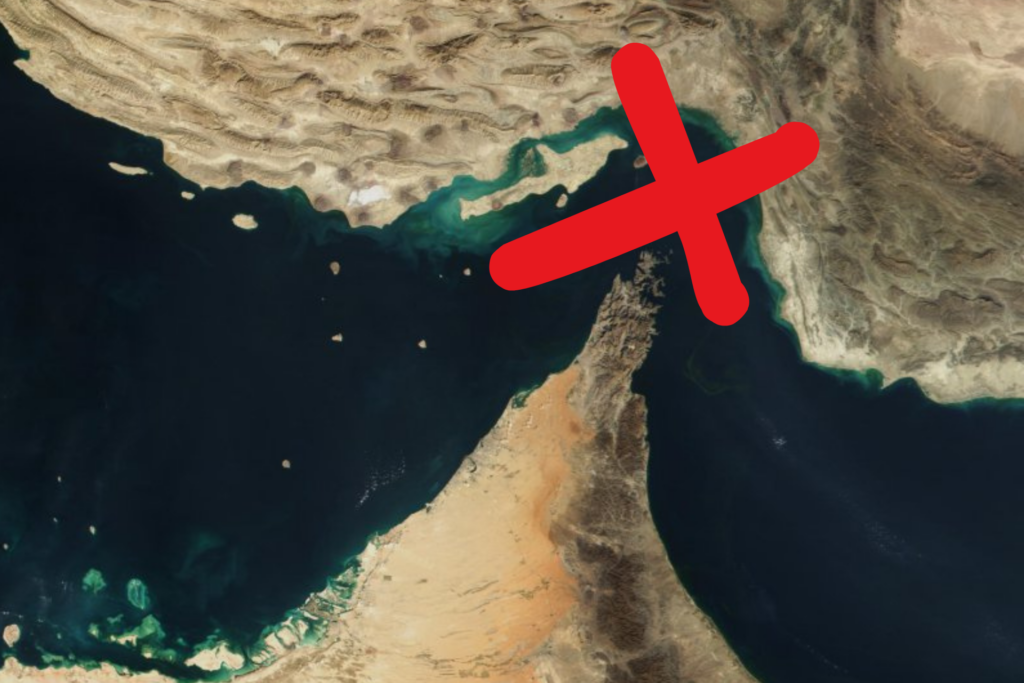
After the US and Israel attacked Iran on 28th February, Iran responded by blocking the Strait of Hormuz, a strategic point in the world’s oil transportation. What does this mean for the world? And how do one even block a strait? Let’s look at it: What Is the Strait of Hormuz? Strait of Hormuz is a 33 kilometres wide (at its narrowest point) strip of water between Iran and Oman connecting the Persian Gulf to the Indian ocean. It’s the only way out for oil tankers from Saudi Arabia, Iraq, Kuwait, the United Arab Emirates, and Iran itself. Every day 25% of the world’s oil passes through the Strait of Hormuz – or actually used to pass… Even though the Strait itself is in international waters, United Nations rules allow countries to control waters up to 12 nautical miles (= 22kilometres) from their coast – and that’s exactly what Iran is doing now. What Does “Blocking the Strait of Hormuz ” Look Like ? Iran’s Islamic Revolutionary Guard Corps broadcasted a message to radios of ships present in the area, that every ship that tries to pass through the Strait of Hormuz would be attacked. And it didn’t just stay with words: Iran actually fired drone and missile strikes on several commercial ships. There is also a suspicion that Iran may have laid sea mines near the strait’s entrance, making passage physically impossible without risking an explosion. What’s the Impact ? As a result of the blockade, the shipping companies are changing routes – now they are mainly using land transport through Jordan and Syria. Which takes much longer, so it costs more and delays deliveries. Due to the war in the Middle East, global oil prices already rose by 20%, hitting 120 dollars per barrel – the highest price since 2008. However, rising oil prices are not the only consequence. The blockade can also affect the development of the whole conflict. Whereas Benjamin Netanyahu (Israeli prime minister) went into this conflict determined to win at all costs, even if it took a long time, his ally Donald Trump (US president) had a different vision… He wanted a quick, decisive strike on Iran – something he would sell as an effective victory with zero costs to its voters. But with the strait blocked, this won’t work. Trump can’t declare victory if the global economy is spiraling into crisis. He could, but who would believe him? Has Something Like This Happened Before? The Strait of Hormuz blockade isn’t the first case where the maritime transport was taken hostage. During the war between Iraq and Iran in the 80s, both sides attacked oil tankers in the Persian Gulf which resulted in an increase in oil prices and panic on global markets until a ceasefire was negotiated. Another example is the Suez Canal Crisis in 1956. After Egyptian President Gamal Abdel Nasser nationalized the Suez Canal, which was previously controlled by Britain and France. Britain, France, and Israel launched a military campaign to retake control of the canal. This led to the blockage of the canal, disrupting the flow of goods and thus increasing transportation costs. The Suez Canal was then blocked once again in 2021. When the Ever Given container ship got stuck in there for six days. This incident cost an estimated $9.6 billion per day in global trade losses. Why Should We Care? Because the blockade of the Strait of Hormuz will cause prices to rise. Not only in transport, when both gasoline and airline tickets will be more expensive, but also in food. Since oil is used not only for fuel but also for fertilizers and packaging. Remember the energy crisis in 2022 when Russia attacked Ukraine… Because the conflict could widen: Trump is already trying to drag other countries in it: Wanna Know More? Check out these articles (that were btw. used to write this article;):
War in Middle East : Story of the Last Week

After February 28, when Israel and the United States “preventively” attacked Iran, the conflict expanded to other states. Which ones? And why? Let’s break it down: Basically, there are four possibilities how other countries got dragged in the war: either they were friends of US or Israel, and because of that they were attacked by Iran; or by its allies; or they were friends with Iran, and decided to support it by attacking Israel or countries that were friends with US or Israel, or they were Iraq. Countries Attacked by Iran All these countries are somehow connected to the United States or Israel – whether it is because they have American bases on their territory, or because they maintain friendly relations with those countries. By attacking them, Iran is trying to destroy American infrastructure, as well as put pressure on their governments to distance themselves from the US/Israel, and to turn public opinion against their leaders for aligning with the West. Countries of Gulf Cooperation Council The Gulf Cooperation Council is a political and economic union of six Arab states bordering the Persian Gulf: Kuwait, Saudi Arabia, Qatar, the United Arab Emirates, Bahrain, and Oman. Founded in 1981 (during the Iran-Iraq War), its purpose was to protect member states from regional instability. All are oil-rich nations that rely on stability for economic prosperity, often acting as mediators in regional conflicts (eg. easing tensions between Israel, the US, and Iran). Naturally, the US-Israel strike on Iran was the last thing they wanted – it threatened their economic interests. They opposed it from the start – but still paid the price… Azerbaijan Despite being a Muslim country, Azerbaijan maintains a good relationship with Israel. Iranian drones struck its autonomous Nakhchivan region. Azerbaijan also accused Iran of planning sabotage operations on its territory – but the Iranian government denied it claiming the sabotages were organized by its enemies who are trying to frame Iran. Turkey Iran also sent two missiles to Turkey. However, NATO, Turkey is part of, neutralized them. Countries Attacking US and Israel Lebanon : Hizbollah Lebanon was drawn into the war by Hezbollah, a Shiite Muslim political party and militant group operating independently of the Lebanese government (basically Hezbollah, is a state within a state). After the US and Israel attacked Iran, Hezbollah struck against Israel. Israel responded to it by attacking Lebanon back. Iraq Iran and Iraq were historically enemies (Iraq even attacked Iran in the 80s), but after Iraqi dictator Saddam Hussein’s fall, the two grew closer. Mainly because both are now led by Shiite muslims. So that’s why, in the current conflict, Iraq supports Iran. Or actually, parts of it do. Because Iraq is divided: between the Kurds, who have a semi-autonomous Kurdish region at the north of Iraq, and the Shiit rest of the country. Whereas the pro-Iranian militias from the Shiite-dominated south support Iran, the Kurds are against it. Kurds even host American bases on their territory. Those bases were bombed by both Iran and military groups from the pro-Iranian part of Iraq. These same pro-Iranian groups also attacked Saudi Arabia and other countries. Countries Attacked by Iranian Allies Cyprus A Lebanese missile struck a British base in Cyprus. While the UK refused to join the US and Israel strikes on Iran, it offered its bases to the US for defense purposes after Iran retaliated. Jordan A longtime US ally, Jordan assisted the US during last summer’s Twelve Day War. Now, its local US bases were attacked and damaged by Iran-backed militias from Iraq. Collaterals: Syria Syria is not officially at war, but due to its geographic position, Iran fires missiles at Israel over Syrian airspace. Debris from intercepted missiles has fallen on Syrian territory, causing damage and minor injuries. What Are the Consequences? The war has reduced and logistically complicated oil exports (e.g. the insurance rates for oil shipping companies skyrocketed because their ships are now in a high risk of strike). This is driving up oil prices. Attacks on oil refineries pose regional ecological threats. For example, a missile strike on a Tehran refinery caused a massive fire, leading to acid rain over the city. Hundreds of thousands of travelers are stranded across the Middle East. Airspace closures (due to missile risks) and mass flight cancellations have left many unable to fly. Sources: A Sprawling Middle East War Explodes | International Crisis Group How the unfolding war is affecting countries in the Middle East | AP News What are the differences between Iraqi Kurdistan and Iraq? From Rivals to Allies: Iran’s Evolving Role in Iraq’s Geopolitics – Middle East Council on Global Affairs Iran-backed militias intensify attacks against US, Israel and allies | Iran | The Guardian How an Incident on the Azerbaijan-Iran Border Became a Test for Diplomacy in the Region – The Times Of Central Asia Why Azerbaijan is important for Israel’s security – JNS.org Syria distances itself from the US-Israeli war on Iran – Enab Baladi Kuwait cuts oil production due to Strait of Hormuz closure
Munich Security Conference : Story of the Last Week

As every year, world leaders gathered in Munich in the second week of February for one of the world’s most important meetings on global security and diplomacy. This year for its 62nd edition. Origin of Munich Security Conference The Munich Security Conference was first organized in 1963 as a small meeting of 60 countries by Ewald-Heinrich von Kleist-Schmenzin. Ewald-Heinrich was the youngest plotter of the famous attempt to assassinate Hitler in Wolf’s Lair. He was supposed to be a part of a group who would organize a coup in case of its success. All this at the age of just 22 years! After the operation went unsuccessful, he managed to cover up his resistance activities. Luckily – because if not, he would have most likely ended up with a death sentence. This way Nazis “just” sent him to the concentration camp, where he managed to survive until the end of war. What’s the Purpose of the Munich Security Conference? In 1963 he came up with an idea to organise a Wehrkundetagung in Munich. The name was a bit of a tongue twister, but there was a simple idea behind it. Von Kleist wanted to make sure such a horrendous conflict as the 2nd World War would never happen again. Therefore he organised a meeting of about 60 important world leaders and international relations experts. Together thy discuss (often hot) security topics. What started as a small private event, has groven to giant proportions over the years Famous speeches at Munich Security Conference During its 62 years of existence, some famous speeches have been given by important actors in international relations on MSC. Such as: Make no mistake, the Munich Security Conference is still a private event. Unlike official government meetings, decisions made here are not legally binding on anyone. But that’s exactly the reason why this event is so worthy to observe. Politicians here dare to be more honest about their intentions. The highlights of MSC 2026 This year’s conference was much less revolutionary… There were no groundbreaking speeches, no strong words, no magical solutions. And compared to previous years, it had overall a little more pessimistic tone. Maybe that’s why didn’t hear that much about it from press. But despite this – or perhaps precisely because of this – we should keep an eye on it. The main topics were: The Collapse of the International Order and the Rise of Destructive Policies Caused mainly by the current dominant world power United States under the leadership of its president Donald Trump. Who is democratically destructive both domestically and internationally (remember, for example, his claims to Greenland). Compared to last year, when the US criticized Europe for its freedom of speech during the Conference, this year their rhetoric was a little more diplomatic. But the message stayed pretty much the same. The US will continue to play by its own rules – whether Europe likes it or not. The quote of the Minister of Foreign Affairs of the US, Marco Rubio summs it all up. “We can no longer place the so-called global order above the vital interests of our people and our nation”. While Europe is still going through the 5 stages of grief over its relationship with the US, countries of the Global South, who never had many reasons to idealize the US, see the change in the international order more positively – especially as an opportunity to establish new trade agreements, now that America made itself unattractive business partner with its high tariffs. The War in Ukraine and European Security This topic is closely related to the previous one – since we only have to speak about it because certain actors chose to undermine the international order. Those actors being Russia, and more recently the US… The Greenland crisis at the beginning of this year raised an uncomfortable question: would NATO act or crumble in case of an escalation? And at the same time it gave Europe a push to start addressing its security not just through speeches, but through action. After the US decreased its military aid to Ukraine by 99 % over the last year, Europe had to step up – recently, the European Union approved a 90 billion euros loan to Ukraine. But more will be needed. However, there were no specific new proposals – only old ones that have been talked about for a long time (such as confiscating frozen Russian funds). The Ukrainian president, Volodymyr Zelenskyy came to the Conference to stress that Ukraine would not be able to defend Europe indefinitely, and urged for increased European help and pressure on Russia and its enablers. Regional Conflicts The Munich Security Conference also addressed regional conflicts – like those which emerged in Syria after the fall of Assad regime or civil war in Sudan that has been going on since 2023 Some attention was also paid to technology, and AI. The Conference didn’t forget about climate crisis either. For example, speakers addressed the access to drinkable water that will be problematic in the future. However, due to the current tense security situation in the world, this topic remained in the background compared to previous years. Why should we care? Because the Munich Security Conference does not generate any legally binding policies, world leaders don’t try that hard to mask their controversial intentions – so it gives us an ideal opportunity to see their true collors… …and to understand the REAL reasons why they want us to support (or not) certain of their decisions. Because MSC can help us get a better overview on priorities of different countries and on relationships between them.
Greenland Crisis : Story of the Last Week

The Greenland crisis has escalated over the past week. Greenlanders are protesting, Trump is threatening, NATO troops are on the scene… How did we get there? Donald Trump first came up with the idea of buying Greenland during his first presidency. At the time, everyone just waved it off as an absurd joke. It wasn’t until his second presidency – when he returned to power with much more radical rhetoric – that people realized he wasn’t joking. In the spring of 2025, Trump began to claim Greenland again – but this time more boldly. He even sent his son and JD Vance there to incite the locals against Denmark, which administers the island. Even though the topic faded from public attention amid other global crises, it never fully disappeared. Greenland resurfaced again when the US attacked Venezuela at the beginning of January. A few hours later, a disturbing status appeared on the Twitter account of Katie Miller. The wife of Trump advisor Stephen Miller shared a map of Greenland with the American flag and the caption “soon.” Stephen Miller later stated that “Greenland should be part of the US” and that “nobody’s gonna fight the US over the future of Greenland”. Soon, Donald Trump himself joined in. In addition to statements such as “The US would own Greenland one way or another,” he ordered special forces to draw up a plan for a possible invasion of Greenland. As a result, “Hands off Greenland” protests started in Denmark this weekend. Many European leaders also supported these protests. At the same time, Denmark, along with other NATO members like Germany, France, the United Kingdom, Norway, Sweden, Finland, and the Netherlands, sent its soldiers to Greenland for exercises. To demonstrate to Donald Trump that they are not afraid of him. Trump responded on his own social media platform. He threatened to impose tariffs on all states that participated in the exercise, which he would gradually increase. But how did Trump even come up with the claim to Greenland? Up until the 10th century, Greenland was inhabited by Indigenous Arctic people. In 985, Norse Viking Erik the Red arrived on the island, naming it “Greenland” to attract other Norsemen. Their settlements thrived for centuries but mysteriously declined by the 15th century (likely due to climate change or conflict with Inuit). In the 18th century, Denmark-Norway rediscovered Greenland during its colonial expansion. When the monarchy of Denmark and Norway broke apart in 1814, Denmark kept Greenland. And that’s when the US enters the game for Greenland for the first time In 1867, after buying Alaska from Russia, US Secretary of State William Seward tried to buy Greenland. He was not only motivated by Greenland’s vast fisheries and mineral wealth but also by its strategic location. By acquiring Greenland, he could force Canada (which lies between Alaska and Greenland) to become part of the US. But Denmark refused. US governement discussed this plan again in 1910 – but made no official offer to Denmark. However, in 1916, Denmark sold to the US another of its islands: the West Indies (now the Virgin Islands) – mainly because they were economically draining. Then came World War II. After Germany occupied Denmark in 1940, the United States signed a “Greenland Defense” agreement with the Danish ambassador, granting the US the right to build military bases on the island. After Germany surrendered in May 1945, the Danes expected the Americans to go home. But they refused. The Cold War with the Soviet Union was beginning, and the Americans were well aware of the strategic location of Greenland. In 1946, during the Truman presidency, the US proposed to pay Denmark $100 million for the island. However, the then Danish Foreign Minister Gustav Rasmussen rejected the proposal – he considered it absurd. According to him, Denmark owed America a lot for its help in the war, but not the whole island of Greenland. Ultimately, in 1951, a compromise was reached. The US and Denmark signed an agreement allowing a US military presence in Greenland in exchange for financial aid. This gave the US the control over Greenland’s defense, though Denmark retained sovereignty. Greenland’s path to independence In 1953, Greenland was integrated into Denmark, meaning that it was no longer a colony. During the 1970s, an independence movement emerged, culminating in 1979, when Greenland gained so-called “home rule” (= self-governance in certain domestic affairs). In 2008, a referendum on greater autonomy leading to eventual independence was held. The vast majority of people voted for loosening ties to Denmark. So, in 2009, Greenland upgraded to “self-government,” meaning total autonomy except for defense and foreign policy, which are still controlled by Denmark. And it also means that Greenlanders can organize a referendum on total independence from Denmark – if they want to. Do they want to? According to the Verian Group survey, 56% of Greenlanders would vote yes to Greenlandic independence if a referendum were held today. But at the same time, 45% of Greenlanders do not want independence if the standard of living is negatively affected. So, the reason the referendum hasn’t been held yet is probably due mainly to economic reasons… On the other hand, when it comes to the question of whether Greenlanders want to be part of the US, the polls show very clear no (by 85%). There have been no major US attempts to acquire Greenland since 1951 – not until Donald Trump raised the idea again in 2019. Why does Greenland matter for Trump? strategic positon Trump claims that Greenland is important to him because of its strategic position toward Russia and China, currently operating in the Arctic region and therefore posing a threat to the US. Although Russian and Chinese ships have appeared in the Arctic Ocean, their main “territory” remains the Pacific Ocean and the Bering Sea, near the US state of Alaska. So, strategically speaking, Trump should be much more worried about the Russian and Chinese threat to Alaska than to Greenland. Moreover, the US