
US and Iran peace deal explained as if you were five
On 17th June, Iran and the United States signed a memorandum to end the war they have been waging since 28th February. Why? Read this article. What did each of them commit to in the memorandum? The best way to find out is, obviously, to read the memorandum directly. “But that memorandum is surely written in terribly difficult administrative English,” you say. And we hear you – therefore we translated it into the mere mortals’ English: Islamabad Memorandum of Understanding between the United States of America and the Islamic Republic of Iran 1 — The United States of America and the Islamic Republic of Iran and their allies in the current war are signing this MOU to declare the immediate and permanent termination of military operations on all fronts, including in Lebanon, and undertake from now on not to initiate any war or any military operation against each other, and to refrain from the threat or use of force against each other, and ensuring the territorial integrity and sovereignty of Lebanon. The final deal will confirm the permanent termination of the war on all fronts, including in Lebanon and other provisions of this paragraph. Translation: The war ends immediately. Both sides promise not to attack each other again – anywhere, not even in Lebanon. This also applies to their allies (a.k.a Israel and Hizballah). This memorandum is just the beginning – a proper final peace deal is yet to come. 2 — The United States of America and the Islamic Republic of Iran undertake to respect each other’s sovereignty and territorial integrity and to refrain from interfering in each other’s internal affairs. Translation: The US and Iran will respect each other’s territorial sovereignty and stop getting into each other’s business. 3 — The United States of America and the Islamic Republic of Iran commit to negotiating and achieving the final deal in maximum 60 days, extendable with mutual consent. Translation: After signing this memorandum they have 60 days to negotiate that proper final peace deal. If they both agree, they can extend this deadline. The Strait of Hormuz 4 — Immediately upon the signing of this MOU, the US will begin the removal of its naval blockade and any disturbances or impediments against Iran, and will fully end the naval blockade within 30 days. During this period, the traffic of vessels will be in proportion to the numbers of pre-war traffic being restored by Iran. The US further undertakes to remove its forces from the proximity of Iran within 30 days after the final deal. Translation: The Strait of Hormuz will be immediately reopened so that as many ships as before the war can pass. The US has 30 days to completely remove its military ships from Hormuz. And, once the final peace deal is signed, 30 days to remove its military forces from the region. 5 — Upon the signing of this MOU, Iran will make arrangements using its best efforts for the safe passage of commercial vessels with no charge, for 60 days only, from the Persian Gulf to the Sea of Oman and vice versa. The traffic of commercial vessels will immediately start, and considering the need for removing the technical and military obstacles, and demining by Iran will be instated within 30 days. Iran will conduct dialog with the Sultanate of Oman to define the future administration and maritime services in the Strait of Hormuz in discussion with other Persian Gulf littoral states in line with the applicable international law and the sovereign rights of coastal states of the Strait of Hormuz. Translation: Iran will reopen Hormuz. For the first 60 days, commercial ships can sail through there for free. Iran will also clear the mines they put there within 30 days. After that, Iran will negotiate with Oman and other Gulf countries about who runs the strait long-term. Financial side of the peace deal 6 — The United States of America undertakes with regional partners to develop a definitive, mutually agreed plan with at least USD 300 billion for the reconstruction and economic development of the Islamic Republic of Iran. The mechanism for the implementation of this plan will be finalized as part of a final deal within 60 days. All required licenses, waivers and permissions needed for the relevant financial transactions will be granted by the United States of America. Translation: The US and its allies will put together at least 300 billion $ to rebuild Iran. And what about sanctions? 7 — The United States of America undertakes to terminate all types of sanctions against the Islamic Republic of Iran, including the United Nations Security Council resolutions, IAEA Board of Governors resolutions, and all unilateral US sanctions, primary and secondary, in an agreed upon schedule as part of the final deal. The Islamic Republic of Iran and the United States of America acknowledge the critical importance of the sanctions termination issue above mentioned, and expressed their intentions to immediately address these issues in the negotiations in order to achieve mutual agreement on them. Translation: The US will drop all sanctions against Iran – everything, from UN resolutions to its own unilateral ones. And Iranian nuclear program? 8 — Iran reaffirms that it shall not procure or develop nuclear weapons. The US and Iran have agreed to resolve the disposition of stockpiled enriched material pursuant to a mechanism that will be mutually agreed upon in accordance with the schedule mentioned in paragraph seven, with the minimum methodology to be down blended on site under the supervision of the IAEA. The two parties also agreed to discuss the issue of enrichment and other mutually agreed matters related to the Islamic Republic of Iran’s nuclear needs, based on a satisfactory framework being agreed upon in the final deal. The final deal will confirm the provisions of this paragraph. The United States of America and the Islamic Republic of Iran acknowledge the critical importance of the nuclear issues above mentioned. They express their intention to immediately
Yes to Israel, no to Russia. Quo vadis, Eurovision?

This year the Eurovision Song Contest celebrated its 70th anniversary. The winner of this jubilee year is Bulgarian singer Dara. Was it because the audience liked “Bangaranga” so much, or rather because Bulgaria is not Israel? And what about Russia? What is Eurovision? The Eurovision Song Contest is an annual music competition organized by the European Broadcasting Union (EBU), a non-profit association of mostly public, but also some commercial, radio and television stations. Eurovision was created in 1956 to unite Europe (that was still a little bit divided after the 2nd world war) in an amusing, laidback way. Which would be also apolitical – at least that’s what’s proclaimed. The reality is a bit more complicated… 💡: Listen to the most legendary Eurovisions songs Can Eurovision be really apolitical? The final round of the 70th Eurovision took place on Saturday, 16th May, in Vienna. And just like the previous year, it was not without a tense atmosphere around the participation of Israel. Several protests took place in the streets of the Austrian capital because of it. And the Netherlands, Ireland, Iceland, Slovenia and Spain even refused to participate. The final vote was also tense, with Bulgarian Dara and Israeli Noam Bettan facing against each other. In the end Bulgaria won by 173 points. This scenario is weirdly similar to what happened last year when Austria beat Israel. Eurovision as Israeli soft power tool Even though Israel won 4 times throughout the history: in 1978, 1979, 1998 and 2018, in other years, we’ve rarely seen it score top ranking spots. Even in 2024, when the world was still shocked by Hamas’s October attack, Israel came 5th. So how come that in 2025, when we could hear much more critical voices on Israel, it almost won? The answer lies in a recent investigation by The New York Times. According to it the Israeli government spent more than a million dollars on online advertisements promoting Israel’s participation in Eurovision. Diplomats and various Israeli advocacy groups also spread videos on social media calling for repeated voting for the Israeli singer. Because yes, in Eurovision you can vote multiple times. Indecisive people surely appreciate that, however it leaves room for cheating. This year, Eurovision prohibited both of the promotion strategies Israel used. Ironically, it was because last year several European media reported that Israel had paid for an online campaign in an attempt to influence the European audience. We’ve already been there… This benevolence of Eurovision towards Israel might seem surprising compared to its attitude towards Russia. After its 2022 invasion of Ukraine, Russia was quickly banned from the competition. Well, “quickly”; after 14 years of controversial behavior, that began with the invasion of Georgia in 2008, continued with the annexation of Crimea and western parts of Ukraine in 2014. Eurovision has long been benevolent towards Russia in the same way it is now benevolent towards Israel. On the contrary, Eurovision was no longer so benevolent when in 2009 Georgia tried to “get back” at Russia at least musically with the song “We Don’t Wanna Put In”. “EBU told Georgia that the song’s lyrics did not comply with the rules about “lyrics, speeches, gestures of a political or similar nature”, and asked Georgia to either re-write the lyrics of the song, or select another to compete. The day after Georgia withdrew from Eurovision 2009 – which was held in Russia,” says the Eurovision website. The boycott of Russia came only after the political consensus on this country unified across Europe as a result of the 2022 invasion. In the case of Israel, this unification simply hasn’t happened yet. The killings Israel is committing in Gaza are being done in the name of its self-defense. And however disproportionate this self-defense is, some Europeans still see it as justifiable because it didn’t come unprovoked. The large Israeli diaspora in European countries also plays a role. Public broadcasters (= members of the EBU) may fear a possible negative response, or even accusations of anti-Semitism, in case they oppose Israel’s practices or participation. Is a boycott even the effective solution? Speaking of boycotts, we should also ask how effective they are. Because even though Russians cannot compete under their own flag, they still find their way in Eurovision. For example, the songwriter of Dara’s winning “Bangaranga”, Dimitris Kontopoulos, worked on several Russian Eurovision songs together with Philipp Kirkorov, who’s a supporter of Russian leader Vladimir Putin. Eden Golan also had some ties to Russia. Although in 2024 she represented Israel in Eurovision, she spent a significant part of her life living in Russia. Where she was trying for a musical breakthrough by performing at various competitions – including in occupied Crimea. Although this doesn’t immediately make her an active Putin supporter, it certainly doesn’t make her his critic Apoliticality or hypocrisy? As a reaction to the accusations of double standards in Eurovision, its director, Martin Green, said that Russia could “theoretically” be allowed to rejoin the competition if its broadcaster proved they are independent of Putin’s regime. He probably wanted to be diplomatic, but it doesn’t paint a very good picture of Eurovision. While it tries to appease openly aggressive countries by turning a blind eye and offering loopholes, it is merciless towards their victims who want to “defend” themselves with nothing but a mere satire… But was it ever any different? Even the organization of the very first Eurovision in 1956 was actually a political concept: to start a cooperation between European public broadcasters. And this year, politics were not absent either. For example, the song by rapper Satoshi “Viva, Moldova!” is basically a patriotic manifesto calling for the pro-Western integration of Moldova. And the Croatian band Lelek did not abandon the political theme either, singing about the oppression faced by Croatian Catholics in Bosnia and Herzegovina under the rule of the former Ottoman Empire. Eurovision is simply never held in a vacuum. The ambition to be “apolitical” won’t magically erase the existing relations between competing countries.
Israel’s death penalty law for Palestinians : Story of the Last Week
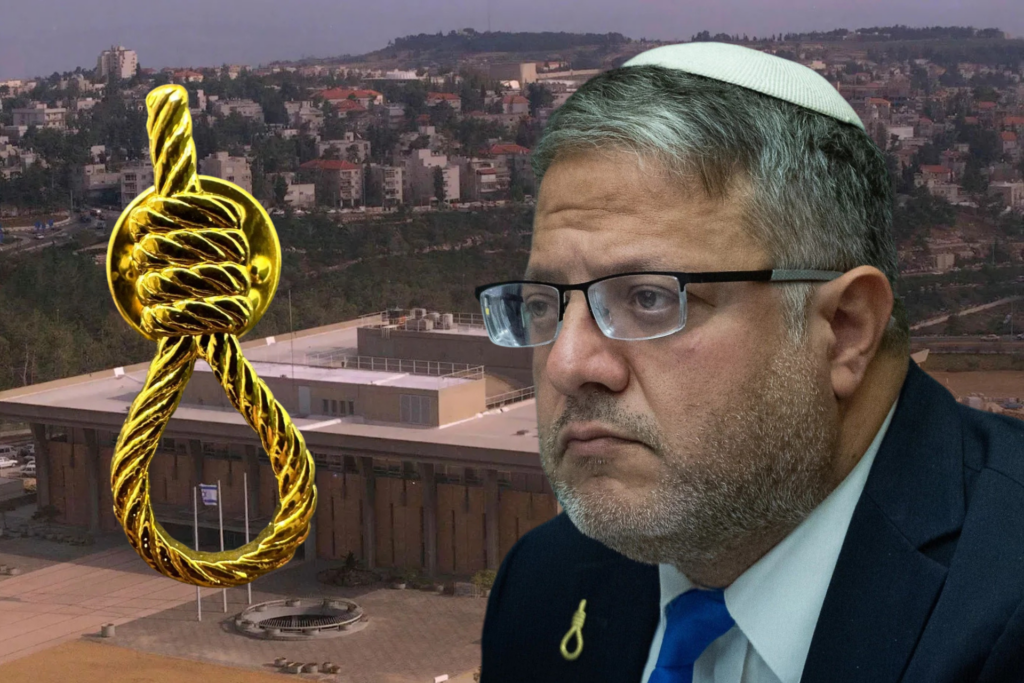
On March 30, 2026, the Israeli parliament (= Knesset), passed a controversial law allowing the death penalty by hanging for Palestinians living in the West Bank convicted of terrorism. What’s this law about? Let’s look at its key excerpt: “A resident of the Area who intentionally causes the death of a person, where the act constitutes an act of terrorism as defined in the Counter-Terrorism Law, shall be sentenced to death, and this punishment only; however, if the Military Court finds, that special circumstances exist for which it is appropriate to sentence the terrorist to life imprisonment, it may impose such a sentence” By “Area” law means Judea and Samaria, which is the West Bank of the Jordan. And by “resident of the Area” law means a person “who is registered in the population registry of the Area or one who resides in the Area even if not registered in said registry, excluding an Israeli citizen or an Israeli resident” 💡: For the original law see here, you can find the unofficial English translation here. Why is it controversial? By its formulation, the law explicitly excludes Israelis from the death penalty, so it doesn’t apply to everyone equally. This is a discriminatory practice that is against the constitution which says that all people are equal. According to the law, executions are fasttracked and stripped of safety mechanisms. The death penalty can be simply decided by a majority of the court without the prosecutor having to propose it. And the execution should be carried out within 90 days of the verdict. Convicted people should not be allowed to receive visitors in prison beforehand. And they can consult their lawyers only via video calls. The death penalty is the default punishment unless the court finds “special circumstances” to change the sentence to life imprisonment. However, the law does not define what these “special circumstances” are, leaving it open to interpretation. Moreover, the law is not “kosher” even according to Jewish morality… Judaic texts say, the death penalty is possible. But they also say that a court that issues a death sentence more often than once every 70 years is considered a bloody court. For this reason, some representatives of Orthodox parties also have a problem with the law. Who wanted this law? The law was presented by Israeli far-right political party Otzma Yehudit. After current Israeli prime minister Benjamin Netanyahu won the 2022 parliamentary elections with his right-wing Likud party, he formed a coalition with Otzma Yehudit, and other far-right parties to gain the majority in the parliament. Otzma Yehudit is an ultranationalist, kahanist party. Kahanism is a movement aiming for the total expulsion of Palestinians from both Israeli and Palestinian territories created by Orthodox US-born rabbi Meir Kahane. Kahane later founded the Jewish Defense League and Kach party. Both of these organized numerous attacks on Arabs in the US, Israel and sometimes other countries. The Kach party was ultimately banned in Israel for its extremist views and listed as a terrorist organisation in the US. Otzma Yehudit is sometimes considered as a kind of successor to Kach. And its leader Itamar Ben-Gvir, currently serving as Israel’s National Security Minister, is not beating the allegations… In the past, he has been convicted of incitement to racism and supporting a terrorist organization for carrying signs saying, “Expel the Arab enemy” and “Rabbi Kahane was right: The Arab MKs are a fifth column.” The fact that the members of the party wore noose-shaped pins to show their support of the law only underlines what kind of party it is… The law passed with 62 votes in favor and 48 against. Are all Israelis in favor of this law? Not all of them. Although after the Hamas attack on Israel on October 7, 2023, Israel is much more radical on security issues, and the society is in favor of similar radical laws (mainly because the current far-right government fuels hostile sentiments towards the Palestinians), some Israelis, human rights organization, legal experts and Knesset members still criticise the law. Given how discriminatory the law is, it wouldn’t be surprising if the Supreme Court struck it down. Yes, the same Supreme Court whose powers Netanyahu successfully tried to limit with his so-called “judicial reform” in 2023… What does this law mean for Israel? The law, naturally, doesn’t create a good image of Israel abroad… It is criticized by the United Nations, Amnesty International, and many countries including Germany, France, Italy, Great Britain, Spain or Ireland… The law thus joins a series of Israeli controversies that are gradually increasing negative views of Israel abroad. The most recent such controversy was Israel’s preventive attack on Iran, joined by the United States. This attack destabilised the whole Middle East and skyrocketed oil prices. As a result, negative views of Israel are also growing in the US, which has always been Israel’s greatest ally – some Americans don’t consider the war in Iran an American war, but an Israeli war into which they have been dragged… Even inside Israel, the law risks deepening divisions. Many Israelis, especially those on the political left and within the human rights community, see it as a dangerous step toward authoritarianism. Why should we care? Because this law does not apply equally to everyone. If we do not want to live in an Orwellian novel, then that should be reason enough Because this law is a part of a broader current world trend, where democratic institutions are being weakened in the name of “higher good”, “greater efficiency”, or “reduced costs”. Don’t buy this Because this is the prime example of what happens if you let extremists into your government: not only will it disrupt order in your country, and bring injustice, but it will also ruin your foreign reputation Sources: The death penalty law for Palestinians convicted of deadly acts of terror is unconstitutional | The Times of Israel Israel: Discriminatory Death Penalty Bill Passes | Human Rights Watch Palestinians convicted of lethal attacks face
Hormuz Crisis : Story of the Last Week
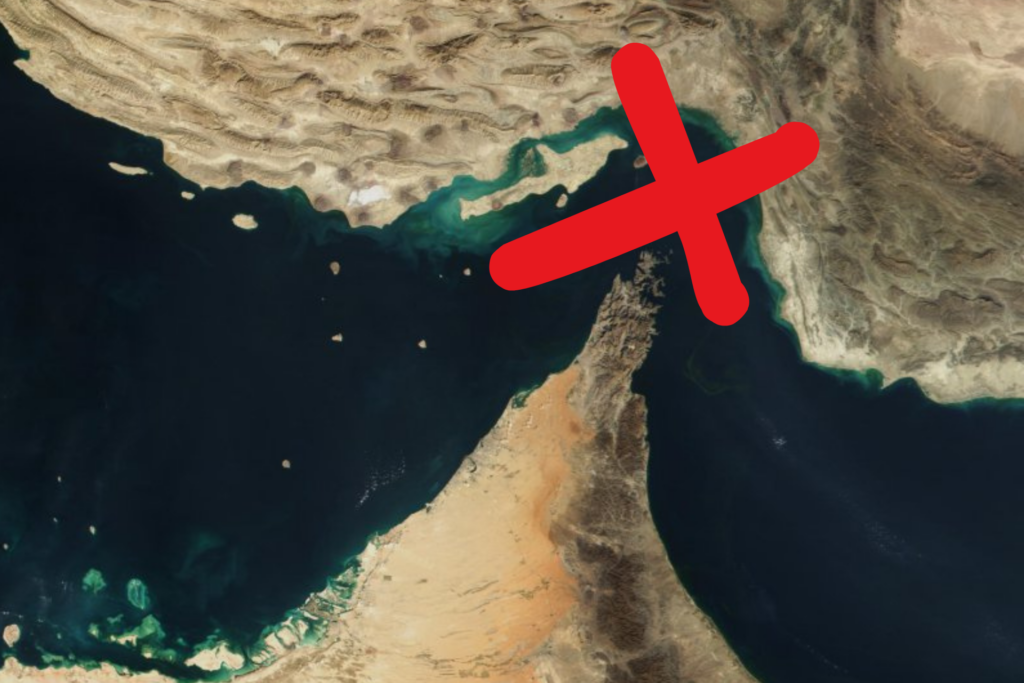
After the US and Israel attacked Iran on 28th February, Iran responded by blocking the Strait of Hormuz, a strategic point in the world’s oil transportation. What does this mean for the world? And how do one even block a strait? Let’s look at it: What Is the Strait of Hormuz? Strait of Hormuz is a 33 kilometres wide (at its narrowest point) strip of water between Iran and Oman connecting the Persian Gulf to the Indian ocean. It’s the only way out for oil tankers from Saudi Arabia, Iraq, Kuwait, the United Arab Emirates, and Iran itself. Every day 25% of the world’s oil passes through the Strait of Hormuz – or actually used to pass… Even though the Strait itself is in international waters, United Nations rules allow countries to control waters up to 12 nautical miles (= 22kilometres) from their coast – and that’s exactly what Iran is doing now. What Does “Blocking the Strait of Hormuz ” Look Like ? Iran’s Islamic Revolutionary Guard Corps broadcasted a message to radios of ships present in the area, that every ship that tries to pass through the Strait of Hormuz would be attacked. And it didn’t just stay with words: Iran actually fired drone and missile strikes on several commercial ships. There is also a suspicion that Iran may have laid sea mines near the strait’s entrance, making passage physically impossible without risking an explosion. What’s the Impact ? As a result of the blockade, the shipping companies are changing routes – now they are mainly using land transport through Jordan and Syria. Which takes much longer, so it costs more and delays deliveries. Due to the war in the Middle East, global oil prices already rose by 20%, hitting 120 dollars per barrel – the highest price since 2008. However, rising oil prices are not the only consequence. The blockade can also affect the development of the whole conflict. Whereas Benjamin Netanyahu (Israeli prime minister) went into this conflict determined to win at all costs, even if it took a long time, his ally Donald Trump (US president) had a different vision… He wanted a quick, decisive strike on Iran – something he would sell as an effective victory with zero costs to its voters. But with the strait blocked, this won’t work. Trump can’t declare victory if the global economy is spiraling into crisis. He could, but who would believe him? Has Something Like This Happened Before? The Strait of Hormuz blockade isn’t the first case where the maritime transport was taken hostage. During the war between Iraq and Iran in the 80s, both sides attacked oil tankers in the Persian Gulf which resulted in an increase in oil prices and panic on global markets until a ceasefire was negotiated. Another example is the Suez Canal Crisis in 1956. After Egyptian President Gamal Abdel Nasser nationalized the Suez Canal, which was previously controlled by Britain and France. Britain, France, and Israel launched a military campaign to retake control of the canal. This led to the blockage of the canal, disrupting the flow of goods and thus increasing transportation costs. The Suez Canal was then blocked once again in 2021. When the Ever Given container ship got stuck in there for six days. This incident cost an estimated $9.6 billion per day in global trade losses. Why Should We Care? Because the blockade of the Strait of Hormuz will cause prices to rise. Not only in transport, when both gasoline and airline tickets will be more expensive, but also in food. Since oil is used not only for fuel but also for fertilizers and packaging. Remember the energy crisis in 2022 when Russia attacked Ukraine… Because the conflict could widen: Trump is already trying to drag other countries in it: Wanna Know More? Check out these articles (that were btw. used to write this article;):
War in Middle East : Story of the Last Week

After February 28, when Israel and the United States “preventively” attacked Iran, the conflict expanded to other states. Which ones? And why? Let’s break it down: Basically, there are four possibilities how other countries got dragged in the war: either they were friends of US or Israel, and because of that they were attacked by Iran; or by its allies; or they were friends with Iran, and decided to support it by attacking Israel or countries that were friends with US or Israel, or they were Iraq. Countries Attacked by Iran All these countries are somehow connected to the United States or Israel – whether it is because they have American bases on their territory, or because they maintain friendly relations with those countries. By attacking them, Iran is trying to destroy American infrastructure, as well as put pressure on their governments to distance themselves from the US/Israel, and to turn public opinion against their leaders for aligning with the West. Countries of Gulf Cooperation Council The Gulf Cooperation Council is a political and economic union of six Arab states bordering the Persian Gulf: Kuwait, Saudi Arabia, Qatar, the United Arab Emirates, Bahrain, and Oman. Founded in 1981 (during the Iran-Iraq War), its purpose was to protect member states from regional instability. All are oil-rich nations that rely on stability for economic prosperity, often acting as mediators in regional conflicts (eg. easing tensions between Israel, the US, and Iran). Naturally, the US-Israel strike on Iran was the last thing they wanted – it threatened their economic interests. They opposed it from the start – but still paid the price… Azerbaijan Despite being a Muslim country, Azerbaijan maintains a good relationship with Israel. Iranian drones struck its autonomous Nakhchivan region. Azerbaijan also accused Iran of planning sabotage operations on its territory – but the Iranian government denied it claiming the sabotages were organized by its enemies who are trying to frame Iran. Turkey Iran also sent two missiles to Turkey. However, NATO, Turkey is part of, neutralized them. Countries Attacking US and Israel Lebanon : Hizbollah Lebanon was drawn into the war by Hezbollah, a Shiite Muslim political party and militant group operating independently of the Lebanese government (basically Hezbollah, is a state within a state). After the US and Israel attacked Iran, Hezbollah struck against Israel. Israel responded to it by attacking Lebanon back. Iraq Iran and Iraq were historically enemies (Iraq even attacked Iran in the 80s), but after Iraqi dictator Saddam Hussein’s fall, the two grew closer. Mainly because both are now led by Shiite muslims. So that’s why, in the current conflict, Iraq supports Iran. Or actually, parts of it do. Because Iraq is divided: between the Kurds, who have a semi-autonomous Kurdish region at the north of Iraq, and the Shiit rest of the country. Whereas the pro-Iranian militias from the Shiite-dominated south support Iran, the Kurds are against it. Kurds even host American bases on their territory. Those bases were bombed by both Iran and military groups from the pro-Iranian part of Iraq. These same pro-Iranian groups also attacked Saudi Arabia and other countries. Countries Attacked by Iranian Allies Cyprus A Lebanese missile struck a British base in Cyprus. While the UK refused to join the US and Israel strikes on Iran, it offered its bases to the US for defense purposes after Iran retaliated. Jordan A longtime US ally, Jordan assisted the US during last summer’s Twelve Day War. Now, its local US bases were attacked and damaged by Iran-backed militias from Iraq. Collaterals: Syria Syria is not officially at war, but due to its geographic position, Iran fires missiles at Israel over Syrian airspace. Debris from intercepted missiles has fallen on Syrian territory, causing damage and minor injuries. What Are the Consequences? The war has reduced and logistically complicated oil exports (e.g. the insurance rates for oil shipping companies skyrocketed because their ships are now in a high risk of strike). This is driving up oil prices. Attacks on oil refineries pose regional ecological threats. For example, a missile strike on a Tehran refinery caused a massive fire, leading to acid rain over the city. Hundreds of thousands of travelers are stranded across the Middle East. Airspace closures (due to missile risks) and mass flight cancellations have left many unable to fly. Sources: A Sprawling Middle East War Explodes | International Crisis Group How the unfolding war is affecting countries in the Middle East | AP News What are the differences between Iraqi Kurdistan and Iraq? From Rivals to Allies: Iran’s Evolving Role in Iraq’s Geopolitics – Middle East Council on Global Affairs Iran-backed militias intensify attacks against US, Israel and allies | Iran | The Guardian How an Incident on the Azerbaijan-Iran Border Became a Test for Diplomacy in the Region – The Times Of Central Asia Why Azerbaijan is important for Israel’s security – JNS.org Syria distances itself from the US-Israeli war on Iran – Enab Baladi Kuwait cuts oil production due to Strait of Hormuz closure
Story of the Last Week: Ceasefire in Gaza

On January 15, 2025, Qatar confirmed the successful negotiation of a ceasefire in Gaza, bringing hope to a region devastated by ongoing violence. This agreement promises a temporary halt to hostilities and humanitarian relief for millions of affected civilians. But can this fragile peace lead to lasting resolution? The Roots of the Conflict After WWI, the Ottoman Empire which contained nowadays Israel and Palestine, collapsed. The victorious Allies ( decided to divide it into so-called mandates and administer them until they were able to self-govern. The part with current Israel and Palestine was administered by Great Britain as Mandatory Palestine. In 1947 the United Nations decided to end the British administration and divide Mandatory Palestine into Israel and Palestine. At this time there were already tensions between Jews and Arabs, once the British withdrew, war broke out at the end of which Israel controlled 2/3 of the Palestinian territory. However, the conflict continued. Between 1947 and 2023, various conflicts took place between Israelis and Palestinians, some of which even escalating into wars. The Recent Developpement On October 7, 2023, Hamas attacked Israel, killing approximately 1200 people and taking 252 hostages. In response, Israel initiated a large-scale military operation in Gaza. Killing around 49,000 Palestinians, many of them being children, destroying local infrastructure, forcibly displacing 1,9 millions of people (so almost 90 % the population of Gaza) and creating a humanitarian crisis as these people lost an access to medical aid, clean water, food or education. Ceasefire in Gaza The ceasefire in Gaza was negotiated with significatn international involvement, particularly from the United States, Egypt, and Qatar. Qatar’s Prime Minister and Foreign Minister, Sheikh Mohammed bin Abdulrahman Al Thani, officially announced the breakthrough on Wednesday, 15th of January 2025. The ceasefire came in force on 19 January and its terms include: This agreement offers a much-needed respite for Gaza’s civilian population, thowever it remains fragile, and its success depends on the commitment of both parties and sustained international pressure. Challenges Facing the Ceasefire in Gaza While the ceasefire is a welcome development, it is far from a resolution. Historically, ceasefires in this conflict didn´t last long, often collapsing into renewed violence. Key challenges include: What Does It Mean for the World? While it may seem that the Israeli-Palestinian conflict is resolved now – the months of violence finally come to an end and people from both sides return to their homes – it’s too early to celebrate. So far, only the first phase of the ceasefire has begun. The second phase is still under discussion. Plus the key question of how will Israelis and Palestinains coexist in the future remains unanswered… As much, as we would like to give you a happyend, we can´t (yet). What we can give you, however, are some predictions. It’s not ideal, but that’s the way it goes in history – sometimes you have to wait a long time for definitive results. In the case of the Israeli-Palestinian conflict, we’ve been waiting since a 1947…