
European Parliament in Nutshell: May 2026
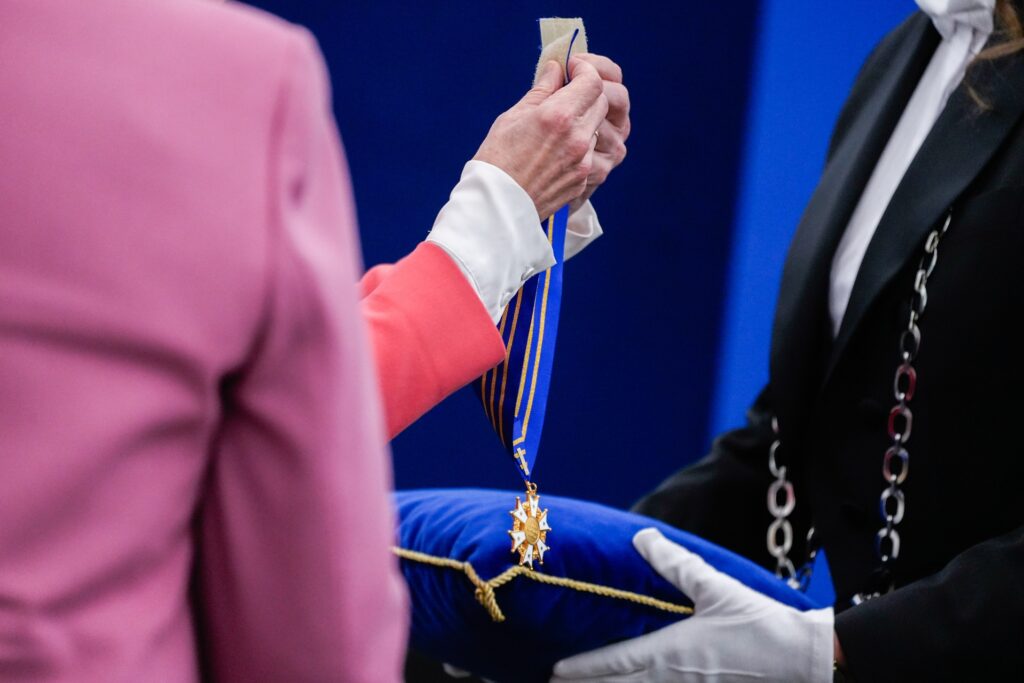
Every month, the European Parliament plenary session takes place in Strasbourg. And every month, IR Media follows it closely. These are the highlights of the last plenary session taking place from 18th to 21st April 2026: Risky foreign investments in EU A strong European Union is the last thing many powerful countries want. Because it’s a competition for them. So some of them are trying to weaken it. Most of the time this happens in a friendly way. For example these countries invest in European sensitive sectors like defence, artificial intelligence, financial services or critical raw materials. Through these investments they not only make Europe dependent on themselves, but they also gain access to sensitive information they could potentially missuse… So this Tuesday, the European Parliament decided that the foreign investments in those sensitive sectors will be screened. And presented the rules for how it will be done. The goal was not to make these rules too complex, so it wouldn’t discourage foreign investors. The EU still wants foreign investors, but given the currrent geopolitical tensions, it wants to have a better overview of them. Deterioration of democracy in Slovakia On Wednesday Eurodeputies adopted a resolution in which they express concern over how the current Slovak government is systematically weakening democracy. For example by reforming criminal law so there would be less strict rules on corruption. Or by changing the constitution, so that it wouldn’t have to respect the European law, and restored the so-called “traditional values”. Which, in the Slovak understanding, means things like not recognizing the existence of trans people or conditioning sex education by parental consent. Slovak government also maintains warm relations with Russia, and is trying more and more to silence public service media and restrict women’s rights. They are also not transparent with how they are using EU funds. A suspicion exists that they are even abusing them to build luxury private properties. Parliament therefore called on the European Commission to look into Slovakia and determine whether it is embezzling European money. European Order of Merit During this plenary session, the European Order of Merit was awarded. The European Order of Merit was invented in 2025 to appreciate individuals who have exceptionally contributed to European unity, democracy, and values. This year, 20 people received the Order. Among them were, for example: The next sitting will be held from 15th to 18th June 2026 in Strasbourg
European Parliament in Nutshell: April 2026

Every month, the European Parliament plenary session takes place in Strasbourg. And every month, IR Media follows it closely. These are the highlights of the last plenary session taking place from 27th to 30th April 2026: Protection of cats and dogs On Tuesday the European Parliament approved the first common European rules for the breeding, sale, and care of dogs and cats. Until now, every country had different rules, which made the system more confusing and easier to abuse by people that were illegally trading animals. The new rules will bring obligatory microchipping and registration of animals in national databases. The regulation also prohibits breeding practices that cause suffering, like inbreeding, or breeding of animals with extreme physical characteristics. These rules will apply even to ordinary pet owners. But don’t worry, after they enter into force, you will have 10 years to register your dog and 15 years to register your cat. Vote by proxy for eurodeputies on maternity leave For a long time, the eurodeputies could vote only if they were physically present in the European Parliament. If they had to stay home to take care of their baby, their vote was wasted… For this reason you could sometimes see eurodeputies bringing their babies into hemicycle – they simply didn’t want to lose their voice. But this changes now. On Wednesday, the European Parliament supported the vote by proxy for its members on maternity leave. Vote by proxy means, that you can delegate someone to vote in your place – usually some colleague… The vote by proxy will be possible between three months before the expected date of birth to six months after the birth. There is one small problem though: this option is only available to women. Men on paternity leave won’t have these accommodations… New definition of rape as sex without consent During this plenary session, MEPs also called on the European Commission, whose role is to propose new EU laws. To propose a uniform definition of rape as sex without consent. Out of 27 EU countries, 17 already define rape like this. But the rest defines rape as an act involving either the use of physical force or some form of coercion like threats, or blackmailing… The problem is that this definition doesn’t take into account cases where the victims are in such a state that the rapists don’t need to use violence or threaten them – for example when they are blacked-out drunk or sleeping like Gisele Pelicot. Redefining rape as the absence of consent would make it easier for such victims to seek justice, and it would cost no one anything (except the rapists) The next sitting will be held from 18th to 21st May 2026 in Strasbourg
European Parliament in Nutshell: February 2026
Every month, the European Parliament plenary session takes place in Strasbourg. And every month, IR Media follows it closely. These are the highlights of the last plenary session taking place from 9th to 12nd February 2026: Change in European migration policy The European Parliament voted for creation of a so-called: “EU list of safe countries of origin”. Which is basically a list of countries from which it is assumed people have no reason to migrate. So if you try to migrate from them, they will most likely sent you back in an accelerated process. So far, each EU country had its own such list. Now they want to make a common one and add Bangladesh, Colombia, Egypt, Kosovo, India, Morocco and Tunisia to it, as well as the EU candidate countries. Parliament also validated so-called “safe third country” concept. Instead of accepting asylum seekers, EU countries could redirect them to some other country, through which the applicant either transited, has some connection with (like language or family), or none of that and the two countries juste have an agreement with each other. On the one hand, this will save EU some time and work. On the other hand some “safe” countries are not safe for everyone – think about homosexuals or political dissidents… European Parliament Approves €90 Billion Ukraine Support Loan The European Parliament approved a 90 billion euro loan for Ukraine to help it resist Russian invasion, which is approaching its 5th anniversary. The loan was agreed under so-called enhanced cooperation procedure. This mechanism allows something to be implemented within the EU even if not all countries agree on it. All financial responsibility for it then goes only to the countries that wanted it – not to the EU as a whole. In this case, 24 EU member states supported the loan, while the Czech Republic, Hungary and Slovakia did not. The EU is providing the loan on the condition that Ukraine continues to promote democracy, the rule of law, respect for human rights and the fight against corruption. Ukraine will repay the loan after it receives war reparations from Russia. How to deal with Europe’s Housing crisis ? The European Parliament’s Special Committee on the Housing Crisis came up with recommendations to deal with the housing crisis in the EU. The MEPs proposed things like: making new houses more energy efficient, limiting short-term rentals, offering more public and social housing, introducing tax breaks for low- and middle-income households, simplifying the administration for new housing projects or better use of EU funds… This session they voted on it within the committee. The next step will be to present it to the whole Parliament, which will happen in March. The next sitting will be held from 9th to 12th March 2026 in Strasbourg
European Parliament in Nutshell: January 2026

Every month, the European Parliament plenary session takes place in Strasbourg. And every month, IR Media follows it closely. These are the highlights of the last plenary session taking place from 19th to 22nd January 2026: European Parliament stood up for passenger rights On Wednesday, the European Parliament rejected the European Council’s proposal to weaken the rights of air passengers. These rights have been in force since 2004. The European Council consists of ministers from all EU countries. In this case it was the Ministers for Transport who made this proposal in June 2025. They proposed to reimburse the passengers only if their flight is delayed by four to six hours depending on the flight distance. instead of the current three hours. And tried to reduce the upper limit of compensation for flight delays or cancellations from 600€ to 500€. Parliament refused that. The MEPs also want to introduce pre-filled forms to simplify the process of claiming a reimbursement. And they want to give passengers a year to file this request. Free trade agreement between EU and Latin America paused On Wednesday Eurodeputies voted to refer the free trade agreement between EU and MERCOSUR to the Court of Justice of the European Union to assess if the agreement is compatible with European law. MERCOSUR is the abbreviation of Southern Common Market, which is a trade bloc of South American countries: Argentina, Brazil, Paraguay and Uruguay… But Mercosur is also used as a global term for that free trade agreement. European Parliament discussed this free trade agreement for years because it’s quite controversial. On the one hand, it will create the largest free trade zone in the world, strengthen the European economy, and help Latin American countries. On the other hand, importing goods from there will be environmentally unfriendly and create a strong competition for European farmers. Despite their numerous protests, the European parliament adopted the agreement. The weekend before this Plenary session the President of the European Commission, Ursula von der Leyen even signed it. But right now it’s frozen and awaits the decision of the Court. European Parliament stands with Iran On Thursday the European Parliament adopted a resolution against the repressions and mass murders committed by the Iranian regime against protesters in Iran. If you want to know more about what’s happening in Iran, we made a Story of the Last Week about this topic. By this resolution the EP demands the immediate and unconditional release of all protesters held under arrest. Parliament also calls on the EU and its member states to take strict measures against the regime like visa bans, money freezing, and providing technical and financial support to fight against the censorship happening in Iran. The next sitting will be held from 9th to 12th February 2026 in Strasbourg
European Parliament in Nutshell: December 2025

Every month, the European Parliament plenary session takes place in Strasbourg. And every month, IR Media follows it closely. These are the highlights of the last plenary session taking place from 15th to 18th December 2025: European Parliament supported “My voice, my choice” initiative for safe and accessible abortion On Wednesday 17th December, eurodeputies supported the European Citizens´Initiative “My voice, my choice” for safe and accessible abortion. A European Citizens’ Initiative is a tool for people from the EU to ask the European Commission to propose some new legislation. To be considered, the initiative must collect at least one million signatures in 7 member states. In this case, the initiative calls for creation of some financial mechanism that would be available to all member states that choose to take part and would allow them to finance abortion care for women who cannot access it in their own country. The European Commission now has time until March 2026 to explain how it will respond to this initiative. Gradual ban of Russian gas The main point of the European plenary session this month was the Russian gas imports. On Wednesday 17th December eurodeputies voted to gradually move away from Russian LNG (= liquified natural gas) and pipeline gas. This comes in response to Russia’s weaponisation of energy supplies, which was happening for the last two decades and escalated with the Russian invasion of Ukraine in 2022. The ban will come gradually. First on the short-term supply contracts for LNG in April 2026, then on the short-term supply contracts for pipeline gas in July 2026, then on the long-term LNG contracts in January 2027 and lastly on the long-term pipeline gas contracts in September 2027. Sakharov prize 2025 As every year, the European Parliament awarded the Sakharov Prize for Freedom of Thought during its December session. This year, to journalists Andrzej Poczobut and Mzia Amaglobeli. Who are currently imprisoned by the political regimes in their countries because of their work. Andrzej Poczobut, a member of the Polish minority in Belarus, was sentenced to 3 years in prison in 2021 for allegedly insulting the President of Belarus and inciting ethnic hatred. In 2023, he received an additional sentence of 8 years for what authorities described as actions harming Belarusian national security. Mzia Amaglobeli was arrested at the beginning of this year for taking part in protests against the Georgian government who is trying to pull the country away from its pro-European course and bring it closer to Russia. Amaglobeli is Georgia’s first female political prisoner since Georgia´s independence in 1992 after the fall of the Soviet Union. Did you know? The Sakharov Prize bears the name of Andrei Sakharov, a Soviet scientist and dissident. He spoke out against political repression and became a symbol of the fight for human rights and freedom of expression. The next sitting will be held from 19th to 22nd January 2026 in Strasbourg