
Yes to Israel, no to Russia. Quo vadis, Eurovision?

This year the Eurovision Song Contest celebrated its 70th anniversary. The winner of this jubilee year is Bulgarian singer Dara. Was it because the audience liked “Bangaranga” so much, or rather because Bulgaria is not Israel? And what about Russia? What is Eurovision? The Eurovision Song Contest is an annual music competition organized by the European Broadcasting Union (EBU), a non-profit association of mostly public, but also some commercial, radio and television stations. Eurovision was created in 1956 to unite Europe (that was still a little bit divided after the 2nd world war) in an amusing, laidback way. Which would be also apolitical – at least that’s what’s proclaimed. The reality is a bit more complicated… 💡: Listen to the most legendary Eurovisions songs Can Eurovision be really apolitical? The final round of the 70th Eurovision took place on Saturday, 16th May, in Vienna. And just like the previous year, it was not without a tense atmosphere around the participation of Israel. Several protests took place in the streets of the Austrian capital because of it. And the Netherlands, Ireland, Iceland, Slovenia and Spain even refused to participate. The final vote was also tense, with Bulgarian Dara and Israeli Noam Bettan facing against each other. In the end Bulgaria won by 173 points. This scenario is weirdly similar to what happened last year when Austria beat Israel. Eurovision as Israeli soft power tool Even though Israel won 4 times throughout the history: in 1978, 1979, 1998 and 2018, in other years, we’ve rarely seen it score top ranking spots. Even in 2024, when the world was still shocked by Hamas’s October attack, Israel came 5th. So how come that in 2025, when we could hear much more critical voices on Israel, it almost won? The answer lies in a recent investigation by The New York Times. According to it the Israeli government spent more than a million dollars on online advertisements promoting Israel’s participation in Eurovision. Diplomats and various Israeli advocacy groups also spread videos on social media calling for repeated voting for the Israeli singer. Because yes, in Eurovision you can vote multiple times. Indecisive people surely appreciate that, however it leaves room for cheating. This year, Eurovision prohibited both of the promotion strategies Israel used. Ironically, it was because last year several European media reported that Israel had paid for an online campaign in an attempt to influence the European audience. We’ve already been there… This benevolence of Eurovision towards Israel might seem surprising compared to its attitude towards Russia. After its 2022 invasion of Ukraine, Russia was quickly banned from the competition. Well, “quickly”; after 14 years of controversial behavior, that began with the invasion of Georgia in 2008, continued with the annexation of Crimea and western parts of Ukraine in 2014. Eurovision has long been benevolent towards Russia in the same way it is now benevolent towards Israel. On the contrary, Eurovision was no longer so benevolent when in 2009 Georgia tried to “get back” at Russia at least musically with the song “We Don’t Wanna Put In”. “EBU told Georgia that the song’s lyrics did not comply with the rules about “lyrics, speeches, gestures of a political or similar nature”, and asked Georgia to either re-write the lyrics of the song, or select another to compete. The day after Georgia withdrew from Eurovision 2009 – which was held in Russia,” says the Eurovision website. The boycott of Russia came only after the political consensus on this country unified across Europe as a result of the 2022 invasion. In the case of Israel, this unification simply hasn’t happened yet. The killings Israel is committing in Gaza are being done in the name of its self-defense. And however disproportionate this self-defense is, some Europeans still see it as justifiable because it didn’t come unprovoked. The large Israeli diaspora in European countries also plays a role. Public broadcasters (= members of the EBU) may fear a possible negative response, or even accusations of anti-Semitism, in case they oppose Israel’s practices or participation. Is a boycott even the effective solution? Speaking of boycotts, we should also ask how effective they are. Because even though Russians cannot compete under their own flag, they still find their way in Eurovision. For example, the songwriter of Dara’s winning “Bangaranga”, Dimitris Kontopoulos, worked on several Russian Eurovision songs together with Philipp Kirkorov, who’s a supporter of Russian leader Vladimir Putin. Eden Golan also had some ties to Russia. Although in 2024 she represented Israel in Eurovision, she spent a significant part of her life living in Russia. Where she was trying for a musical breakthrough by performing at various competitions – including in occupied Crimea. Although this doesn’t immediately make her an active Putin supporter, it certainly doesn’t make her his critic Apoliticality or hypocrisy? As a reaction to the accusations of double standards in Eurovision, its director, Martin Green, said that Russia could “theoretically” be allowed to rejoin the competition if its broadcaster proved they are independent of Putin’s regime. He probably wanted to be diplomatic, but it doesn’t paint a very good picture of Eurovision. While it tries to appease openly aggressive countries by turning a blind eye and offering loopholes, it is merciless towards their victims who want to “defend” themselves with nothing but a mere satire… But was it ever any different? Even the organization of the very first Eurovision in 1956 was actually a political concept: to start a cooperation between European public broadcasters. And this year, politics were not absent either. For example, the song by rapper Satoshi “Viva, Moldova!” is basically a patriotic manifesto calling for the pro-Western integration of Moldova. And the Croatian band Lelek did not abandon the political theme either, singing about the oppression faced by Croatian Catholics in Bosnia and Herzegovina under the rule of the former Ottoman Empire. Eurovision is simply never held in a vacuum. The ambition to be “apolitical” won’t magically erase the existing relations between competing countries.
European Parliament in Nutshell: May 2026
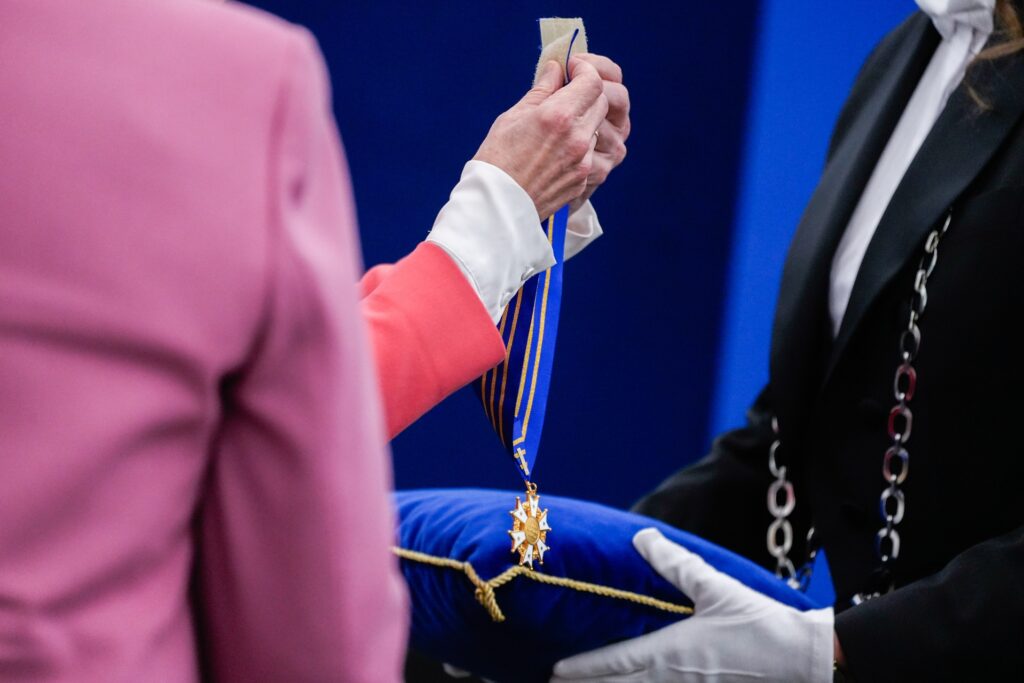
Every month, the European Parliament plenary session takes place in Strasbourg. And every month, IR Media follows it closely. These are the highlights of the last plenary session taking place from 18th to 21st April 2026: Risky foreign investments in EU A strong European Union is the last thing many powerful countries want. Because it’s a competition for them. So some of them are trying to weaken it. Most of the time this happens in a friendly way. For example these countries invest in European sensitive sectors like defence, artificial intelligence, financial services or critical raw materials. Through these investments they not only make Europe dependent on themselves, but they also gain access to sensitive information they could potentially missuse… So this Tuesday, the European Parliament decided that the foreign investments in those sensitive sectors will be screened. And presented the rules for how it will be done. The goal was not to make these rules too complex, so it wouldn’t discourage foreign investors. The EU still wants foreign investors, but given the currrent geopolitical tensions, it wants to have a better overview of them. Deterioration of democracy in Slovakia On Wednesday Eurodeputies adopted a resolution in which they express concern over how the current Slovak government is systematically weakening democracy. For example by reforming criminal law so there would be less strict rules on corruption. Or by changing the constitution, so that it wouldn’t have to respect the European law, and restored the so-called “traditional values”. Which, in the Slovak understanding, means things like not recognizing the existence of trans people or conditioning sex education by parental consent. Slovak government also maintains warm relations with Russia, and is trying more and more to silence public service media and restrict women’s rights. They are also not transparent with how they are using EU funds. A suspicion exists that they are even abusing them to build luxury private properties. Parliament therefore called on the European Commission to look into Slovakia and determine whether it is embezzling European money. European Order of Merit During this plenary session, the European Order of Merit was awarded. The European Order of Merit was invented in 2025 to appreciate individuals who have exceptionally contributed to European unity, democracy, and values. This year, 20 people received the Order. Among them were, for example: The next sitting will be held from 15th to 18th June 2026 in Strasbourg
European Parliament in Nutshell: April 2026

Every month, the European Parliament plenary session takes place in Strasbourg. And every month, IR Media follows it closely. These are the highlights of the last plenary session taking place from 27th to 30th April 2026: Protection of cats and dogs On Tuesday the European Parliament approved the first common European rules for the breeding, sale, and care of dogs and cats. Until now, every country had different rules, which made the system more confusing and easier to abuse by people that were illegally trading animals. The new rules will bring obligatory microchipping and registration of animals in national databases. The regulation also prohibits breeding practices that cause suffering, like inbreeding, or breeding of animals with extreme physical characteristics. These rules will apply even to ordinary pet owners. But don’t worry, after they enter into force, you will have 10 years to register your dog and 15 years to register your cat. Vote by proxy for eurodeputies on maternity leave For a long time, the eurodeputies could vote only if they were physically present in the European Parliament. If they had to stay home to take care of their baby, their vote was wasted… For this reason you could sometimes see eurodeputies bringing their babies into hemicycle – they simply didn’t want to lose their voice. But this changes now. On Wednesday, the European Parliament supported the vote by proxy for its members on maternity leave. Vote by proxy means, that you can delegate someone to vote in your place – usually some colleague… The vote by proxy will be possible between three months before the expected date of birth to six months after the birth. There is one small problem though: this option is only available to women. Men on paternity leave won’t have these accommodations… New definition of rape as sex without consent During this plenary session, MEPs also called on the European Commission, whose role is to propose new EU laws. To propose a uniform definition of rape as sex without consent. Out of 27 EU countries, 17 already define rape like this. But the rest defines rape as an act involving either the use of physical force or some form of coercion like threats, or blackmailing… The problem is that this definition doesn’t take into account cases where the victims are in such a state that the rapists don’t need to use violence or threaten them – for example when they are blacked-out drunk or sleeping like Gisele Pelicot. Redefining rape as the absence of consent would make it easier for such victims to seek justice, and it would cost no one anything (except the rapists) The next sitting will be held from 18th to 21st May 2026 in Strasbourg
European Parliament in Nutshell: March 2026
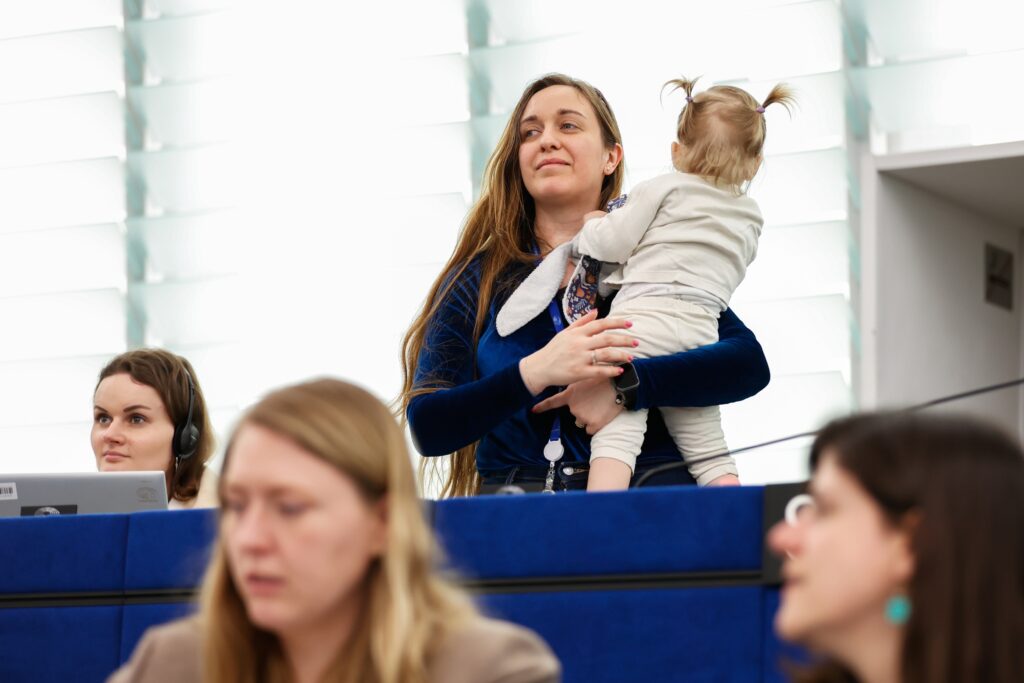
Every month, the European Parliament plenary session takes place in Strasbourg. And every month, IR Media follows it closely. These are the highlights of the last plenary session taking place from 9th to 12nd March 2026: European Parliament against gender pay gap On Wednesday eurodeputies voted on the report prepared by the Committee on Women’s Rights and Gender Equality. This report maps the gender pay gap in the European Union, its consequences and proposes solutions to combat it. Gender pay gap is a difference between the average gross hourly earnings of men and women. In the EU it’s currently 12 %. This doesn’t mean that jobs would give women automatically a 12% lower salary just because they are women… The gender pay gap is more of a structural problem. Stereotypes that there are “men’s jobs” and “women’s jobs” still persist in society and influence our career choices. Those “women’s jobs”, are considered less prestigious, therefore less paid. If women try to get into “men’s jobs”, they face backlash and sexism not all of them can withstand. Moreover, women are still expected to perform the majority of housework and childcare. Tasks that are unpaid, and often force women to interrupt their careers. Which results in women having lower pensions. Some of the solutions this report proposes are: AI will have to respect copyright On Tuesday, MEPs adopted a series of recommendations to protect copyrighted creative work from use by artificial intelligence. Because right now, AI uses copyrighted works freely with no limits. Eurodeputies want authors to be paid if their works are used by AI, ideally even retrospectively. And, to guarantee them an option to completely opt-out from their work being used by AI. They also want to make AI companies transparent about what copyrighted works they used to train their models. Now it’s up for the European Commission to transform these recommendations into concrete laws. Chat Control reached a compromise On Wednesday, the European parliament voted to extend exemption from ePrivacy Directive. This directive normally prohibits the scanning of private messages, but the exception allows it. The goal was to enable big digital platforms to detect child sexual abuse materials by scaning their users’ messages. But it was a bit double-edged because it could be misused to spy on citizens by authoritarian governments. Fortunately, MPs also voted that scanning private messages can only take place under a court order in case of a suspected sexual abuse. Last but not least, do you remember how the last plenary session, the Special Committee on the Housing Crisis came up with recommendations to deal with the housing crisis in the EU? This session they presented it to the whole Parliament, and the parliament voted yes. The next sitting will be held from 27th to 30th April 2026 in Strasbourg
Munich Security Conference : Story of the Last Week

As every year, world leaders gathered in Munich in the second week of February for one of the world’s most important meetings on global security and diplomacy. This year for its 62nd edition. Origin of Munich Security Conference The Munich Security Conference was first organized in 1963 as a small meeting of 60 countries by Ewald-Heinrich von Kleist-Schmenzin. Ewald-Heinrich was the youngest plotter of the famous attempt to assassinate Hitler in Wolf’s Lair. He was supposed to be a part of a group who would organize a coup in case of its success. All this at the age of just 22 years! After the operation went unsuccessful, he managed to cover up his resistance activities. Luckily – because if not, he would have most likely ended up with a death sentence. This way Nazis “just” sent him to the concentration camp, where he managed to survive until the end of war. What’s the Purpose of the Munich Security Conference? In 1963 he came up with an idea to organise a Wehrkundetagung in Munich. The name was a bit of a tongue twister, but there was a simple idea behind it. Von Kleist wanted to make sure such a horrendous conflict as the 2nd World War would never happen again. Therefore he organised a meeting of about 60 important world leaders and international relations experts. Together thy discuss (often hot) security topics. What started as a small private event, has groven to giant proportions over the years Famous speeches at Munich Security Conference During its 62 years of existence, some famous speeches have been given by important actors in international relations on MSC. Such as: Make no mistake, the Munich Security Conference is still a private event. Unlike official government meetings, decisions made here are not legally binding on anyone. But that’s exactly the reason why this event is so worthy to observe. Politicians here dare to be more honest about their intentions. The highlights of MSC 2026 This year’s conference was much less revolutionary… There were no groundbreaking speeches, no strong words, no magical solutions. And compared to previous years, it had overall a little more pessimistic tone. Maybe that’s why didn’t hear that much about it from press. But despite this – or perhaps precisely because of this – we should keep an eye on it. The main topics were: The Collapse of the International Order and the Rise of Destructive Policies Caused mainly by the current dominant world power United States under the leadership of its president Donald Trump. Who is democratically destructive both domestically and internationally (remember, for example, his claims to Greenland). Compared to last year, when the US criticized Europe for its freedom of speech during the Conference, this year their rhetoric was a little more diplomatic. But the message stayed pretty much the same. The US will continue to play by its own rules – whether Europe likes it or not. The quote of the Minister of Foreign Affairs of the US, Marco Rubio summs it all up. “We can no longer place the so-called global order above the vital interests of our people and our nation”. While Europe is still going through the 5 stages of grief over its relationship with the US, countries of the Global South, who never had many reasons to idealize the US, see the change in the international order more positively – especially as an opportunity to establish new trade agreements, now that America made itself unattractive business partner with its high tariffs. The War in Ukraine and European Security This topic is closely related to the previous one – since we only have to speak about it because certain actors chose to undermine the international order. Those actors being Russia, and more recently the US… The Greenland crisis at the beginning of this year raised an uncomfortable question: would NATO act or crumble in case of an escalation? And at the same time it gave Europe a push to start addressing its security not just through speeches, but through action. After the US decreased its military aid to Ukraine by 99 % over the last year, Europe had to step up – recently, the European Union approved a 90 billion euros loan to Ukraine. But more will be needed. However, there were no specific new proposals – only old ones that have been talked about for a long time (such as confiscating frozen Russian funds). The Ukrainian president, Volodymyr Zelenskyy came to the Conference to stress that Ukraine would not be able to defend Europe indefinitely, and urged for increased European help and pressure on Russia and its enablers. Regional Conflicts The Munich Security Conference also addressed regional conflicts – like those which emerged in Syria after the fall of Assad regime or civil war in Sudan that has been going on since 2023 Some attention was also paid to technology, and AI. The Conference didn’t forget about climate crisis either. For example, speakers addressed the access to drinkable water that will be problematic in the future. However, due to the current tense security situation in the world, this topic remained in the background compared to previous years. Why should we care? Because the Munich Security Conference does not generate any legally binding policies, world leaders don’t try that hard to mask their controversial intentions – so it gives us an ideal opportunity to see their true collors… …and to understand the REAL reasons why they want us to support (or not) certain of their decisions. Because MSC can help us get a better overview on priorities of different countries and on relationships between them.
European Parliament in Nutshell: February 2026
Every month, the European Parliament plenary session takes place in Strasbourg. And every month, IR Media follows it closely. These are the highlights of the last plenary session taking place from 9th to 12nd February 2026: Change in European migration policy The European Parliament voted for creation of a so-called: “EU list of safe countries of origin”. Which is basically a list of countries from which it is assumed people have no reason to migrate. So if you try to migrate from them, they will most likely sent you back in an accelerated process. So far, each EU country had its own such list. Now they want to make a common one and add Bangladesh, Colombia, Egypt, Kosovo, India, Morocco and Tunisia to it, as well as the EU candidate countries. Parliament also validated so-called “safe third country” concept. Instead of accepting asylum seekers, EU countries could redirect them to some other country, through which the applicant either transited, has some connection with (like language or family), or none of that and the two countries juste have an agreement with each other. On the one hand, this will save EU some time and work. On the other hand some “safe” countries are not safe for everyone – think about homosexuals or political dissidents… European Parliament Approves €90 Billion Ukraine Support Loan The European Parliament approved a 90 billion euro loan for Ukraine to help it resist Russian invasion, which is approaching its 5th anniversary. The loan was agreed under so-called enhanced cooperation procedure. This mechanism allows something to be implemented within the EU even if not all countries agree on it. All financial responsibility for it then goes only to the countries that wanted it – not to the EU as a whole. In this case, 24 EU member states supported the loan, while the Czech Republic, Hungary and Slovakia did not. The EU is providing the loan on the condition that Ukraine continues to promote democracy, the rule of law, respect for human rights and the fight against corruption. Ukraine will repay the loan after it receives war reparations from Russia. How to deal with Europe’s Housing crisis ? The European Parliament’s Special Committee on the Housing Crisis came up with recommendations to deal with the housing crisis in the EU. The MEPs proposed things like: making new houses more energy efficient, limiting short-term rentals, offering more public and social housing, introducing tax breaks for low- and middle-income households, simplifying the administration for new housing projects or better use of EU funds… This session they voted on it within the committee. The next step will be to present it to the whole Parliament, which will happen in March. The next sitting will be held from 9th to 12th March 2026 in Strasbourg
European Parliament in Nutshell: January 2026

Every month, the European Parliament plenary session takes place in Strasbourg. And every month, IR Media follows it closely. These are the highlights of the last plenary session taking place from 19th to 22nd January 2026: European Parliament stood up for passenger rights On Wednesday, the European Parliament rejected the European Council’s proposal to weaken the rights of air passengers. These rights have been in force since 2004. The European Council consists of ministers from all EU countries. In this case it was the Ministers for Transport who made this proposal in June 2025. They proposed to reimburse the passengers only if their flight is delayed by four to six hours depending on the flight distance. instead of the current three hours. And tried to reduce the upper limit of compensation for flight delays or cancellations from 600€ to 500€. Parliament refused that. The MEPs also want to introduce pre-filled forms to simplify the process of claiming a reimbursement. And they want to give passengers a year to file this request. Free trade agreement between EU and Latin America paused On Wednesday Eurodeputies voted to refer the free trade agreement between EU and MERCOSUR to the Court of Justice of the European Union to assess if the agreement is compatible with European law. MERCOSUR is the abbreviation of Southern Common Market, which is a trade bloc of South American countries: Argentina, Brazil, Paraguay and Uruguay… But Mercosur is also used as a global term for that free trade agreement. European Parliament discussed this free trade agreement for years because it’s quite controversial. On the one hand, it will create the largest free trade zone in the world, strengthen the European economy, and help Latin American countries. On the other hand, importing goods from there will be environmentally unfriendly and create a strong competition for European farmers. Despite their numerous protests, the European parliament adopted the agreement. The weekend before this Plenary session the President of the European Commission, Ursula von der Leyen even signed it. But right now it’s frozen and awaits the decision of the Court. European Parliament stands with Iran On Thursday the European Parliament adopted a resolution against the repressions and mass murders committed by the Iranian regime against protesters in Iran. If you want to know more about what’s happening in Iran, we made a Story of the Last Week about this topic. By this resolution the EP demands the immediate and unconditional release of all protesters held under arrest. Parliament also calls on the EU and its member states to take strict measures against the regime like visa bans, money freezing, and providing technical and financial support to fight against the censorship happening in Iran. The next sitting will be held from 9th to 12th February 2026 in Strasbourg